
Survey of London: Volume 35, the theatre Royal, Drury Lane, and the Royal Opera House, Covent Garden. Originally published by London County Council, London, 1970.
This free content was digitised by double rekeying. All rights reserved.
'The Theatre Royal: Site', in Survey of London: Volume 35, the theatre Royal, Drury Lane, and the Royal Opera House, Covent Garden, (London, 1970) pp. 30-39. British History Online https://www.british-history.ac.uk/survey-london/vol35/pp30-39 [accessed 26 April 2024]
In this section
CHAPTER III
The Theatre Royal, Drury Lane: the Site
The original Theatre Royal, Drury Lane, was built in an oblong stable yard in the centre of the block of property bounded by Brydges (now Catherine) Street on the west, Russell Street on the north, Drury Lane on the east, and Little Brydges Street and Vinegar Yard on the south (fig. 1). At the time of the building of the theatre in 1662–3 the yard was already surrounded by buildings on all four sides, and the only access to it was by a narrow passage at the west end leading into Brydges Street and by another at the east end to Drury Lane (Plate 1b). When the operations of the theatre required more space, the existence of buildings all around the site made any expansion extremely difficult to achieve. These difficulties were greatly increased by the fact that the ground landlords of the site of the theatre, the Earls of Bedford, who had for many years owned the freehold of the entire block of property described above, had between 1635 and 1659 disposed of the fee farms of most of the ground around the theatre. Until the 1790's the separate fee-farm ownerships thereby established prevented any effective widening of the theatre on the north and south sides, and although enlargements of the site did take place from time to time, notably under David Garrick, Drury Lane Theatre remained hemmed in by the surrounding buildings until Henry Holland rebuilt it in 1791–4. By this time the fourth and fifth Dukes of Bedford had repurchased the freehold of most of these surrounding buildings, and Holland was therefore able to design a much wider theatre with less constricted access. The present theatre erected in 1811–12 now occupies what is virtually an island site, with the principal entrances from Catherine Street and Russell Street (see figs. 1–6).
The site leased by the fifth Earl of Bedford in December 1661 to the building shareholders had some years previously formed part of a strip of land some 60 feet wide, extending westward from Drury Lane to the wall of Covent Garden (later Brydges Street). This strip had been leased in 1616 by Edward, third Earl of Bedford, to Sir Edward Cecil, later Viscount Wimbledon, for a term dependent on three lives. (fn. 5) During the currency of this lease part of the site of the future Theatre Royal was occupied by an earlier and probably short-lived playhouse. A survey made in or after May 1635 mentions here a stable, coachhouses, a riding-house and 'A playhouse 31 foote broad & 40 foote longe: boarded walles & sheded with pann tiles'. (fn. 6) This may perhaps be identified with the temporary playhouse licensed by the Lord Chamberlain in April 1635 to a group of French players, and which was erected within the short space of seventeen days from the grant of the licence in the 'manage' (i.e. riding school) of Monsieur Le Febure in Drury Lane. (fn. 7)
When the lease of 1616 expired in 1652 the middle portion of the strip, comprising the future site of the Theatre Royal, passed into the tenure of Richard Ryder, carpenter, and was described in the fifth Earl of Bedford's lease of 20 December 1661 to the theatre building shareholders as 'the Rideing Yard'. (fn. 8) By this time the Earls of Bedford had sold the fee farm of most of their ground surrounding the site of the theatre (see fig. 1).
The lease of 20 December 1661 to the building shareholders was for a term of forty-one years from Christmas 1661 at an annual rent of £50. The site (A on fig. 1) was described as measuring in length 112 feet east to west and in breadth 59 feet at the east end and 58 feet at the west end. (fn. 9) Access was by means of two passages, from Drury Lane and Brydges Street. These dimensions were repeated precisely in the later leases granted by the Dukes of Bedford to the building shareholders in 1695, 1710/11, and 1731/2, (fn. 10) and it was within the boundaries of this curtilage that the first theatre was built in 1662–3 and (after the fire of 1671/2) the second in 1674. The first theatre did not occupy the whole site; in front of the west end there was a small yard (B on fig. 1) which measured 10 feet by 58 feet. (fn. 11)
The freehold of the plot of ground immediately east of the theatre also belonged to the Earl of Bedford, who on 1 May 1662 leased it to William Hewett (fn. 12) (see fig. 1, land marked 'leased to Hewett May 1662'). Hewett was one of the two trustees for the building shareholders in their lease of 20 December 1661, but his status in this second lease is uncertain. However, it seems likely that he was again serving as trustee for the building shareholders. (fn. 13) Little is known about what use was made of this site other than that by June 1663 several of the building shareholders and/or actors held a sub-lease of part of it, where then stood several newly built messuages. (fn. 14) In a sub-lease of the theatre granted in June 1683 by the building shareholders to Charles Davenant, Thomas Betterton and William Smith (fn. 15) the length of the playhouse is given as 140 feet, that is eastwards 28 feet beyond the 112-foot-long curtilage of the theatre site itself. As there is no evidence that the theatre building had been extended eastward, it seems probable that part at least of this second plot was used in conjunction with the theatre even from this early date; but it was not an integral part of the playhouse, and when the ground lease to Hewett expired in 1702 the second Duke of Bedford granted the new lease not to the building shareholders but to Christopher Rich, who was then managing the affairs of the theatre. This lease states that five houses and other buildings then stood on this eastern plot, and that the passage from Drury Lane to the theatre still extended through the middle of the site. (fn. 16)
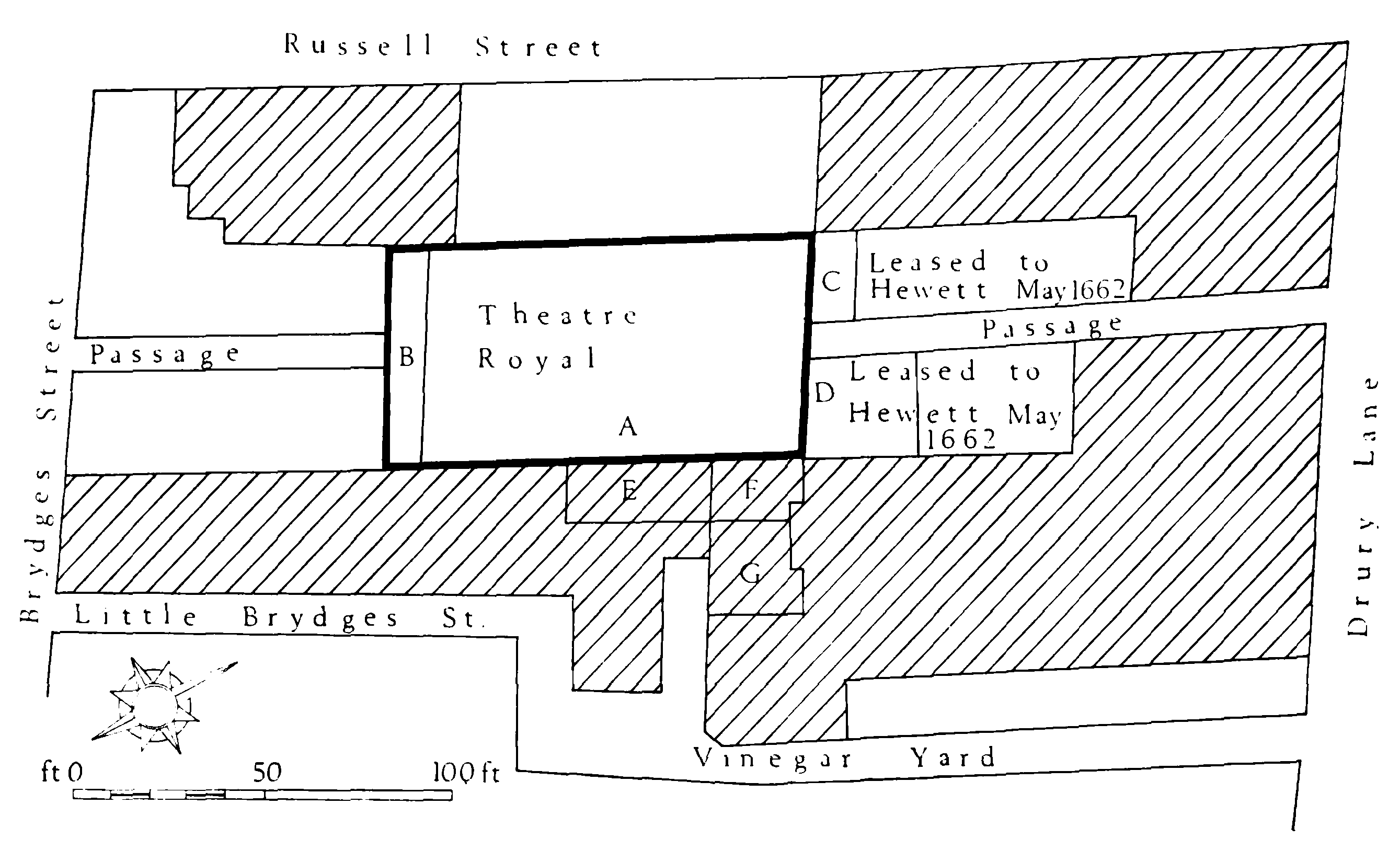
Fig. 1. Site plan, 1661–1748. Based on leases and fee-farm grants in Greater London Record Office. Hatched areas represent land sold by the Earls of Bedford before 1661. Unhatched areas represent land owned by the Earls and Dukes of Bedford
A Site leased for theatre, 20 December 1661 (marked with
thick line)
B Yard of first theatre
C Hall
D Sparrow's Nest
E (? Great) Scene Room
F (? Little) Scene Room
G Green Room
A lease plan of 1710 shows the plot marked C on fig. 1 (which was later used as a hall to the theatre, see Plate 6) as 'let to players'. (fn. 17) By 1739 the plot marked D on fig. 1 was in the tenure of Charles Fleetwood, who was then in control of the theatre. (fn. 18) This was then known as the Sparrow's Nest (probably because a John Sparrow had occupied it in the 1670's), (fn. 19) and was used for a wardrobe. (fn. 20)
It has previously been assumed that the extra 28 feet at the east end of the theatre mentioned in the sub-lease of 1683 (see above) was taken up by a scene room which therefore measured 28 feet by 58 feet. (fn. 21) This is not the case; the site of the scene room was on the south side of the theatre on ground the fee farm of which had been sold by the fourth Earl of Bedford in 1635 to Henry Wicks. (fn. 22) In about 1662–4 John Higden, who had acquired this fee farm from Wicks, (fn. 23) leased part of his ground, of unknown dimensions, to eight of the actors for a term of forty years at an annual rent of £30. In 1684 Higden's son was the defendant in a Chancery suit in which he recited the lease granted by his father to the actors and mentioned that 'the Scene Roome . . . did and does stand upon this defendant's father's land'. (fn. 24)
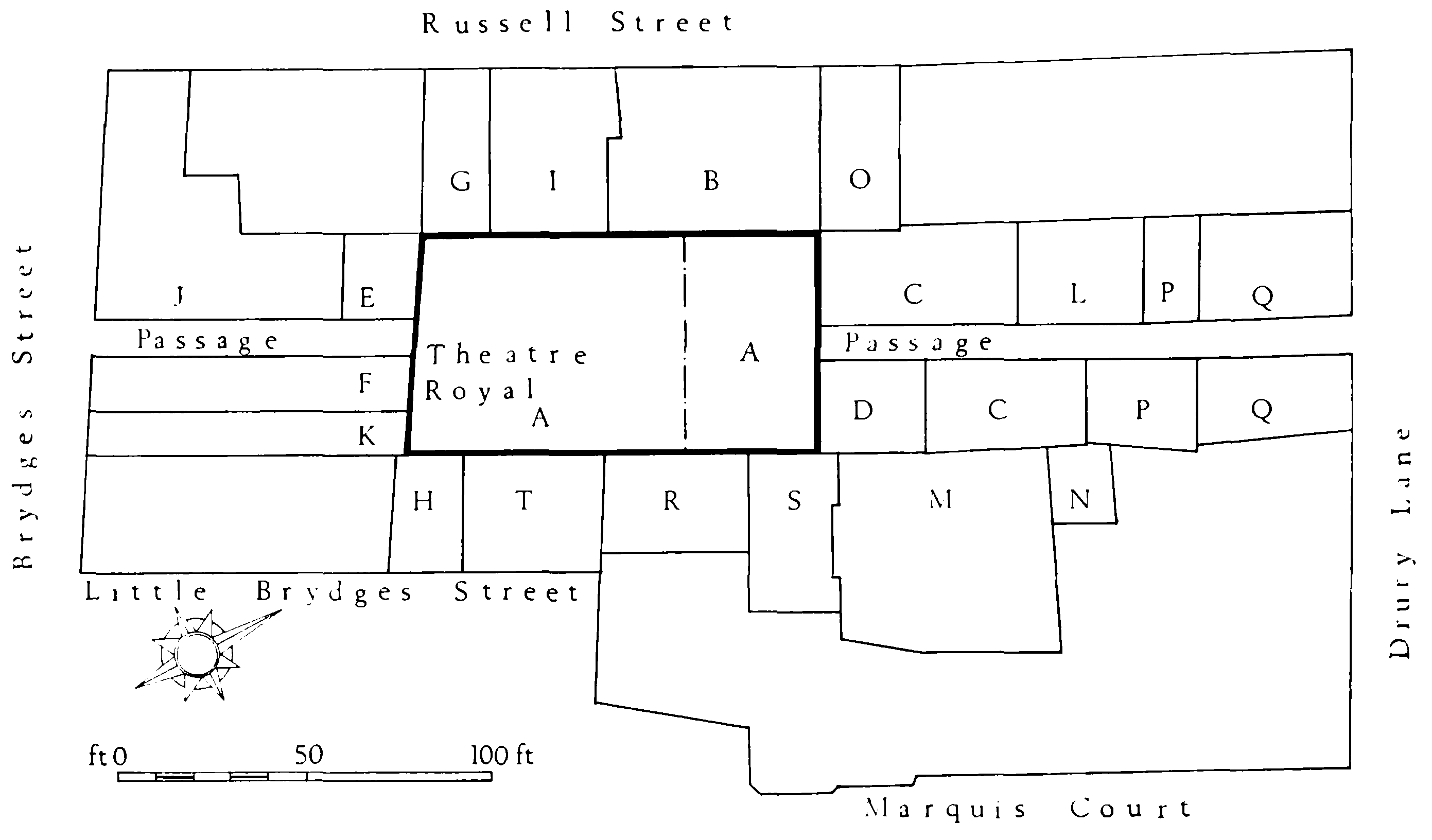
Fig. 2. Site plan, 1748–78. Based on leases and plan of 1778 in Greater London Record Office. The broken line denotes the position of the frontispiece, 1778. By 1778 the whole of the passage from plot A to Drury Lane had been built over
In 1683 the actors were ejected from the scene room for failure to pay the rent, and the property (rebuilt after the fire of 1672) was then leased for nineteen years to the directors of the new united company of actors—Charles Killigrew, Charles Davenant and their principal associates. (fn. 24) In 1714 when William Collier, then the sub-lessee and chief manager of the theatre, held the lease of the scene room, it was described as the 'Great Scene Room' (? E on fig. 1) and the 'Little Scene Room' (fn. 25) (? F on fig. 1). The plan of c. 1748 reproduced on Plate 6 marks plots E and F as 'taken into the playhouse'. It also marks plot G on fig. 1 as the Green Room, which could be entered from either Little Brydges Street or Vinegar Yard.
Between 1748 and 1791 there was considerable piecemeal expansion of the site of the theatre. In 1748 the fourth Duke of Bedford renewed the ground lease of the playhouse itself (A on fig. 2) to David Garrick and James Lacy for a term of twenty-one years commencing at Christmas 1753. This new lease also included a number of adjoining buildings and houses: three in Russell Street against the north side of the theatre (B), of which the one at the east end was turned into a side entrance to the theatre; six houses in the passage to Drury Lane (C), including a hall to the theatre and the Sparrow's Nest (D); and three houses in the passage to Brydges Street (E and F). These buildings were let for a variety of terms according to when the current leases fell in, but the lease of the whole site was calculated to expire on 25 December 1774; the rent increased as the various buildings became vacant, reaching the maximum of £210 per annum on 25 December 1759. (fn. 26)
It was probably about this time, 1748–9, that Garrick and Lacy also acquired the leases of two properties adjoining the theatre which did not belong to the Duke of Bedford. These were a house in Russell Street (G on fig. 2) which is shown on the plan of c. 1748 (Plate 6) as containing a passage to the playhouse and was probably used for the new passage to the boxes made in 1750: and a house in Little Brydges Street (H on fig. 2) which is shown on the same plan as containing two passages into the theatre. (fn. 27)
In 1749 the Duke of Bedford granted Garrick and Lacy a lease of two more houses in Russell Street (I on fig. 2) between those they already had. (fn. 28) Three years later, in 1752, a new passage into the theatre from Brydges Street (F) was opened on the south side of the old passage. (fn. 29) In 1753 Garrick and Lacy obtained a lease of the Rose Tavern on the corner of Russell Street and Brydges Street (J on fig. 2) from the Duke of Bedford. (fn. 30)
In 1762 Garrick and Lacy decided to make some substantial alterations to the playhouse and applied to the fourth Duke of Bedford's son, the Marquess of Tavistock, who then possessed a life interest in the property, for a renewal of the lease. The new lease, dated 24 March 1762, (fn. 31) extended the site at either end (K and L on fig. 2) and granted a reversionary term of twenty-one years from 25 December 1774 of the theatre and all other buildings leased by the Bedfords to Lacy and Garrick in or since 1748 (A—J excluding G and H on fig. 2). The fine was £2,100 and the new rent £350 per annum from Lady Day 1775.
By this time the Dukes of Bedford were occasionally buying back the fee farms of some of the property which their predecessors had sold in the seventeenth century, and in 1764 the plot marked M on fig. 2, which had been sold in 1642, was repurchased. (fn. 32) Two years later the Marquess of Tavistock leased it to Garrick and Lacy for a term expiring at Christmas 1795—the date of expiry of all the other plots in lease to them. (fn. 33) This site was later used for scene rooms and a 'Lamp lighting' room. (fn. 34) Later in the same year, 1766, Garrick and Lacy also acquired from Jeremiah Percy, plumber, a sub-lease of the adjoining small plot marked N. (fn. 35)
In 1775–6 the theatre was altered and embellished to the designs of Robert Adam, and these improvements occasioned the acquisition of yet more property. In 1775 Garrick bought the fee farm of the Ben Jonson's Head Tavern in Russell Street (fn. 36) (plot O on fig. 2), 'for the Better accommodation of the said Theatre' and the joint use of himself and Willoughby Lacy. This house was used as a box-office lobby. (fn. 37)
The most striking of the alterations made in 1775 was the erection in Brydges Street of an imposing facade (Plate 8) to the two existing parallel passages which gave access to the theatre. On either side of these passages were situated the 'Chair Room', the treasurer's office and a number of lobbies. Some of the more recently acquired buildings surrounding the theatre itself may also have been renovated at this time. (fn. 34)
The plan of 1778 reproduced on Plate 7 and redrawn on fig. 3 shows the theatre divided into three parts—the west part, 'from Frontispiece to outside of West Wall, which includes Boxes, Pitt and Gallerys, with the Orchestra and part of the Stage before the Curtain'; the middle part, from 'the Shutter home to the Frontispiece'; and the east part, 'with the two Closets home to the Shutter'. This plan also shows that the theatre had been considerably lengthened since its original erection in 1672–4, for the east wall now stood some 100 feet east of the site of Wren's east wall. Some of this lengthening had probably taken place before 1775—perhaps in 1762.
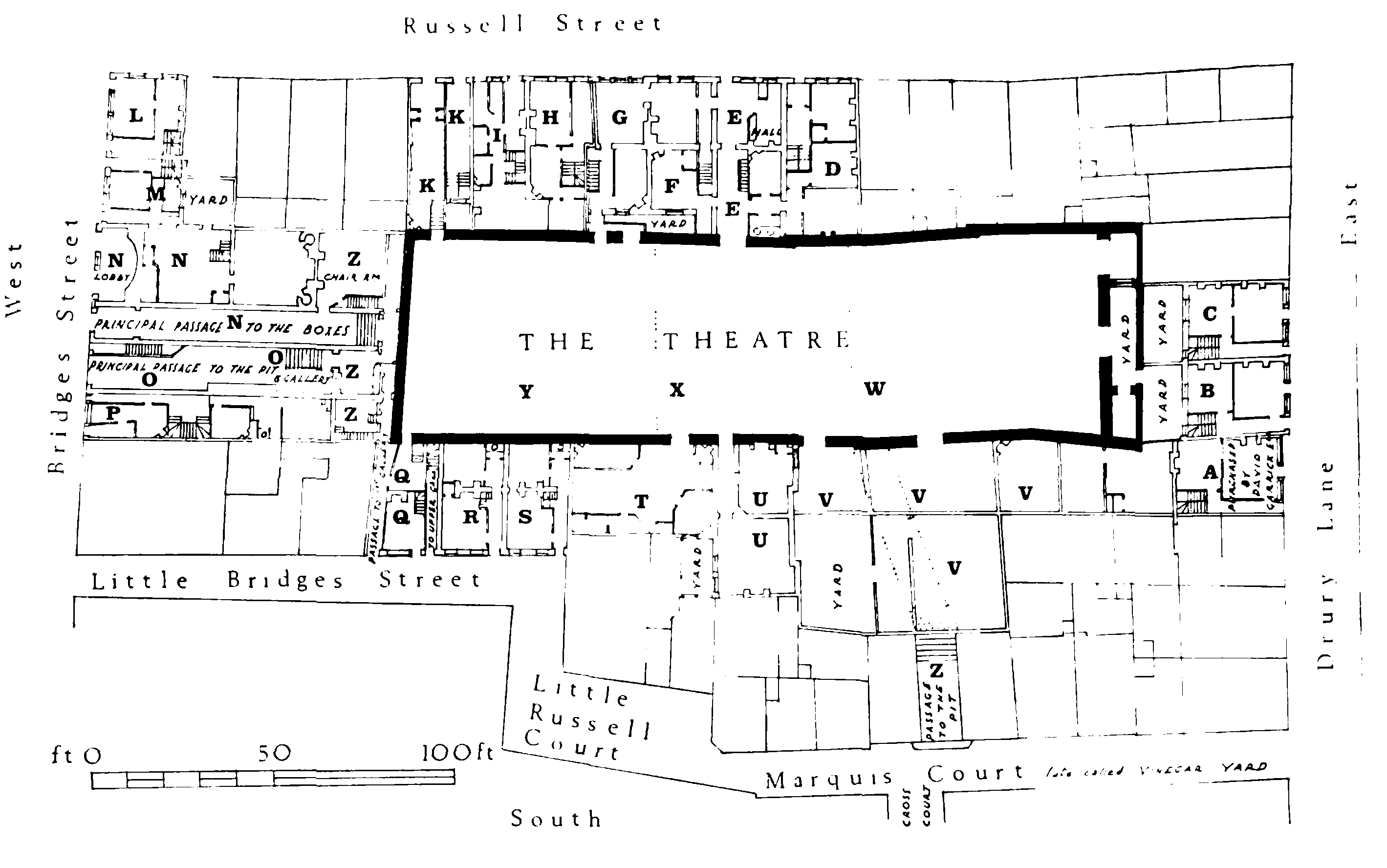
Fig. 3. Site plan, 1778. Redrawn from the plan reproduced on Plate 7
A William Smith now Hughes, house belonging to the
Fund
B Jane Garland and Richard Brusby
C William Bayless
Russell Street
D Thomas Fosbrook. Box Book keeper
E Hall and Entrance in the Theatre
F William Kirk. Housekeeper
G Ditto and dressing-rooms over
H William Pope
I Yearley Waterer
K Francis Heath with the Box passage
Bridges Street
L Richard Newton
M Ditto next
N John Harrison and the principal passage to the Boxes
O Inmates over and the principal passage to the Pit and
Gallery
P Thomas Parsonage
Little Bridges Street
Q Charlotte Jones with passages to the First and Upper
Gallerys
R John Aickin
S Isaac Abrahams
T Property Room, Matted room and Carpenters Hall
Building
U Old Green room and New Green room Building
V Scene rooms and Lamplighting room
The Theatre
W East part with the two Closets home to the Shuttter
X Middle part from the Shutter home to the Frontispice
Y West part from Frontispiece to outside of West wall,
which includes Boxes, Pit and Gallerys with the
Orchestra and part of the Stage before the Curtain
Z Treasury. Gallery Staircases and Lobbys from the West
Wall of Theatre home to the Rose Tavern and long
Passage to the Pit from Marquis Court
(Inscribed) September 1778. J Hele
Charlotte Street
Pancras
Pencil note written on plots B and C: 'This Plan is certainly wrong as far as relates to Mr. Macnamara, it not shewing
it correctly. Ground is not in the Shape here represented. A. R. Brown March 1813.'
In May 1776 the site was again extended eastwards towards Drury Lane. This extension was more difficult to achieve because the freehold of the land (P and Q on fig. 2) between Drury Lane and that leased by the Marquess of Tavistock to Garrick and Lacy in 1762 did not belong to the Duke but to one Arthur Jones. (fn. 1) On 1 May 1776 Garrick and Lacy leased to Jones the passage, which had been excepted out of the fifth Earl of Bedford's original grant of the fee farm in 1656, and which still bisected plots P and Q. On 2 May 1776 Jones leased to the Duchess of Bedford (guardian of her grandson, the fifth Duke, who was still a minor) the plots marked P, together with the passage between them, which he had just acquired from Garrick and Lacy. On the following day the Duchess leased the same plots (P), and the passage between them, back to Garrick and Lacy for a term expiring at Christmas 1795. (fn. 39) The proprietors of the theatre no longer required the passage from Drury Lane into the theatre, 'a more commodious Passage' having recently been made to it from Marquis Court (see Plate 7). Part of plot P was used for two outbuildings one of which housed the fire engine, and the other was intended to store the organ used in oratorios. (fn. 40)
In December 1776 Garrick and Lacy purchased the leases of the two adjoining plots to the east, marked Q. The ground between the two halves of plot Q was described as 'Formerly old Passage to said Theatre . . . with all Tenements . . . afterwards Built or erected Thereon.' (fn. 41)
Meanwhile, the lease of the enlarged 'Great Scene Room' (marked R on fig. 2), and of the 'Little Scene Room' (S), the latter now known (probably after rebuilding) as the 'New Scene Room', had been renewed in 1771 to Garrick and James Lacy by Samuel Wegg, the owner of the fee farm. This lease also included both the adjoining plot to the west, marked T, where stood two houses in Little Brydges Street, (fn. 42) and the house on plot H. It is not known when the houses on plot T first came into Garrick and Lacy's possession.
Between 1776 and 1791 no additions were made to the site of Drury Lane Theatre. By the latter year both Drury Lane and Covent Garden theatres had become too small to provide for the needs of the increasing London audience and the demand for a third London theatre was growing. Rather than yield to this attack upon his monopoly position Sheridan, who was now the principal proprietor of Drury Lane, sought to forestall the opposition by building a very much larger theatre. For this he needed a bigger site, but even after the various additions made to the site since 1748 the basic difficulty remained—the theatre was still largely hemmed in by ground not belonging to the Dukes of Bedford. It was clearly desirable that the site of the new theatre should not be in several separate ownerships, and accordingly in 1789–90 Sheridan requested the fifth Duke of Bedford to purchase those pieces of ground which would be required and to grant a new ground lease of the enlarged site so formed. (fn. 43) The Duke agreed to co-operate, and by the summer of 1791 he had either bought or contracted for most of the properties required. On 30 July 1791 he agreed with Sheridan and Linley that he would before Christmas 1795 grant them a ninety-nine-year lease of all the ground which they wanted. This ground is shown in fig. 4. In order to complete the unification of ownership of the site Sheridan and Linley agreed to sell to the Duke their fee farm of the Ben Jonson's Head in Russell Street (A on fig. 4), which Garrick had bought in 1775. (fn. 2) The lease was to commence at Christmas 1795, the date of expiry of the current ground lease of the site of the existing theatre. (fn. 45) On 6 August 1791 the fifth Duke granted Sheridan and Linley a short lease expiring at Christmas 1795 of those pieces of ground of which the conveyances to him had by then been completed. (fn. 46)
In the event the Duke did not succeed in purchasing part of one plot in Drury Lane which he had covenanted to buy. The purchase of the freehold of plot B on fig. 4 was held up by legal difficulties, but as this ground was occupied by old houses in Drury Lane whose site was not immediately required for the rebuilding of the theatre, this delay had no great significance. Ultimately plot B was bought by the theatre proprietors' trustees in 1807, and sold by them to the sixth Duke in 1812. (fn. 47)
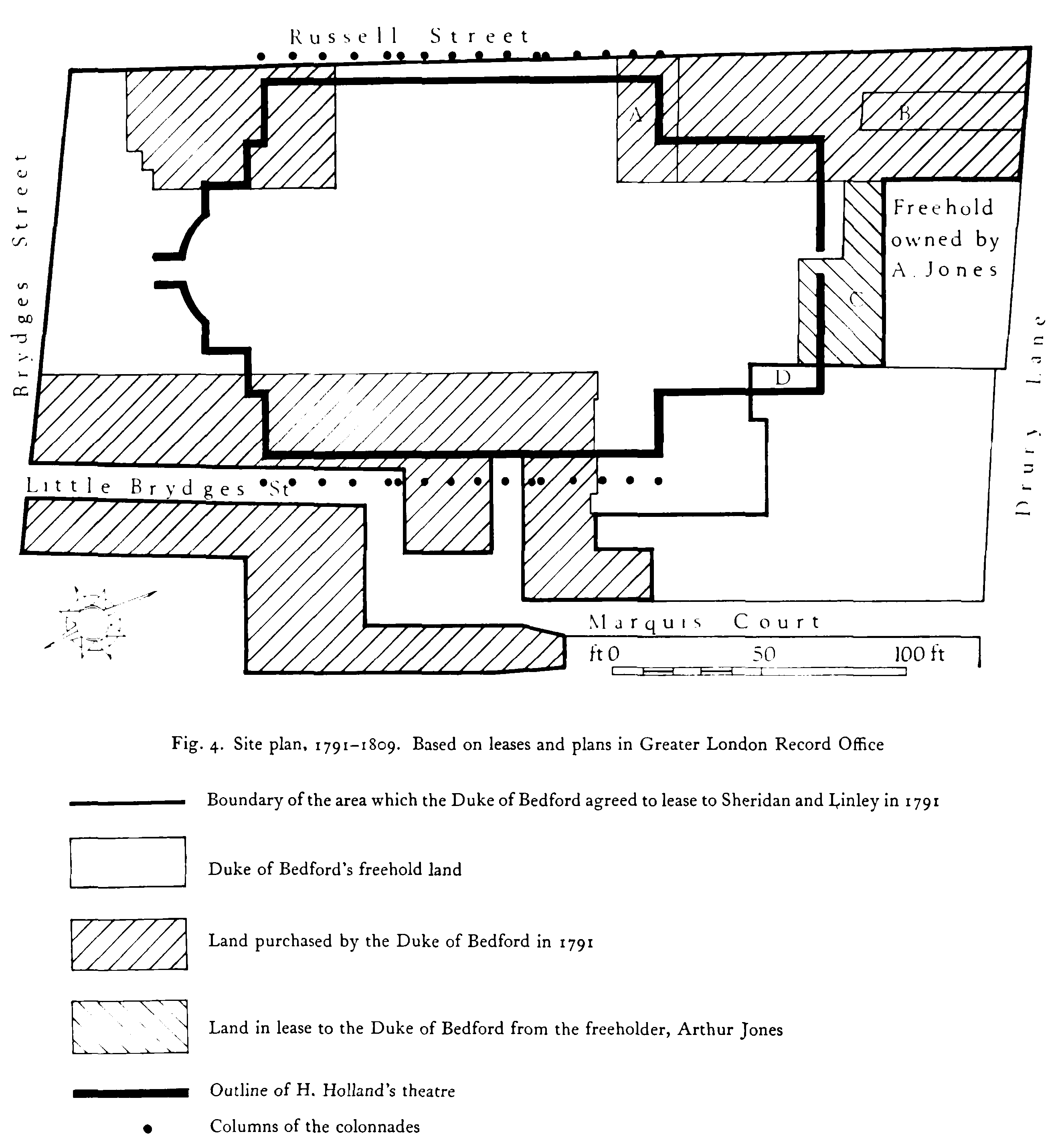
Fig. 4. Site plan, 1791–1809. Based on leases and plans in Greater London Record Office
Boundary of the area which the Duke of Bedford agreed to lease to Sheridan and Linley in 1791
Duke of Bedford's freehold land
Land purchased by the Duke of Bedford in 1791
Land in lease to the Duke of Bedford from the freeholder, Arthur Jones
Outline of H. Holland's theatre
Columns of the colonnades
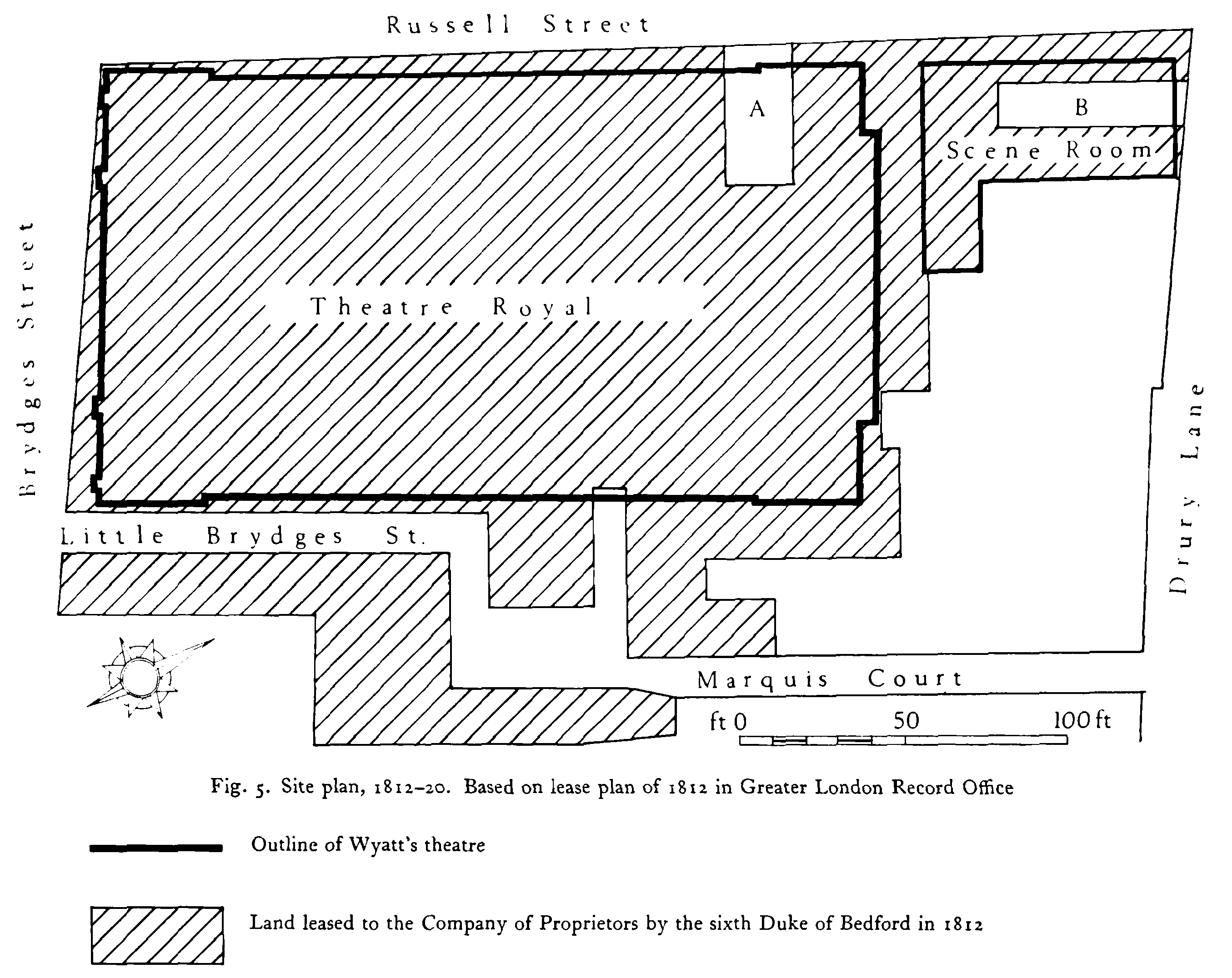
Fig. 5. Site plan, 1812–20. Based on lease plan of 1812 in Greater London Record Office
Outline of Wyatt's theatre
Land leased to the Company of Proprietors by the sixth Duke of Bedford in 1812
The small plot D within the walls of the theatre but outside the boundary of the agreed site was already held by Sheridan and Linley under a lease granted by Jeremiah Percy to Garrick and Lacy in 1766 (N on fig. 2)
In the agreement of 30 July 1791 Sheridan and Linley covenanted to rebuild the theatre and to erect new houses on those parts of the site which were not occupied by the theatre itself. (fn. 3) The agreement states that these building works were to be carried out in accordance with the designs prepared by Henry Holland and which had already been approved by the fifth Duke. (fn. 41) Shortage of money prevented Sheridan and Linley from fulfilling the whole of their covenant, and the land at the corner of Russell Street and Brydges Street remained vacant until after the burning of the theatre in 1809 (Plate 21b). Because of their failure to meet their obligations the Duke refused to execute the new ground lease which he had undertaken to grant to Sheridan and Linley, though he continued to receive his rent under the terms of the agreement of 30 July 1791.
The old playhouse closed its doors on 4 June 1791, and the first performance in the new house took place on 12 March 1794.
Fig. 4 shows that Holland's theatre as actually built was not completely restricted to land owned by the fifth Duke of Bedford, for a small piece of the stage was built upon ground which had been leased to the Duchess of Bedford in 1776 by the then owner of the freehold, Arthur Jones (see page 35). According to Holland's nephew, Henry Rowles, writing in 1815, this mistake occurred because Holland had been misled by the plan of 1778 of Garrick's theatre (reproduced on Plate 7), which purported to show all the ground then occupied by the theatre as being in the ownership of the Duke of Bedford. Even the lawyers were confused, for in the agreement of 30 July 1791 the Duke had covenanted inter alia to lease plot C on fig. 4 for a term expiring in 1894, although his own term in it only extended to 1844. In 1800 more of the land owned by Jones was used for the erection of a large carpenter's shop, measuring 60 feet by 20 feet, at the east end of the theatre. This was built by Mr. John Jackson of Pimlico, upon a platform about ten feet above the ground and on the same level as the stage, for which it was sometimes used as an extension. (fn. 49)
As the Duke of Bedford held the ground lease of plot C on fig. 4 from the freeholder, Arthur Jones, the existence of this divided ownership of the freehold of the site of the theatre did not present any problems until the destruction of Holland's theatre by fire on the night of 24 February 1809. But when the present Theatre Royal, Drury Lane, was built in 1811–12, to the designs of Benjamin Dean Wyatt, no part of it stood on Jones's land, which was now owned by a Mr. Macnamara. The latter was left with the ruins of the now useless carpenter's shop and a small part of the old theatre, and he therefore claimed damages for contravention of the lease against his tenant, the sixth Duke of Bedford. A jury in the Court of King's Bench found for the plaintiff and in 1815 the Duke's steward reported that £1,100 had been paid to Macnamara for the damages awarded to him. (fn. 50)
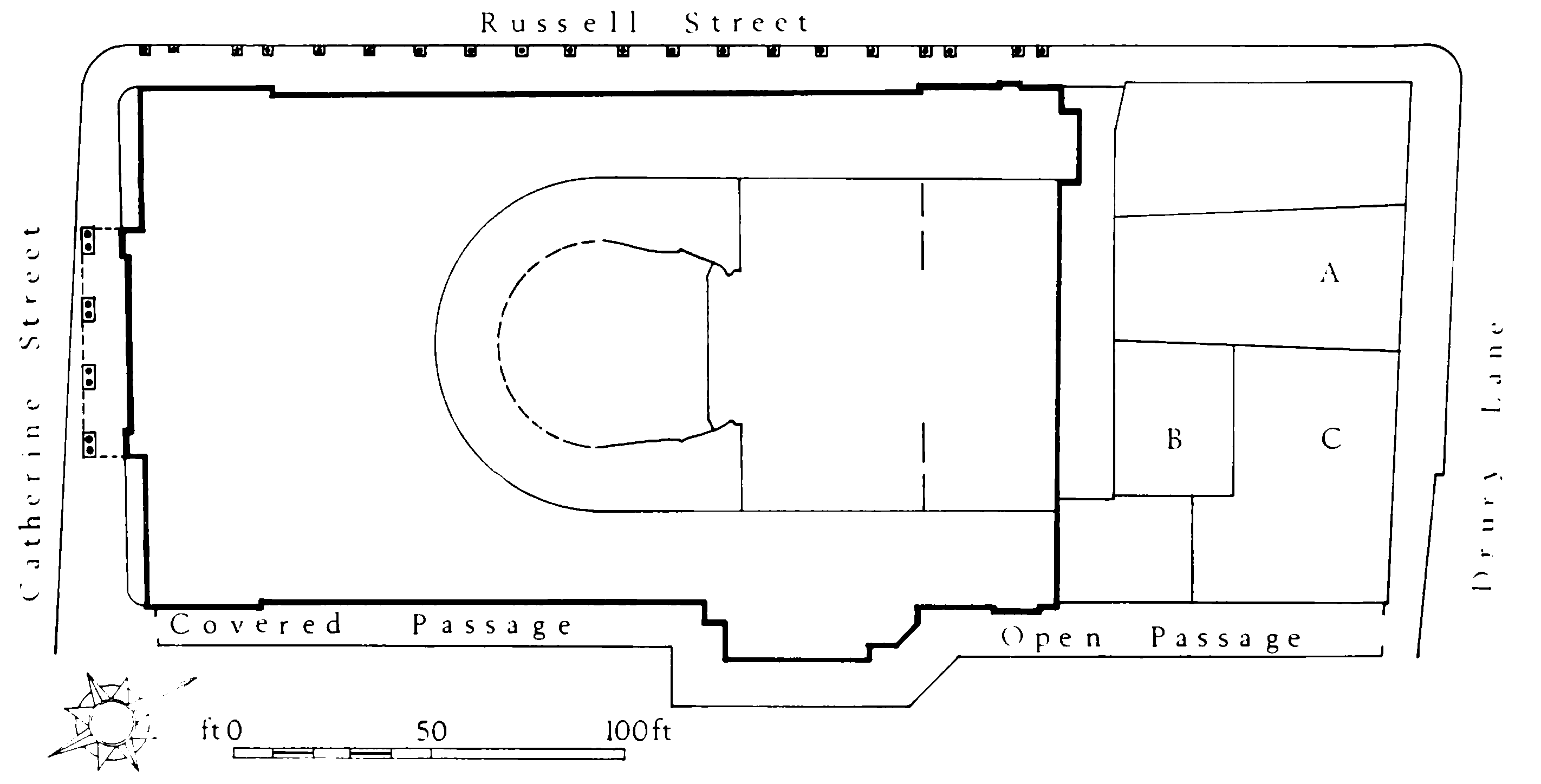
Fig. 6. Site plan, 1903. Based on lease plan of 1903 in Greater London Record Office
The new theatre was already nearly completed when, on 11 July 1812, the sixth Duke of Bedford granted a new ground lease to the jointstock company, the Theatre Royal Drury Lane Company of Proprietors, which had been responsible for the rebuilding, for a term expiring at Christmas 1894. (fn. 51) (fn. 4) The ground granted by this lease is shown on fig. 5. The plot there marked A, formerly the Ben Jonson's Head (the freehold of which had been bought from Sheridan by the Company of Proprietors and sold to the Duke of Bedford in March 1814) was the subject of a separate lease made to the company in July 1814, also for a term expiring at Christmas 1894. (fn. 55) The plot marked B on fig. 5 (the freehold of which had been bought by the theatre proprietors' trustees in 1807 and sold to the Duke in 1812) was also the subject of a separate lease to the company in January 1813, again for a term expiring at Christmas 1894. (fn. 56) In 1814 the present two-storey building had been erected on this and the adjoining ground at the corner of Russell Street and Drury Lane; it was originally used as a scene room. (fn. 57)
On the south side of the theatre there remained some vacant land between the theatre and the north side of Little Brydges Street and Marquis Court (formerly Vinegar Yard). In 1824 this was enclosed by a wall and iron railings and a number of outbuildings were subsequently erected there. (fn. 58) The houses on the south side of Little Brydges Street and Marquis Court which had been included in the lease of 1812 were sublet to supplement the company's income. (fn. 59) When the ground lease of 1812 expired in 1894 the new lease of the theatre granted by the eleventh Duke of Bedford did not include any property on the south side of Little Brydges Street.
The final alterations to the curtilage of the theatre were made in 1897–1903. As part of his agreement with the eleventh Duke in 1897 (fn. 60) Arthur Collins, the lessee, undertook to make a narrow private passage extending along the whole of the south side of the theatre and to enclose it with the high wall which now separates this passage from the blocks of flats later built on the north side of the extension of Tavistock Street. In compensation for the resultant loss of some buildings on the south side of the theatre Collins was given permission to rebuild the property room and paint-shop (A and B on fig. 6) at the east end of the theatre, with a front to Drury Lane. This agreement was subsequently taken over by the present company, Theatre Royal Drury Lane Limited, (fn. 61) which completed the work and in December 1900 obtained from the Duke a lease embodying these alterations to the site. (fn. 62) At the same time the company also obtained a separate lease of Nos. 67–70 (consec.) Drury Lane, (fn. 63) C on fig. 6, which had been rebuilt in 1899–1900 to the designs of P. E. Pilditch. (fn. 64) In 1903 both these leases were surrendered and the Duke granted a new lease of the whole site for a term expiring in 1977. (fn. 65) The company thus obtained possession of all the premises between the east end of the theatre and Drury Lane, and thereby concluded the process of piecemeal enlargement of the site which had been going on ever since the building of the first theatre there in 1662–3.