Survey of London: Volumes 33 and 34, St Anne Soho. Originally published by London County Council, London, 1966.
This free content was digitised by double rekeying. All rights reserved.
'Soho Square Area: Portland Estate, No. 1 Greek Street, The House of St. Barnabas-in-Soho', in Survey of London: Volumes 33 and 34, St Anne Soho, ed. F H W Sheppard (London, 1966), British History Online https://www.british-history.ac.uk/survey-london/vols33-4/pp88-106 [accessed 30 April 2025].
'Soho Square Area: Portland Estate, No. 1 Greek Street, The House of St. Barnabas-in-Soho', in Survey of London: Volumes 33 and 34, St Anne Soho. Edited by F H W Sheppard (London, 1966), British History Online, accessed April 30, 2025, https://www.british-history.ac.uk/survey-london/vols33-4/pp88-106.
"Soho Square Area: Portland Estate, No. 1 Greek Street, The House of St. Barnabas-in-Soho". Survey of London: Volumes 33 and 34, St Anne Soho. Ed. F H W Sheppard (London, 1966), British History Online. Web. 30 April 2025. https://www.british-history.ac.uk/survey-london/vols33-4/pp88-106.
In this section
No. 1 Greek Street: The House of St. Barnabas-in-Soho (fn. 1)
In March 1678/9 Richard Frith and William Pym leased the house on this site to Cadogan Thomas of Lambeth, timber merchant. The house was described as 'All that messuage or Tenement being A greate Corner house abutting North upon A new Square called Fryths Square'. The site included ground laid out as a garden behind the house and other land set aside for the erection of coach-houses and stables, together with the free use of 'A certaine Pond or receptacle for Water' near the house. The lease to Cadogan Thomas was for fifty-one years at a peppercorn rent for the first year (evidently to allow him time to complete the house) and at £20 per annum rent thereafter. There was an additional rent of ten shillings a year to be paid towards the upkeep of the pales, fountain and garden in the middle of Soho Square. (fn. 3)
The names of the first occupants are unknown until 1689, when in an agreement of that year for the tenancy of the adjoining No. 26 Soho Square, a 'Roome next ye Lord Crews Garden' is mentioned. It is clear from the parish ratebooks for 1691 that Thomas Crew, second Baron Crew, was then the occupant of the house at the eastern corner of Greek Street and the square. (fn. 4) Lady Cavendish lived here from at least 1703 to 1717; other inhabitants include the Countess of Fingall, widow of the fourth Earl, 1718, and William Archer, of Coopersale, Essex, M.P., 1719–38. (fn. 5)
The house which Frith and Cadogan Thomas had built is shown in the anonymous engraving reproduced on Plate 68b. It then appears as three storeys high, five windows wide to the square, with the entrance in the second bay from the east, and with three dormer windows in the steeply pitched roof.
In April 1740 William Archer's widow, Susannah, sold the lease of the house to John Smither(s) of St. Marylebone, bricklayer, for £550. (fn. 6) By May 1742 he had demolished the house, (fn. 7) which he had already mortgaged for £330, (fn. 8) but by October 1743 he had been declared bankrupt. (fn. 9) His chief creditors were William Baker of St. George's, Hanover Square, and Thomas Scott of Fulham, both brickmakers, and Thomas Woodward of St. Marylebone, timber merchant. (fn. 10)
The erection of the new house was undertaken by Joseph Pearce of St. James's, bricklayer, with the assistance of George Pearce of St. Martin's, plumber, who evidently supplied the capital. In the summer of 1744 George Pearce, with the consent of Smither's creditors, lent £2,000 to Joseph Pearce on the security of the property, (fn. 11) and in May 1745 he advanced another £1,000. (fn. 12) By December 1746 the Pearces had evidently purchased the lease from Smither's creditors, for in that month they surrendered it to the ground landlord, the Duke of Portland, who granted a new lease to Joseph Pearce. This lease, which was for eighty-seven years from Michaelmas 1746, was granted in consideration of a fine of £110 and of Joseph Pearce's expense in building the carcase of the new house; the ground rent was £21 10s. per annum plus a garden rent of £1. The ground plan of the house as built by Pearce is drawn in the margin of the lease, and a comparison with the present-day plan shows that no significant alterations have been made. (fn. 13)
At this period Joseph Pearce was also concerned in the erection of two small houses fronting Greek Street (Nos. 2 and 3) on the southern part of the original site of No. 1. They were probably built in carcase in 1744 and first occupied in 1748 (see page 172). In December 1747 he mortgaged the mansion at No. 1 to George Pearce for £3,400. (fn. 14) It remained empty and in July 1753 Joseph Pearce conveyed his interest in it to the executors of the now-deceased George. (fn. 15) The house was still unoccupied, but in October 1754 the executors sold the lease to Richard Beckford, (fn. 16) a member of a prominent and wealthy family of West Indian planters, and a brother of Alderman William Beckford, who then lived at No. 22 Soho Square.
Richard Beckford had previously lived on his plantations in Jamaica. He had been a member and acting Speaker of the island's House of Assembly but in November 1753 he retired from office and 'acquainted the house that he soon intends to leave the island for the establishment of his health'. (fn. 17) He was still in Jamaica during the general election of April-May 1754 when he was chosen as a member for Bristol (his campaign being conducted for him by his brother William) (fn. 18) but he must have arrived in England shortly afterwards. By June 1754 he had evidently begun to negotiate for a lease of No. 1 Greek Street, (fn. 19) which he finally acquired in the following October for £2,500. (fn. 13)
At Christmas 1754 Beckford moved into the house, (fn. 20) the rateable value of which had been doubled from £120 to £240 during the second half of this year. It seems likely from the structural evidence (discussed below) that the present elaborate interior was not the work of the two Pearces, who may indeed have left the building unfinished. The probability, therefore, is that Beckford was responsible for these finishings, although the documentary evidence is not absolutely conclusive. Neither Beckford's own papers, nor those of his agent, Captain Thomas Collett, who negotiated the purchase of the house and paid the parish rates, appear to have survived.
Towards the end of 1755 Beckford departed for the Continent, probably for the sake of his health. He made his will in France on 22 December 1755 and died at Lyons on 24 January 1756. (fn. 21) In April 1756 Thomas Collett, now one of Beckford's trustees, sold the house and its furnishings to (Sir) James Colebrooke for £6,300. (fn. 2) The conveyance recited that the previous owner had 'laid out and expended several sums in rebuilding, altering and improving the said messuage and with furnishing the same with useful and ornamental furnishings'. (fn. 22) Colebrooke lived here until his death in 1761, when his executors sold the house for £4,000. (fn. 23)
The purchaser was George Cruickshanks of Hitchin, esquire, who lived here until 1765. (fn. 24) The next occupant was William Mowbray, esquire, from 1766 to 1808. (fn. 5) There were then a number of intermediate owners until No. 1 Greek Street was taken by the Westminster Commissioners of Sewers in 1811. (fn. 25) The house was used by them and later by the Metropolitan Board of Works (their successors after 1855) as offices, and during this period a number of additions were made to the back premises to provide more accommodation. (fn. 26)
In August 1861 the Metropolitan Board of Works, in anticipation of its move to new offices in Spring Gardens, sold the house to the representatives of the House of Charity for £6,400. (fn. 27)
The House of Charity, now known as the House of St. Barnabas-in-Soho, was established in 1846 for the relief of the destitute and the houseless poor in London. Its two principal objects were 'to afford temporary relief to as many destitute cases as possible, and to have a Christian effect on the poor population'. The first honorary secretaries were Dr. Henry Monro, physician to Bethlehem Hospital, and Roundell Palmer, later first Earl of Selborne and Lord Chancellor; the first list of 164 associated members of the charity included W. E. Gladstone and Frederick Denison Maurice, who later inaugurated the Working Men's College in Red Lion Square. The charity's first house was at No. 9 Rose (now Manette) Street, which was opened on 11 January 1847. It remained here until its removal to No. 1 Greek Street in 1862. (fn. 28)
Little alteration was made to the existing building, but ambitious plans were drawn up by Joseph Clarke, an architect associated with the work of the charity, for the erection of a chapel, refectory, dormitories and cloisters, to be built behind the house and backing on to Rose Street. Of this scheme, only that for the chapel was ever realized. (fn. 29) The builder employed was Edward Conder and work on the chapel began in June 1862. The nave was completed early in the following year and the builder then estimated that it would cost another £1,013 to finish the sacristy and the four circular apses. This sum did not include the cost of the glass and carving nor the decoration and completion of the interior. For these items another scheme was elaborated by Clarke in July 1863. This envisaged an interior incorporating shafts of serpentine and green Irish and Devon marbles, mosaics, frescoes of the Passion 'in the new water glass process', rich hangings, painted memorial windows and arcades decorated with inscriptions mixed with foliage in wrought metal. Externally the new building was to be crowned by a flèche, to be erected by Mr. Skidmore at a cost of £380. (fn. 30) The chapel was ready for use in 1864, although its embellishment may not have been completed by that date. It was possibly to meet some of the building and decorating costs that three chimneypieces from the house were sold for £350. (fn. 31)
Restoration of the interior of the house was commenced in 1958, the main stair hall and the principal room on the ground and first floor being completed in 1960. Further work was undertaken in 1964 with the restoration of the east front room on the ground and first floors, the ground-floor lobby and the first-floor south back room. (fn. 32)
Architectural Description
The house has a plain and, for its period, curiously old-fashioned exterior (Plate 78a, fig. 16), the design of which seems hardly to have felt the influence of the Palladian ideas which were well established by the 1740's and are evident in the internal finishings. A conceivable explanation is that the builder was trying to match his front to those already existing in the square, for Sutton Nicholls's view of c. 1727 (Plate 68a) suggests that at that date house-fronts of a similar pattern were still predominant.
The house contains a basement, three storeys and a garret, with fronts of purple-red brick to Soho Square and Greek Street, four and five windows wide respectively. The windows have flat gauged arches of the same colour and contain barred double-hung sashes in frames of which only the margins are exposed, these being set within plastered reveals. The sashes are mostly nineteenth-century replacements, and probably the only original ones are those in the basement with broad flat glazing-bars. Above the basement, ground and second storeys are raised bandcourses, the first in stone and the other two in brick, while in the second storey the sills are continued, in a rather unhappy attempt at a pedestalcourse. The doorway, set in the second bay from the south in the Greek Street front, has a stone doorcase of far more sophisticated design than the rest of the exterior, suggesting that it may have been inserted when the interior was finished (Plate 78b). It consists of a moulded architrave with a plain pulvinated frieze and a moulded cornice above, the latter supported on carved consoles. The door itself has six raised-and-fielded panels in ovolo-moulded frames, and over it is a plain fanlight. Flanking the foot of the steps is a pair of blunted stone obelisks on moulded pedestals but these probably lack their original iron lampholders and torch-extinguishers. The arearailing, almost certainly renewed, is of plain design with urn-finials to the standards.
Some other alterations have been made to the exterior of the house, probably in the nineteenth century. The upper part of the walls, starting from the bandcourse above the second storey, has been rebuilt in yellow brick, though incorporating some of the original material. At the same time, perhaps, the third-storey windows towards the square were lengthened and given plain guardrails, while the roof was rebuilt as a steeply pitched mansard covered with blue slates. Finally, a band of glazed tiles was introduced above the second-storey bandcourse, this having until recently borne the inscription House of Charity on each front. (fn. 33)
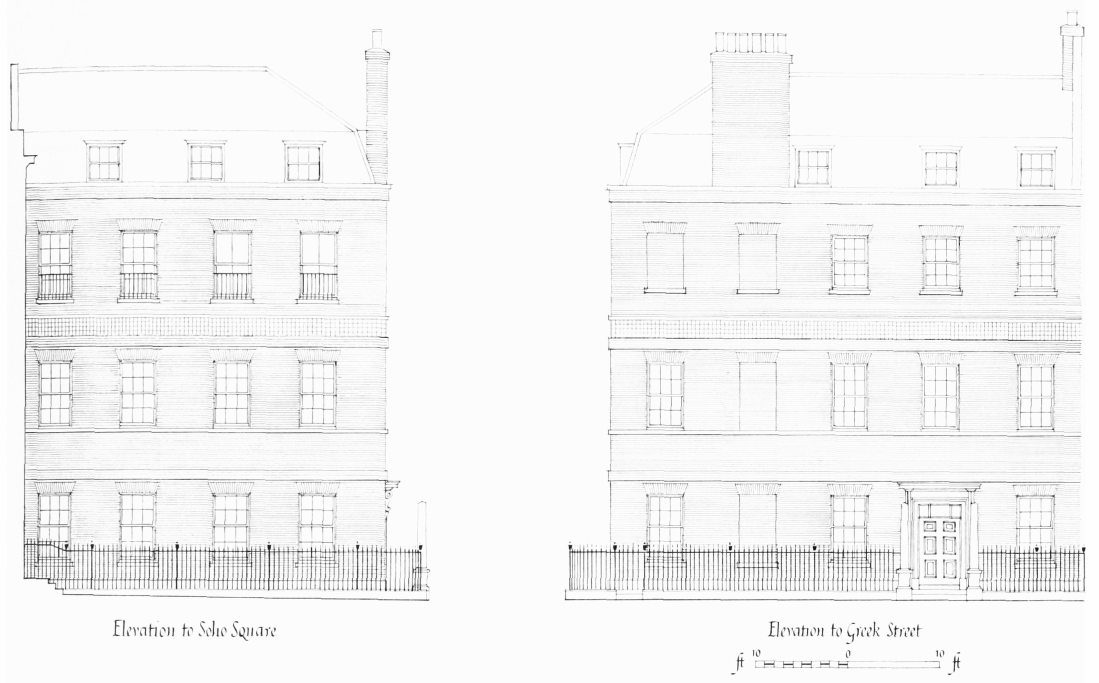
No. 1 Greek Street, elevations
The development of the site since 1744–6 is recorded in some detail by a series of plans made for the Westminster Commissioners of Sewers in the early nineteenth century. (fn. 34) The first of these, a copy of a ground-floor plan attached to the Portland lease of 1746, confirms that the layout of the house has been little altered, apart from some minor additions at the back. It is arranged on an almost square plan, a small piece being taken out of the north-east corner where it interlocks with No. 26 Soho Square (figs. 17, 18). The principal apartments are on the Greek Street frontage, the entrance and staircase hall at the southern end, and the principal room, with two windows on to the square, immediately north of it. The eastern part of the house is reached through an L-shaped lobby opening out of the north-east corner of the hall. On the north side of this is the small east front room with two windows on to the square, and on the south, beside the hall, is the secondary staircase. The third room, which lies to the east of this staircase and the lobby, is equal in size to the principal room, and, until the back wall was altered in the nineteenth century, had four windows overlooking the courtyard. On the first floor, however, this room is subdivided to make a narrow closet at the north end, and the plan of 1746 shows that originally the ground-floor room also was divided. At its north-east corner is a small projecting closet, now barely recognizable.
The plan of 1746 shows a yard, or perhaps a garden, lying behind the house on the east side, to the south of which was a stable-yard with its entrance in Rose (now Manette) Street. The stable buildings occupied the north and east sides of the yard, the east range apparently designed for eight horses and three carriages, while the north range contained three rooms of uncertain purpose divided by a passage leading into the yard. The north front of this latter range had a projecting centre and a regular series of blind windows, suggesting that it had been designed as a façade to screen the stables from the house. It is not known when these buildings were demolished, but there is a drawing of 1847 which appears to be a design for the Commissioners of Sewers' additional offices as built, and for this the site would certainly have had to be cleared. The offices consist of a small rectangular building of two storeys, now much altered, attached to the south-east corner of the house and linked to it by a corridor adjoining the back room on the east. A further corridor now links this building to the chapel, which occupies the Manette Street frontage.
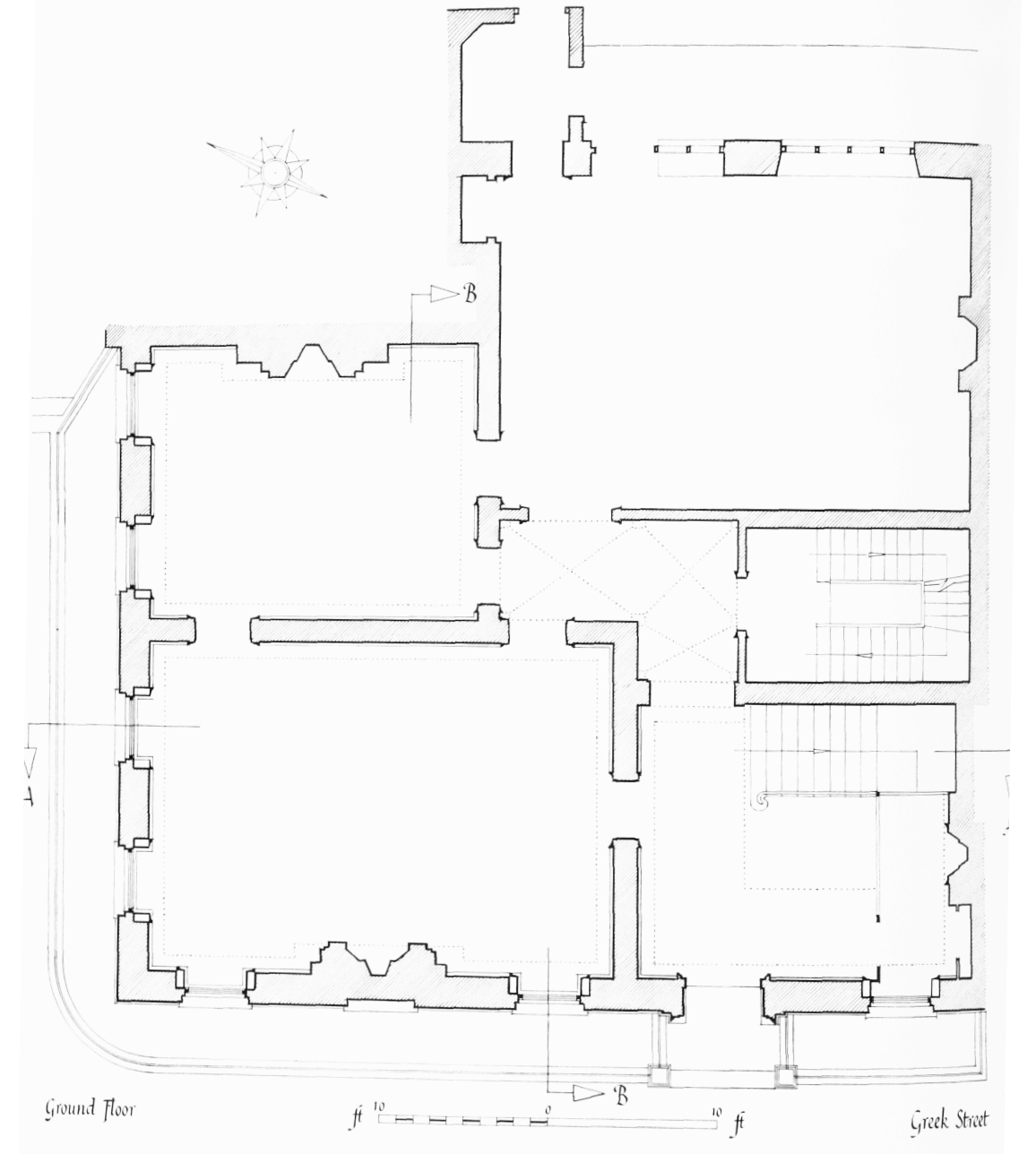
No. 1 Greek Street, ground-floor plan
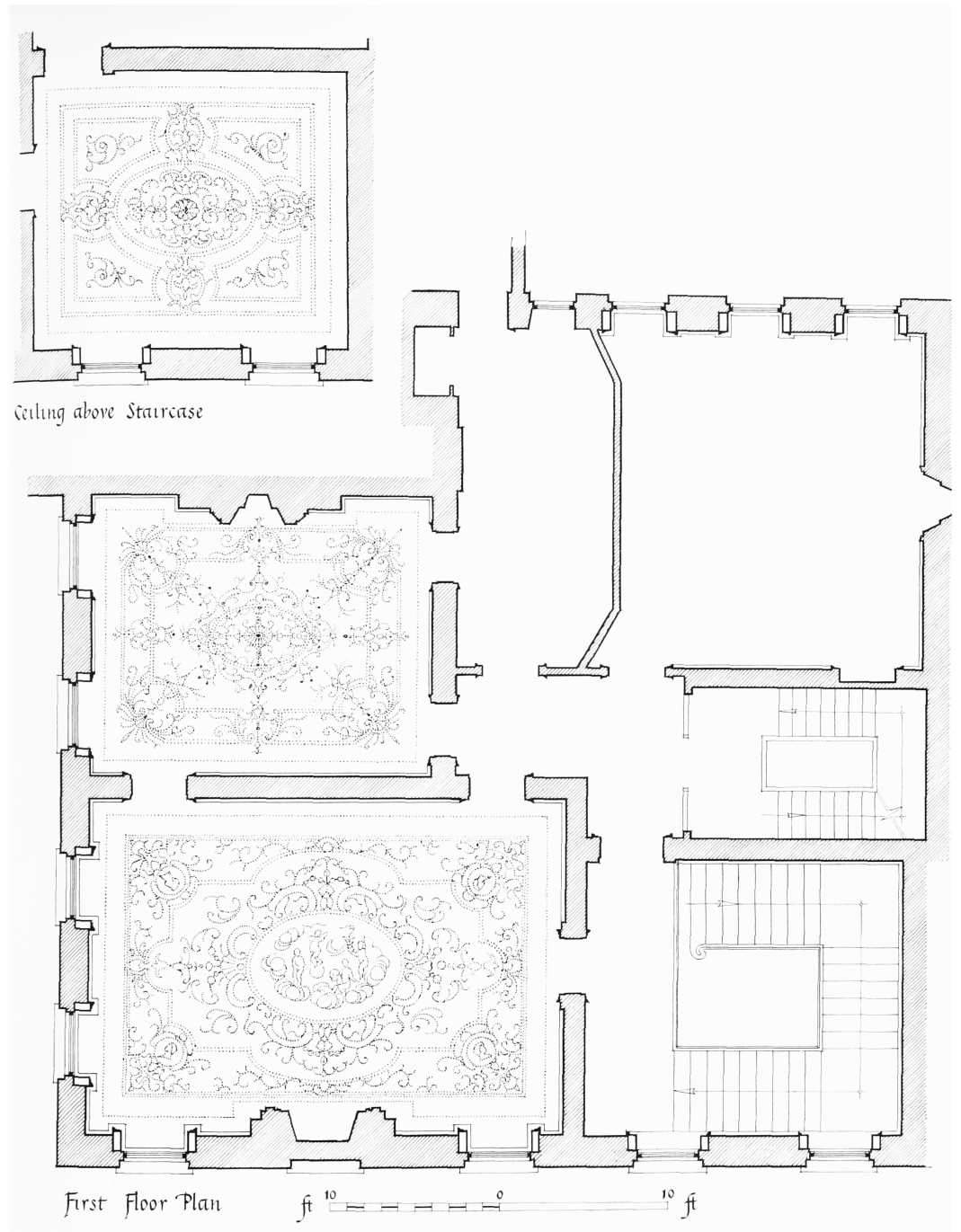
No. 1 Greek Street, first-floor plan
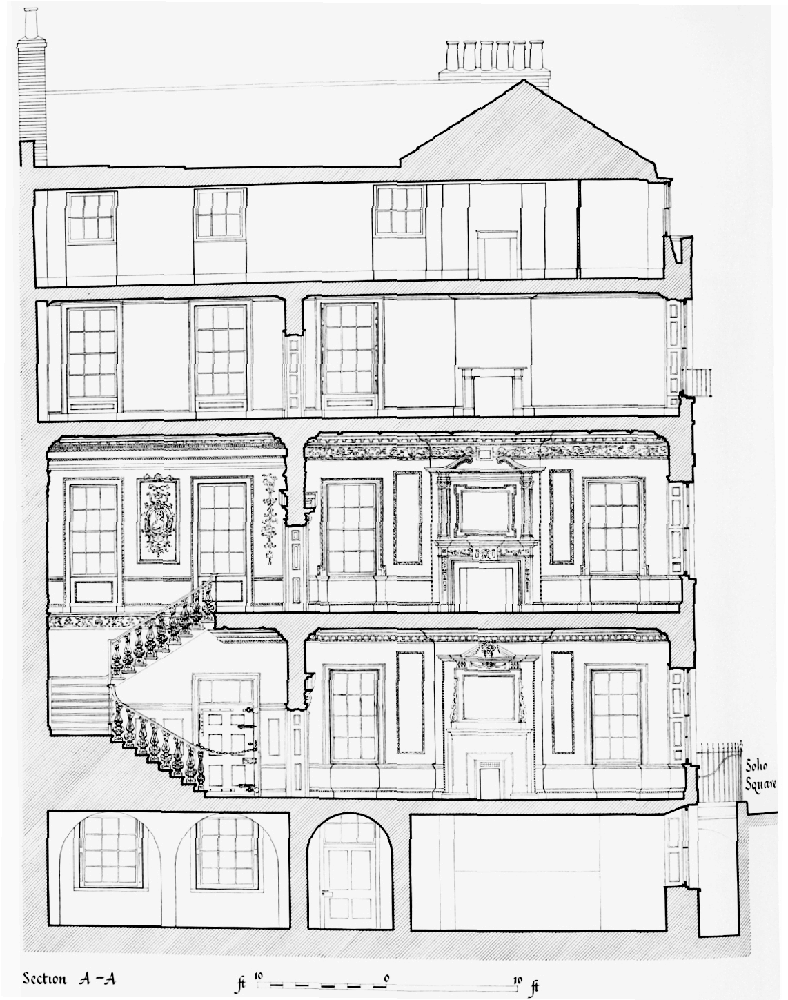
No. 1 Greek Street, section north to south
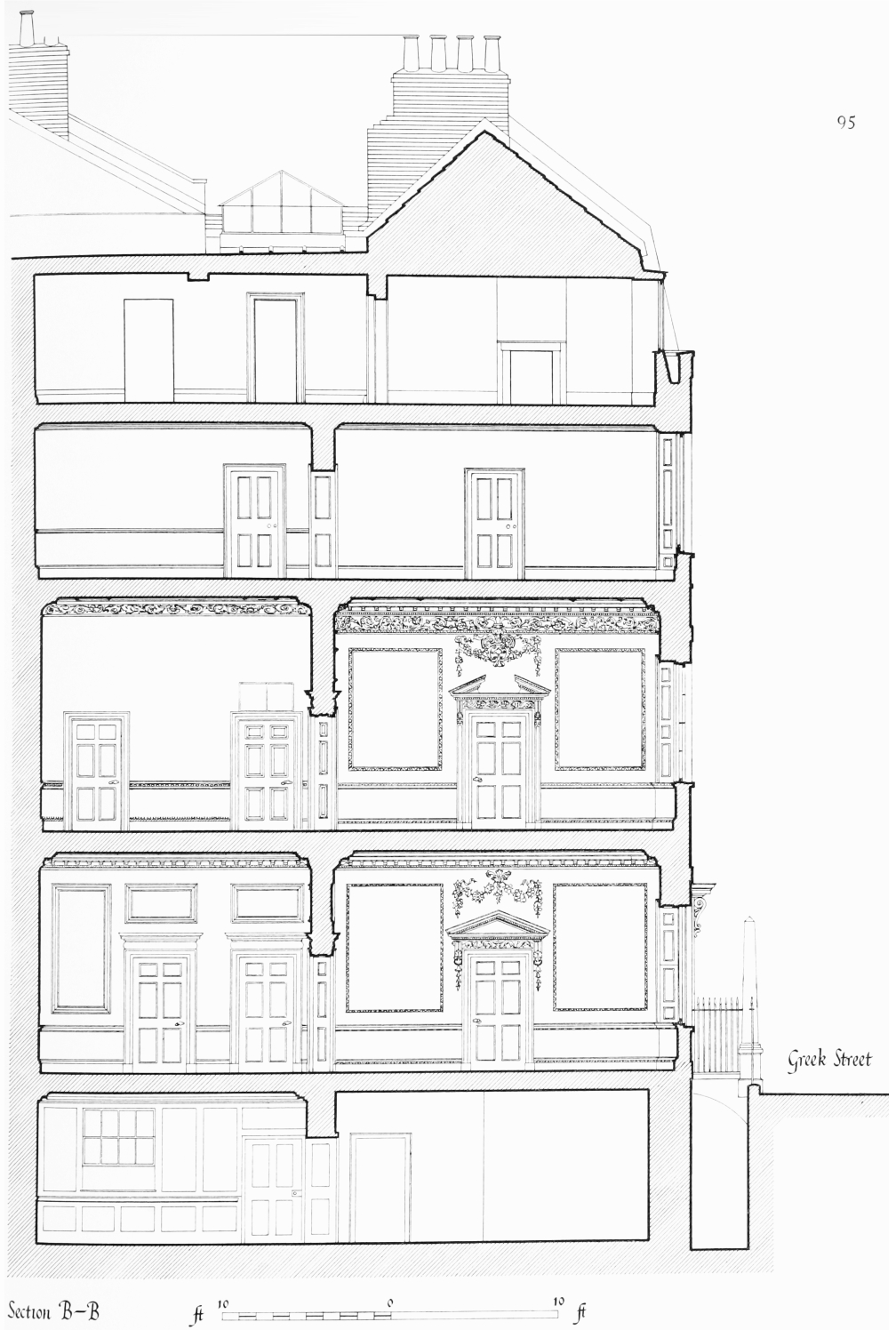
No. 1 Greek Street, section east to west
The interior of No. 1 Greek Street, finished in carved wood and moulded plasterwork, is one of the best examples of the mid eighteenth-century English Rococo style now surviving in London (figs. 19, 20). The contrast between Pearce's clumsy exterior and the splendid embellishments of the interior suggests that the latter were undertaken by one of the early occupants. As has been seen, the documentary evidence points to Beckford as the probable instigator of the work, but the name of the designer is quite unknown, and identification on stylistic grounds is particularly difficult because of the scarcity of major estate developments in London at this time, from which well-documented parallels might have been drawn. Flitcroft and Isaac Ware have both been suggested, (fn. 35) but the distinctive features of their style are lacking. Possibly one should look for a highly skilled craftsman rather than an architect, particularly since the house is noted more for its detail than for overall quality of design. In this connexion the names of George Fawkes and Humphrey Willmott, the plasterers employed at the Mansion House at about the same date, have been suggested, (fn. 31) but their work does not seem markedly closer in style than that in a dozen houses up and down the country. Plasterwork of similar character was formerly to be seen at No. 71 Dean Street, a house of the late 1750's, although the designer of this, too, is unknown.
Perhaps the nearest parallel is provided by the plasterwork at Nos. 15, 45 and 46 Lincoln's Inn Fields, houses that were being rebuilt at about the same period. Two other houses there, Nos. 35 and 36, also contemporary with No. 1 Greek Street, were by (Sir) Robert Taylor, (fn. 36) and it is perhaps worth recalling not only Taylor's later work for Sir James Colebrooke's younger brother, Sir George, but also that he designed the Colebrooke family mausoleum, erected at Chilham Church, Kent, in 1755. (fn. 37)
The finest decoration, as in so many eighteenth-century houses, was reserved for the staircase hall and the first-floor rooms, the ground floor rooms, though elaborately finished, being only paler versions of those above.
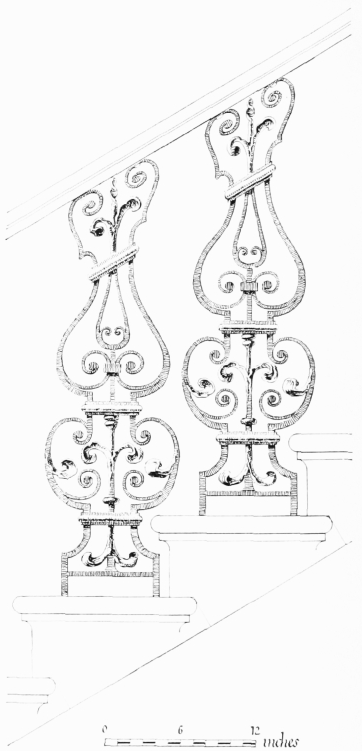
No. 1 Greek Street, staircase balustrade
The hall occupies two storeys, having a fine cantilevered stone staircase rising in three flights against the east, south and west walls to a gallery along the north wall (Plate 80b, fig. 21). The steps have moulded nosings, each one carrying an ornate wrought-iron baluster made up of Cscrolls supporting lyre-scrolls. Completing the balustrade is a mahogany handrail which is ramped up at each turn of the stair over a slender octagonal newel with a square pedestal, and at the bottom forms a half-volute above a curtail step. The two uppermost flights have flat soffits, carved to match the wooden raised-and-fielded panels with ovolomoulded frames on the underside of the gallery.
The compartment is very simply finished at ground-storey level, the attention of the visitor being purposely drawn to the richly decorated upper stage. At the lower level the walls are lined with three-quarter-height panelling, the dado of which is plain with a moulded rail and skirting, and the upper panels sunk with ovolo-moulded frames, the whole being finished with a small moulded cornice. The rest of the wall face is plain, except for an enriched cornice, probably of wood, below the gallery. The doorway to the principal room has six ovolo-moulded panels, and is framed by a plain moulded architrave, while the tall round-arched opening to the lobby has moulded imposts and an archivolt. In the south wall, below the stairs, is a stone chimneypiece with an ovolo-moulded architrave, plain frieze and moulded cornice.
The elaboration of the upper level begins with a plaster band of intertwined C-scrolls, flowers and scallop-shells at first-floor level, this being continued across the front of the gallery. Above is a series of rectangular panels of moulded plasterwork, mostly of standard Palladian form but loaded with profuse Rococo ornament (Plates 79a, 80a). In the centre of the south wall is a wide blank panel enclosed by an enriched shouldered architrave, this being surmounted by a female mask set amid scrolls and foliage and with a halo-like scallop-shell behind it; pendants of flowers hang from the shoulders at the top of the architrave, and at the foot of it is a twisted cartouche flanked by foliage. At either side of this panel is a narrow one enclosed by a straight border but filled with scallop-shells, C-scrolls and flowers, and by foliage which appears to twist under the frame. The east wall has a similar arrangement, with an identical centre panel and, beside it on the south, a narrow panel differing from its counterpart only in having a garland of leaves as the principal motif. The place of the northern panel is taken by the opening to the first-floor lobby, a repetition of that on the ground floor but with enriched mouldings on the imposts and archivolt, the soffit of the arch and the inner faces of the piers being lined with sunk ovolo-moulded panels. The opening is now fitted with a low iron gate, added in the early or mid nineteenth century. Above the arch is a plaster lion-head holding in its mouth two richly moulded swags, the outer ends of which are suspended from scallop-shells.
The north wall, at the back of the gallery, has a plain wooden dado with enriched rail and skirting, broken off-centre by the doorway to the principal room. This is framed by an enriched architrave surmounted by a pulvinated frieze carved with a scallop-shell and foliage, and by an enriched triangular pediment. The reveals are lined with raised-and-fielded panels in ovolomoulded frames, and there are six similar panels to the door itself. Above the doorway is a lionhead with swags, matching that over the lobbyentrance. Immediately west of the doorway is one of the charming Rococo devices that help mitigate the formal Palladianism of the panels. It is a partly draped female bust with head and body half-turned in opposing directions, this being set in a medallion of C-scrolls which is itself the centrepiece of a mass of intertwined foliage and C-scrolls (fig. 22a). At each end of the wall is a narrow panel matching, in a shortened version, its counterpart on the opposite wall (fig. 22c). The dado is continued along the west wall, and here the principal feature is the pair of windows, these having architraves with bold egg-and-dart mouldings and shutters with panel frames similarly carved. Between them is a medallion like that on the north wall, but here confined by a rectangular frame, while at the north end of the wall is a delightful pendant of fruit, flowers and acanthus leaves suspended from a rocaille shell (fig. 22b).
Round the top of the hall is a full entablature composed of an enriched architrave, a plain frieze and a heavily enriched modillion cornice. The ceiling is designed as an oval enclosed within a rectangle, the intervening spaces being filled with four spandrel panels. Within the oval is a chandelier-boss composed of acanthus leaves, and this is surrounded by a continuous chain of intertwined C-scrolls adorned with flowers and foliage. The spandrel panels are filled with scrolled foliage, and dividing them are four cartouches made up of C-scrolls (Plate 79b).
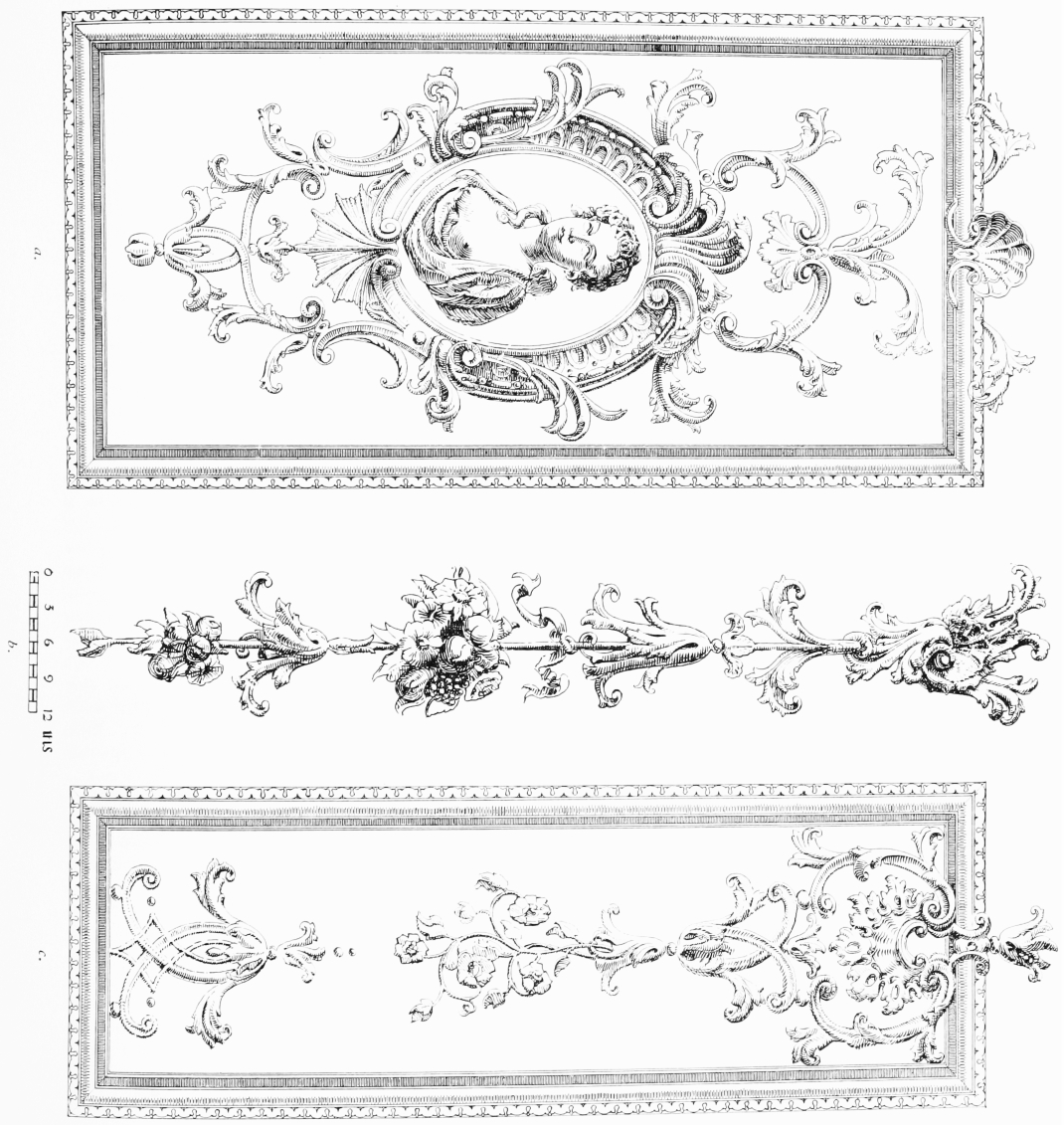
No. 1 Greek Street, staircase compartment, plaster decoration
The decorations of the principal first-floor room adhere much more closely to the standard Palladian formula and work in the Rococo manner is limited almost entirely to the opulent plaster ceiling. Use is made of motifs similar to those in the hall, but they give the impression of being the work of a more skilled hand. The walls of the room are lined with wood panelling, the dado being plain with heavily enriched rail and skirting, while the upper part has sunk panels with prominent carved frames similar in design to the plaster ones in the hall (Plates 84, 85b). In the centre of the east wall, balancing the chimneypiece opposite, is a wide rectangular panel framed by a small enriched moulding, this in turn being enclosed within an architrave carved with eggand-dart and lugged at all four corners. The architrave is broken at the top to form a swanneck pediment and this is loaded with ornament, most of it probably papier-mâché. Between the volutes is a female mask haloed with a scallopshell, below which is a chain of swags suspended from the mouths of a pair of splendid writhing dragons with wings unfurled; it is commonly supposed that these dragons allude to the City connexions of the owner of the house (Plate 85a). At either side of the centre panel is a narrow oblong one with an enriched frame, and beyond that another similar but slightly wider panel which is stopped short above a doorway, while at the very end is a single vertical strip of carved wood like that used in the panel-frames. The two doorways have enriched architraves finished with pulvinated friezes and enriched dentilled cornices, the former carved with large flowers on a trellised background of ribbons and flowers; the doors themselves are six-panelled with plain ovolo-moulded panelframes.
In the west wall the central feature is the monumental continued chimneypiece of carved wood emphasized by a strongly projecting chimney-breast. The chimneypiece itself dates only from 1960, when it replaced a white marble one of the mid-to-late nineteenth century, but the overmantel is original. This has at either side a fluted Composite column attached to a wide pilaster, these supporting an enriched entablature which breaks forward above them and is crowned by a wide swan-neck pediment; originally, no doubt, there was some piece of ornament between the volutes, but this has been removed, probably when a modern air-vent was inserted. In the centre of the overmantel is a raised panel with an enriched frame, probably intended for a picture, and this is enclosed within a shouldered architrave. Flanking the chimney-breast are two narrow panels, and beyond them the two windows, each with an enriched architrave lugged at the foot, the dado breaking forward to form a pedestal below them; the shutters have sunk panels, their frames carved with flower-and-dart.
The north wall has two similar windows having narrow panels with enriched frames between and at either side. Opposite, in the south wall, is the doorway to the hall, centrally placed between two wide panels. This is an elaborated version of the two in the east wall, the architrave flanked by narrow pilasters and the frieze carved with oak leaves bound with foliage, while above it is a broken triangular pediment on enriched consoles (fig. 25a). On the wall over the pediment is a large plaster cartouche, suspended from a pair of richly modelled swags.
The wall scheme is completed by an entablature composed of a wooden architrave carved with egg-and-dart, a plaster frieze moulded with a series of rolling, foliated scrolls, and an ornate dentilled and modillioned cornice. The ceiling is the finest feature of the room and is fairly close in style to the ceilings in the first-floor rooms of the former No. 15 Lincoln's Inn Fields. The design consists of a large rectangle enclosing a slightly smaller rectangle with incurved angles, the frame broken to form an ellipse on each of the long sides and a semicircle on the short sides. In the centre of the ceiling is an oval plaque and this has chandeliers (not original) hanging from inconspicuous bosses at either end. The outer rectangle is linked to the semicircles and ellipses of the inner one by scallop-shells and cartouches adorned with scrolls of foliage and each corner contains a large medallion made up of C-scrolls surrounded with foliage and more C-scrolls, having in the centre the profile-head of a classical figure; it has been suggested that these may represent the four seasons, but no such precise identification seems possible. Within the inner rectangle is an exuberant but ordered mass of foliage and C-scrolls, among which, corresponding to the semicircles and ellipses, are shell-like motifs hung with swags. The centre plaque contains the sort of scene commonly found in ceilings from the 1730's onwards, four rather stolid putti romping amid stylized clouds and bearing in their hands emblems symbolic of the elements (Plate 86).
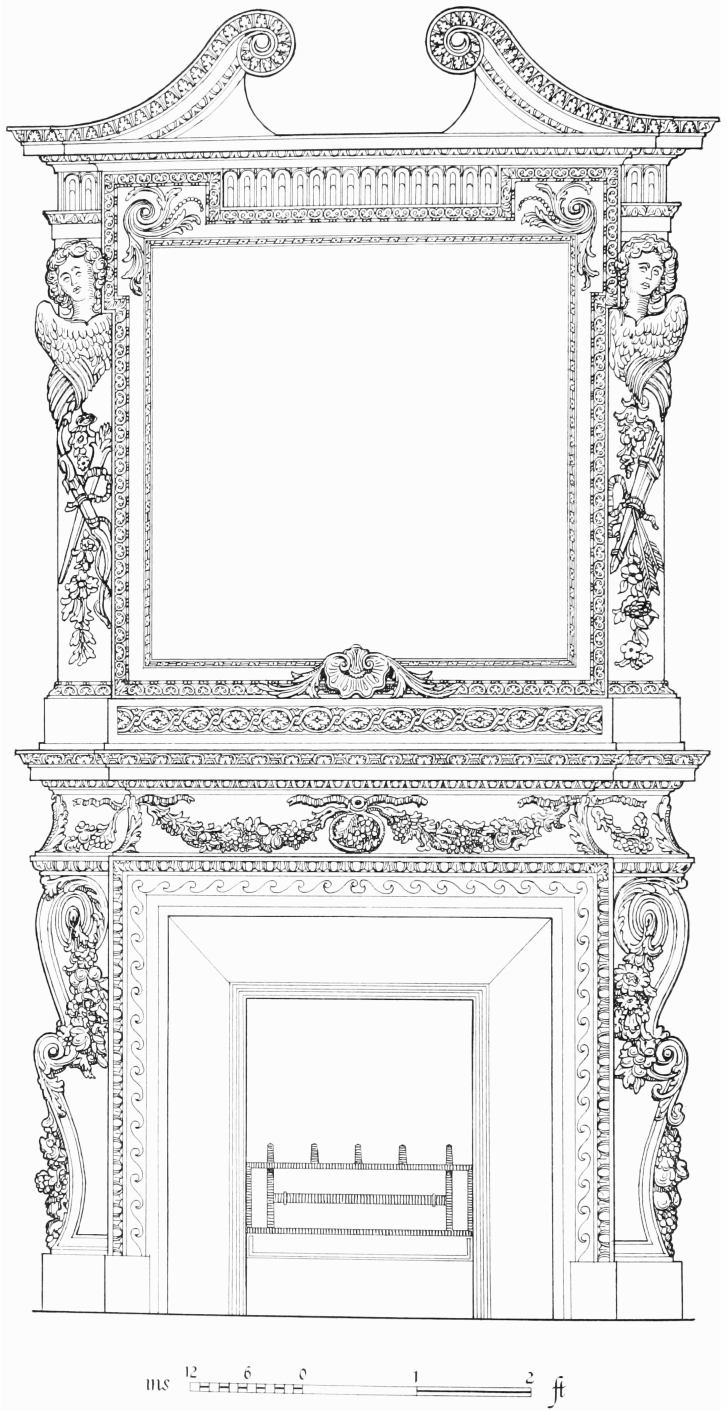
No. 1 Greek Street, first-floor back room, chimneypiece
The lobby on the first floor is simply treated with a plain wooden dado heavily moulded on rail and skirting, the upper walls being plain except tor a small plaster cornice. The four doorways have moulded architraves and contain doors with six ovolo-moulded panels, those opening into the principal room and the south back room having raised-and-fielded panels. The latter also has an overdoor composed of an ogee-profiled frieze and a dentilled cornice, a feature which may have been removed from the other doors when fanlights were inserted in the nineteenth century.
The east front room comes much closer in style to the French Rococo, despite some solidly Palladian features. Round the lower part of the walls is a plain wooden dado with a heavily enriched rail and skirting, the plain upper part having been intended, perhaps, for silk hangings similar to those installed during the recent restoration. The walls are finished with an enriched cornice, the lower part of which is coved and decorated with scallop-shells and scrolls of foliage. The chimneypiece, very much in the Louis Quinze manner, is of carved wood, except for the actual fireplacesurround which is of marble; possibly the woodwork originally had marbled paint to match, but the whole is now painted cream (fig. 26). The surround has a curvilinear head, and the panel above is covered with trellis-work having fourpetalled flowers at the intersections. Imposed on the centre of this is a great scallop-shell with acanthus leaves springing from it, and at either side is a sunflower. The angles of the chimneypiece are splayed and treated with buttresses which form into scrolls top and bottom, the upper scroll having a pendant of flowers below it. Upon this scroll rests a C-scroll forming a bracket to the shaped mantel-shelf. The two windows are almost identical to those in the principal room, except that the panels of the shutters are carved with egg-and-dart.
One original doorcase remains complete, in the west wall, this having an enriched architrave, a pulvinated frieze carved with foliage and a scallop-shell motif, and an enriched cornice; the door has six raised-and-fielded panels in ovolomoulded frames and is set within similarly panelled reveals (fig. 25c). Until recently there were two doorways in the south wall, as shown in fig. 18. The eastern one, of nineteenth-century date, has now been removed and the opening built up. The other doorway is original, though it has probably lost its overdoor. It has a Rococo catch of chased and gilded metal, said to be the surviving original from which others in the building were copied.
The design of the ceiling, much lighter than that of the principal room and closer in manner to the French Rococo, is based on two rectangles, one inside the other, having an oval in the middle. The outer rectangle has splayed angles composed of a pair of curvilinear scrolls centred on a shell motif, from which sprout flowers and foliage in every direction. Other rocaille motifs decorate the short sides and incurved angles of the inner rectangle, twisting under and over the frame to link up with the outer rectangle, while the long sides are broken by a projection made up of two foliated parabolic scrolls, its centre occupied by a basket of flowers. A chain of shell-like C-scrolls surrounds the centre oval, these facing alternately inward and outward, with sprays of flowers scattered between. Opposite each of the four sides of the rectangle another piece of rocaille is looped through the frame, and in the centre of the oval is a chandelier-boss of acanthus leaves (Plate 87).
The south back room is notable for its rich wood-carving, and although this has been subjected to some indignities, little seems to have been destroyed. The north wall, however, has been canted forward in the middle, the panelling, but not the plasterwork, having been replaced; the earliest first-floor plan, that of 1812, shows a straight wall in this position. The walls have a plain wooden dado with a carved rail and skirting, the wall face above now being plain except for the entablature of moulded plaster at the top. This has an enriched architrave, a frieze of scallopshells and scrolls of foliage, and a cornice with dentils and modillions.
In the centre of the south wall is a wooden chimneypiece richly carved in the Rococo manner (Plate 83b, fig. 23). The fireplacesurround is of white marble carved with Vitruvian scroll and egg-and-dart, this being flanked by shaped buttresses formed into great S-scrolls at the top, and casually draped with long pendants of fruit and flowers. Above is a frieze with shaped ends, carved with swags and ribbons and finished with an enriched cornice. The overmantel consists of a large square panel, probably intended for a picture, enclosed by an enriched shouldered architrave with a flourish of foliage in the shoulders and a shell motif at the foot. The panel stands on a low pedestal which breaks forward beneath it and is there decorated with a band of flattened guilloche. Flanking the top of the panel is a pair of cherubs' heads with wings folded below them, together with another long pendant of fruit and flowers; to the pendant on the east side is attached a bow and a flaming torch, and to that on the west side a sheaf and arrows. The head of the panel has the appearance of being imposed on an entablature with enriched architrave, fluted frieze, and wide swan-neck pediment.
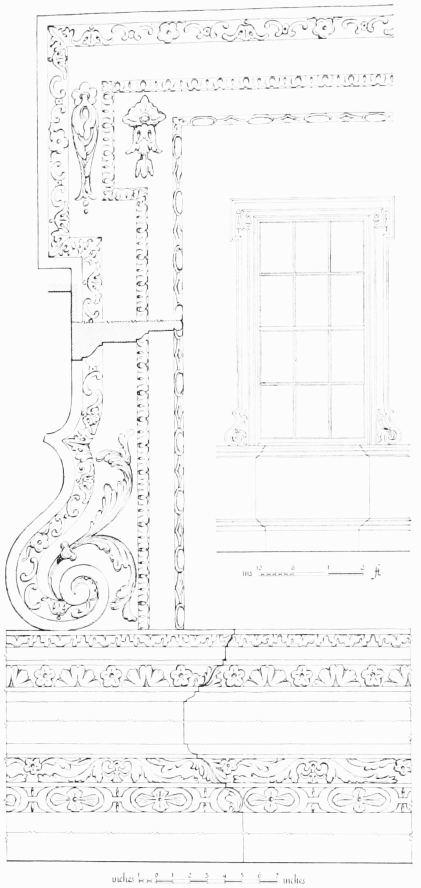
No. 1 Greek Street, first-floor back room, window joinery
The doorway at the north end of the west wall is balanced by a dummy at the south end (Plates 82b, 83a, fig. 25d). Each doorway has an enriched shouldered architrave with single acanthus buds carved on the shoulders, having above it a pulvinated frieze identical with its counterpart in the principal room, and a dentilled and modillioned cornice; the door is six-panelled, the panelframes carved with scallop-and-dart and flower-and-dart. The windows have shouldered architraves of the same pattern as the doors, except that the outer moulding turns outward at the bottom to form an arris, and then twists into a scroll; the shutters have sunk panels like those on the door (Plate 83c, fig. 24). The southernmost window has been converted into a door to an added wing. The north back room and the closet are now entirely plain.
On the ground floor the decoration of the principal room is a simplified version of that used on the floor above. The walls are lined with wood panelling, but the dado has less elaborate mouldings and the frames of the upper panels, except for that of the middle panel on the east wall, are not raised, having a single cyma-moulding enriched with a leaf pattern; the centres of the panels appear to be of plaster, as do the frames. On the east wall the head of the middle panel has no dragons, and the swags are replaced by a couple of sprays of flowers, but from the shoulders of the panel hang pendants of flowers and foliage, the tops of which take the form of dragons' heads. Above the doorways there are only short panels, and at the ends of the wall full, but very narrow ones; the doorcases differ from those in the room above in having friezes with a kind of guilloche pattern in flowers and foliage (Plate 81a).
The lower part of the chimneypiece is a plain stone surround of the middle or late nineteenth century, but the wooden overmantel is original (Plate 81b). It consists of a large panel, now blank, with an enriched shouldered frame, this being set on a low pedestal which breaks back at the sides to support scroll-buttresses freely adorned with fruit, flowers and foliage, and with a bearded male mask balanced on top. Above is a frieze of acanthus buds with a plaque in the centre bearing a garland and two festoons. The plaque is finished with a broken triangular pediment having a basket of flowers in the middle, the straight cornice being continued across the overmantel and chimney-breast.
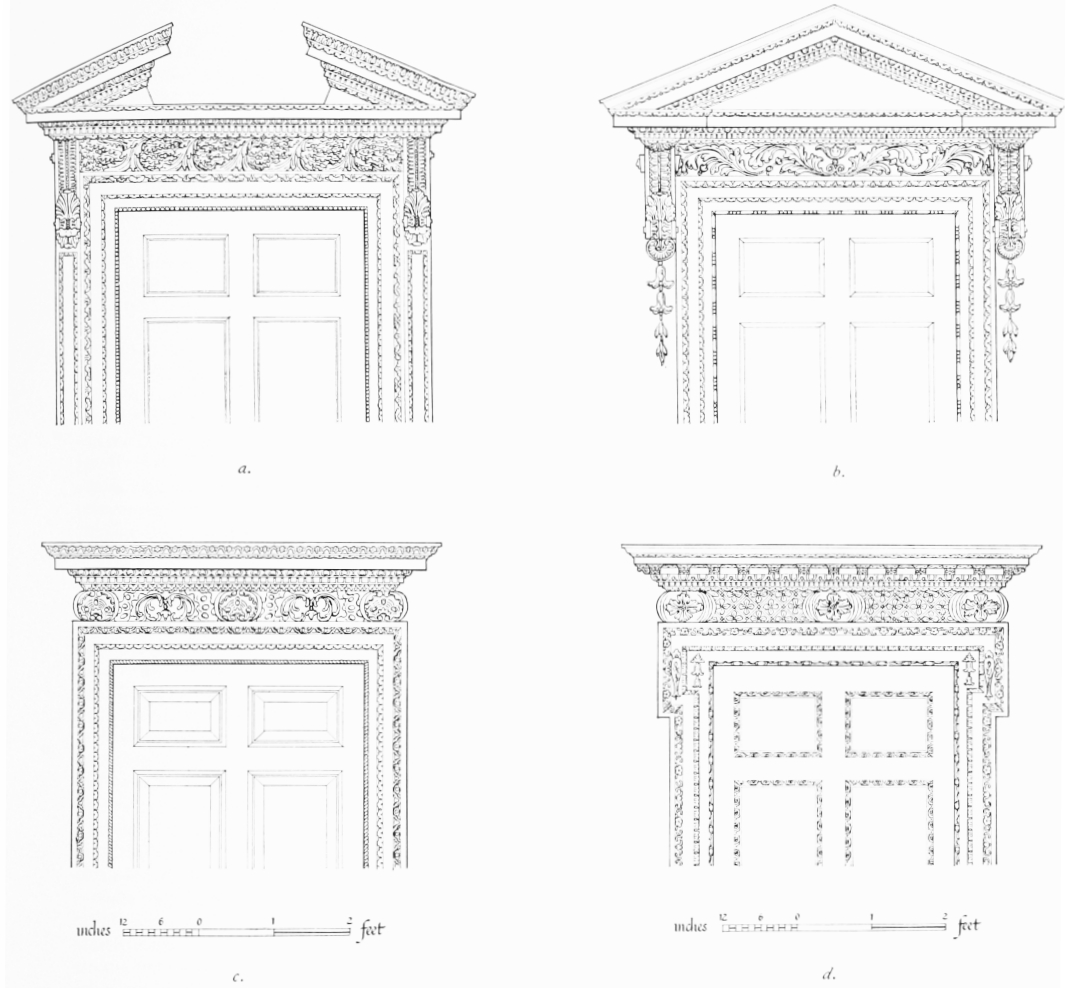
No. 1 Greek Street, internal doorways
The doorway in the south wall is similar to its first-floor counterpart, but without flanking pilasters; the frieze is also different, being like the others in the room, and the pediment is complete, its brackets decorated with short pendants of flowers hanging from scallop-shells. The swags over the pediment are repeated, but with the central cartouche omitted (Plate 81c, fig. 25b). The windows all have straight architraves and the shutters have panels with enriched cymamoulded frames. In the plan of 1746 the two windows in the west wall are shown blind and a plan of 1810 still shows only one of them glazed; this must imply that some of the window-boxings are imitations of the earlier work, although the difference is not apparent. Round the top of the room runs a modillion cornice, a little plainer than that in the room above, and with no architrave or frieze, the ceiling being plain, apart from a chandelier-boss of acanthus leaves.
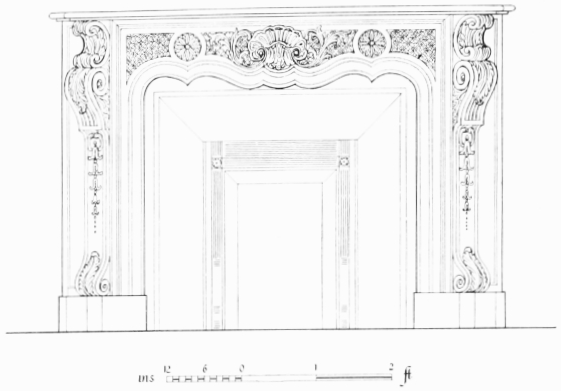
No. 1 Greek Street, first-floor east front room, chimneypiece
The east front room (Plate 82a) has a plain wood dado with an enriched rail and skirting, but above is a series of panels formed by raised plaster mouldings, the authenticity of winch is highly questionable. One curious feature is that in the upper part of the chimney-breast the chimneypiece is flanked by sunk wood panels with cyma-moulded frames. The chimneypiece now has a stone fireplacesurround of the mid-to-late nineteenth century, but the original overmantel remains—very similar to that in the principal room, except that the frieze over the panel-frame is cyma in profile and carved with an uninterrupted pattern of acanthus leaves, while the pediment contains only a low pedestal, this having lost the ornament that must originally have stood upon it. The three doorways have enriched architraves, plain pulvinated friezes and moulded cornices, and the windows straight enriched architraves, the shutters having sunk cyma-moulded panels carved with a leafpattern.
There is now only one back room on this floor, the sparse decoration of which dates entirely from the middle or late nineteenth century, but the plan of 1746 shows that it was formerly divided into two rooms of equal size, one of them, the southern room, being entered only through the other. However, the plan of 1810 shows that by the time the Commissioners of Sewers acquired the house the division had been removed, the north end of the room being divided off by a screen of columns to form an alcove with a vaulted ceiling. It is, of course, possible that this alteration was effected in the 1750's, but a late eighteenth- or early nineteenth-century date seems the more likely.
The passage to the hall is stone-paved, the walls lined with a plain wood dado having a moulded rail and skirting and the doorways fitted with simple moulded architraves. Its most interesting feature is the plaster ceiling, which is designed as a groined vault springing from moulded corbels. The date of this is uncertain, but as a purely negative piece of evidence it may be noted that the vaulting is not shown on the plan of 1746 but is included in that of 1810. Its rather awkward relationship to the walls suggests, however, that it does not date from the 1750's, and it might in fact be an addition of the late eighteenth or early nineteenth century contemporary with the alcove in the back room.
On similar grounds the secondary staircase could be assigned to the same period, for the curious wedge-shaped steps used in the short flights also appear first in the plan of 1810. The staircase is set in a narrow plain-walled compartment which extends from basement to garret and is lit from above. The cantilevered stone steps are fixed into the long walls of the compartment, the ends of the flights resting on stone landings supported by great segmental arches, although some of the intermediate landings are replaced by the short flights previously mentioned. The thin square balusters of iron, two to a step, curve outwards at top and bottom, so that they project into the well, while the oak handrail is ramped up at each turn of the stair, features which serve to temper the extreme severity of the design.
The second-floor rooms were completely altered in the nineteenth century to provide dormitory accommodation for the House of Charity.
The Chapel
The chapel is only part of Joseph Clarke's original scheme for the site, which was to have included a cloister surrounded by three ranges of buildings containing dormitories and a refectory. Plans and perspectives of the scheme, intended to cover the whole area of the stable-yard, are displayed in the house, and an engraving of some of these can be seen in The Builder, 7 June 1862, p. 407.
The chapel consists of a lofty but very narrow nave, terminating in a round apse at the cast end and flanked on each side by a pair of low semicircular side-chapels (Plate 20a, fig. 27). Clarke must originally have had in mind a building of the general shape of the Sainte Chapelle, an impression which is reinforced by the knowledge that the side-chapels were an afterthought (fn. 38) and that the roof was to have been surmounted by an ornate iron flèche. The detail, however, is entirely in a robust early Gothic manner, reminiscent, if anything, of the style of William Burges.
The external walls are in white stone with horizontal bands of red sandstone, and stand on a battered rusticated plinth. The roof also, now re-covered, originally had tiles arranged in bands of alternating colours. (fn. 33) Internally the walls are treated with bands of red and white stone as on the exterior but further embellished with coloured marbles in accordance with the contemporary taste for polychrome decoration (Plate 20b). It is clear, moreover, from documents preserved among the title-deeds, that yet more lavish effects were intended, had funds been available.
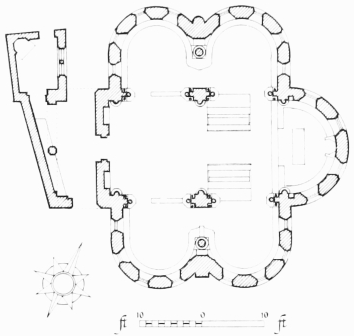
Chapel of The House of St. Barnabas-in-Soho, plan
The nave walls are arranged in two bays divided by shafts of grey marble, except at the east end where the pair of shafts flanking the altar is of reddish marble. From these shafts spring the pointed iron ribs of the wooden vault. Within the bays are the openings to the side-chapels, formed by pointed arches springing from squat columns of pinkish marble, and above each arch is a pair of the round clerestory windows much favoured at this period.
The wall of the eastern apse is lined with pink marble, its four lancet windows flanked by slender columns of dark grey marble which support a continued impost band of acanthus leaves. Below them is a series of brightly coloured mosaic panels set in the arches of a blind arcade. The semi-dome of the ceiling is now painted blue with golden stars, but was originally intended to be covered with a fresco of the Passion. A large rose window occupies the top of the west wall, most of which, however, is taken up by the organ, said to have been installed in 1872. All the stained glass was blown out during the 1939–45 war and replaced in 1957–8 with glass designed by John Hayward.
The original seating plan has also been altered, Clarke's intended arrangement having been more like that of a college chapel, with staff, council members and choir facing each other in the nave, while the inmates of the house sat behind them in the side-chapels. Behind the altar, in early Christian fashion, was a throne for the Visitor.