
Magna Britannia: Volume 5, Derbyshire. Originally published by T Cadell and W Davies, London, 1817.
This free content was digitised by double rekeying. All rights reserved.
'General history: Gentry families extinct since 1500', in Magna Britannia: Volume 5, Derbyshire, (London, 1817) pp. cxii-clii. British History Online https://www.british-history.ac.uk/magna-britannia/vol5/cxii-clii [accessed 24 April 2024]
Families extinct, or removed out of the County, since 1500.
Abney, of Willesley. — This family settled at Willesley, in consequence of a marriage with the heiress of Ingwardby, soon after the commencement of the fifteenth century. The elder branch became extinct in 1791, by the death of Thomas Abney, Esq., whose heiress married Charles Hastings, Esq. (now General Sir Charles Hastings, Bart.) Edward Abney, Esq., of Measham-field, is of a younger branch of this family. Sir Thomas Abney, of Stoke-Newington, in Middlesex, who was Lord-Mayor of London in 1701, was of a younger branch of the Willesley family. This branch is extinct: the heiress died unmarried in 1782.
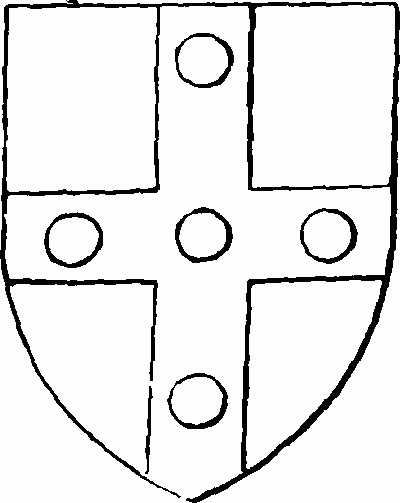
Arms: — Argent, on a cross, Sable, five bezants.
Agard, of Foston and Sudbury. This ancient family settled at Foston as early as the year 1310. The estate was sold in the reign of Charles II.; and about the same time one of the coheiresses of Charles Agard, Esq., the last heir male, married John Stanhope, of Elvaston, ancestor of the Earl of Harrington.
One of the Agards of Sudbury married a coheiress of Ferrers of Tarnworth. We do not find when this branch became extinct.
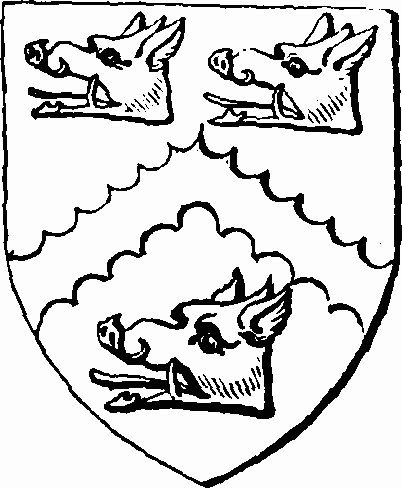
Arms of Agard of Foston. — Argent, a chevron engrailed, Gules, between three boars' heads, couped, Sable, langued, Gules.
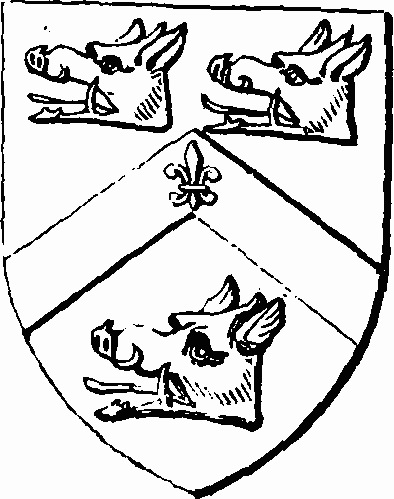
Arms of Agard of Sudbury:— Argent, on a plain chevron, Gules,between three boars' heads, couped, Sable, langued of the second, a fleur de lis, Or.
Crest: — A bugle-horn, Arg. garnished, Or, slinged, Sab.
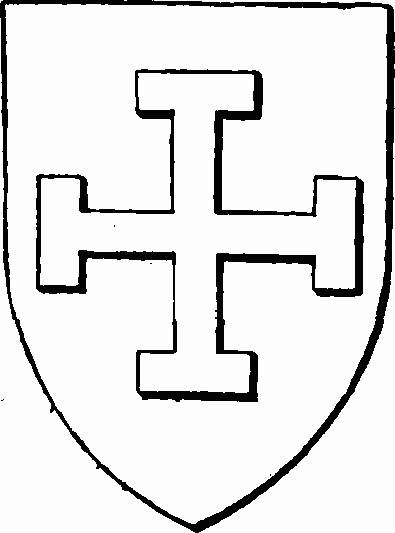
Alen, or Aleyne, of Gresley. — Sir Christopher Aleyne, son of Sir John Aleyne, or, as he himself wrote his name, Alen, Lord Mayor of London, in 1535, settled at Gresley. His descendant, Samuel Stevenson Aleyne, Esq., (who died in 1734,) was the last heir male of this branch of the family: his sisters and coheirs married Malbon, Cowper, and Wardburton. The Aleynes, Baronets, of Hatfield, in Essex, were descendants also of the Lord Mayor.
Arms of Aleyne of Gresley: — Sable, a cross potent, Or.
Crest: — A demi-lion rampant, Sable, holding in his paws, a rudder, Or.
Sir John Alen, the Lord Mayor, bore — Or, three ogresses, on each a talbot passant of the field; on a chief, Gules, a lion passant guardant of the field. This coat is quartered on the monument of the Aleyne family at Gresley.
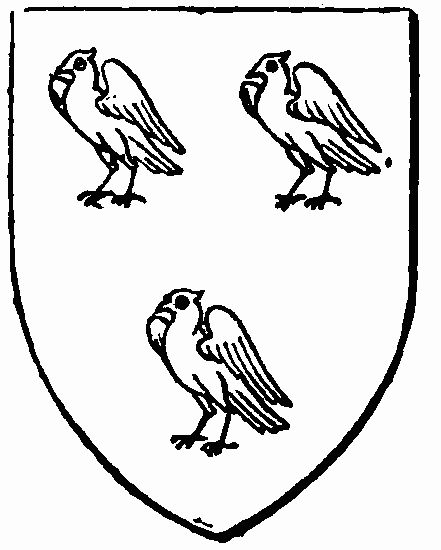
Alsop, of Alsop-in-the-Dale. — This ancient family was settled at Alsop, about the time of the conquest, and continued in an uninterrupted descent for 19 or 20 generations. It appears to have become extinct by the death of Anthony Alsop, Esq., somewhat more than a century ago. John Alsop, of a younger branch, settled in London, had a grant of arms in 1597. Another branch was of Marshfield in Leicestershire, at the time of the visitation of that county, in 1619.
Old arms of Alsop: — Sable, a bend Argent, between three doves in chief, wings expanded, of the second, legged and beaked, Gules, with ears of wheat in their beaks, Proper; and three pheons in base, Or.
In the Visitation of Derbyshire, 1634, the arms of Alsop, of Alsop, are described — Sable, three doves, rising, Argent, beaked and legged, Gules.
The grant to Alsop of London was — Sable, on a bend, between six doves, Argent, legged and beaked, Gules, three pheons of the field.
Crest: — A dove, Argent, legged and beaked, Gules, between two ostrich-feathers. Sable.
The Alsops of Leicestershire bore — Sable, on a chevron, between three rooks, Or, a mullet of the field.
Ashton, of Castleton, Stony-Middleton, &c., descended from the Ashtons of Lancashire.— Alexander Ashton, of Castleton, the representative of this branch, was aged 40 in 1667, and had a son, Robert. (fn. n1) Robert, a younger son of Charles Ashton, who was of Castleton in 1625, settled at Stony-Middleton; his son, Robert who was sheriff in 1665 had three wives: Robert, his son by his first wife, settled at Bradway, and his elder son, Richard, who was of Bradway and of Scotton, in Lincolnshire, died in 1706. This Richard had several brothers, one of whom was the learned Dr. Charles Ashton, master of Jesus College, Cambridge.
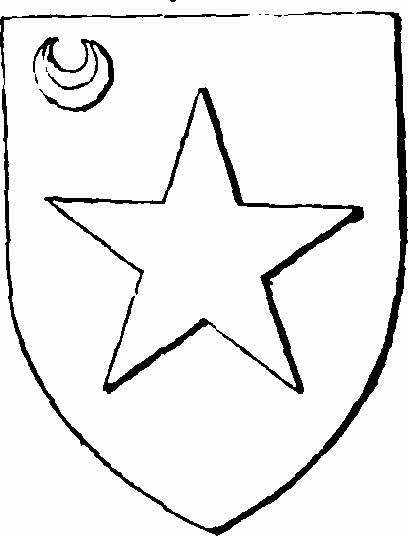
Robert Ashton, of Stony-Middleton, the sheriff, had by his second wife only a daughter; by his third wife a son, Benjamin, who settled at Hathersage: the daughter, and eventually sole heir of Benjamin married Spence, whose heiress married Shuttleworth.
Arms: — Argent, a mullet, Sable, a crescent for difference.
Crest: — A boar's head, couped, Argent.
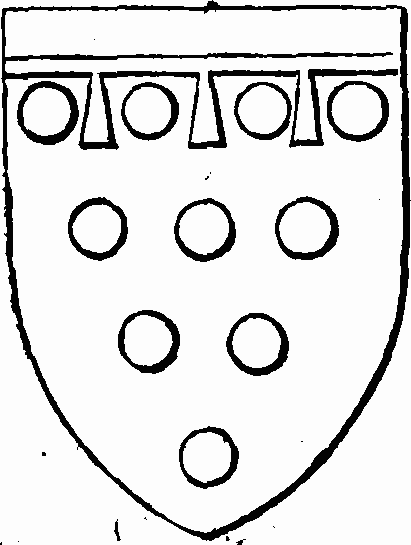
Babington, of Dethick and Normanton. —Thomas Babington, second son of Sir John Babington (fn. n2), by the heiress of Ward, and brother of Sir William Babington, who was appointed Chief Justice of the King's Bench in 1423, married the heiress of Dethick, and settled at Dethick. His grandson, Thomas, had four sons: Sir Anthony, the elder, who continued the Dethick line; William, who married one of the coheiresses of Beaumont of Tinmore, in Staffordshire, where he settled; Rowland, who settled at Normanton; and Humphrey, who settled at Temple-Rothley, in Leicestershire, and married the other coheiress of Beaumont. The last-mentioned was immediate ancestor of Thomas Babington, Esq., now of that place, sometime M.P. for Leicester. Sir Anthony's first wife was a coheiress of Ormond, by the heiress of Chaworth: by his second wife he had three sons, the elder of whom was ancestor of the Babingtons of Rampton, in Nottinghamshire. Anthony, great-grandson of Sir Anthony, being descended from the first wife, was executed for high treason, in 1586. The Dethick estate, which had been secured by a previous transfer to his younger brother, was sold about the middle of the following century. The elder'grandson of his brother George was living, and 32 years of age, in 1672. None of the family remain in Derbyshire; but the late Mr. Cornelius Babington, of Bolingbroke in Lincolnshire, descended from Corne lius Babington, of Bolingbroke in Lincolnshire, descended from Cornelius, great nephew of Anthony Babington, who was attainted in 1586, died in 1811, at an advanced age, leaving male issue. The Norman ton branch sold that estate in the reign of Queen Elizabeth. A branch of the Babington family descended from a younger son of Sir John Babington before-mentioned, was settled, for several generations, in Devonshire.
Arms: — Argent, ten torteauxes, four, three, two, one, Gules; a label of three points, Azure.
Crest: — A demi-dragon, with wings expanded, Gules, a scroll issuing from the mouth.
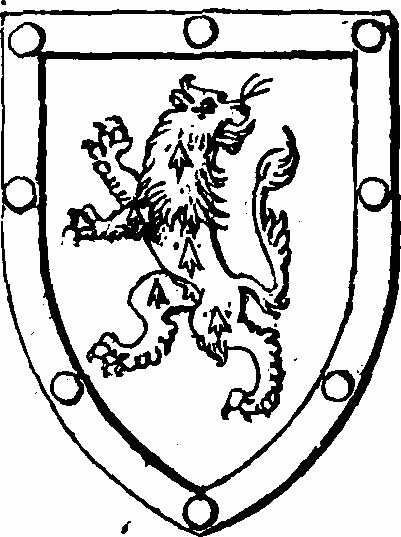
Bache, of Stanton. — This family, which had resided at Stanton more than 200 years, became extinct by the death of William Bache, Esq., in 1698: the heiress married the grandfather of Bache Thornhill, Esq., now of Stanton.
Arms: — Or, a lion rampant regardant, Pean; a border Sable bezanty.
Crest: — A demi-lion rampant regardant, Pean, holding in its paws a bezant.
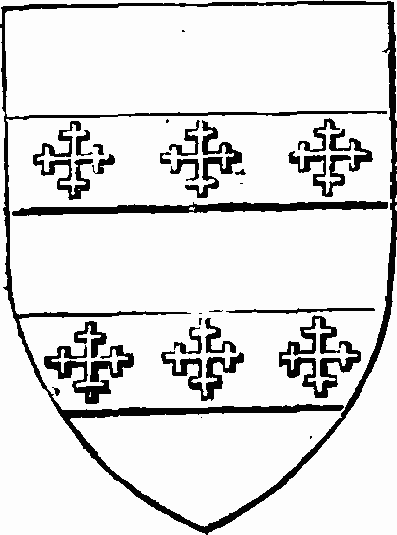
Ballidon, of Derby. — Three descents of this family, who were of some antiquity at Ballidon, whence they took their name, are described in Dugdale's Visitation. William Ballidon, Esq., the last heir male, died in 1745: his sister and heiress married William Coke, Esq., of Trusley.
Arms granted by Dugdale: — Argent, two bars, Vert, each charged with three cross-crosslets, Or.
Crest: — A demi-lion rampant, Vert, crowned, Or, holding between his paws a cross-crosslet of the second.
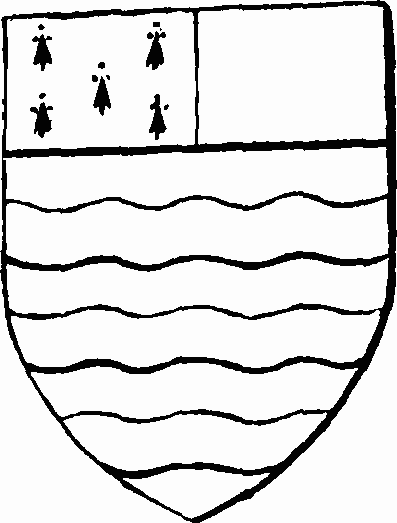
Barley, of Barley, otherwise Barlow. — The pedigree of this family in Glover's Visitation deduces their origin from Simon Barley, who called the place after his own name in the reign of William the Conqueror. This alone would be sufficient to make its authenticity questionable. There is no doubt that they were a very ancient family; but there is reason for supposing that, instead of a descendant of Simon above-mentioned having married ried the heiress of Abitot, the Barleys were descended from a younger son of the Abitot family, who on settling at Barley assumed, as was usual, he name of the place of his residence. James Barley, Esq., who lived in the reign of James I., left two daughters coheiresses, who married Linney and Bullock. He had a younger brother, who married a daughter of John Talbot, and died without issue.
Arms of Barley: — Argent, three bars wavy, Sable; a chief, per pale, Erm. and Gules.
Crest: — A demi-stag, charged with three bars, wavy.
A younger branch, which was of Dronfield-Woodhouse, and became extinct in the sixteenth century, bore — Barry wavy of six, Argent and Sable, a chief, per pale, Ermine and Gules, charged with a fleur-de-lis, Or.
Bassett, of Langley. — Sir John Bassett, of Chedle, who died in the reign of Henry IV., married the heiress of Brailsford, of Brailsford; his son by this wife was of Brailsford, and left a daughter and heir married to Shirley. Ralph Bassett, son of Sir John by another wife, married the heiress of Beke; and his grandson of the same name the heiress of Dethick, who had married a coheiress of Meynell, of Langley-Meynell. The posterity of the last-mentioned Ralph were in consequence of this match settled at Langley, for several generations. William Bassett, of Langley, grandson of Ralph, married, a coheiress of Byron. The heiress of this branch of the Bassett family married Henry Howard, a younger son of Thomas, Earl of Suffolk, and after his death, William Cavendish, Earl of Newcastle.
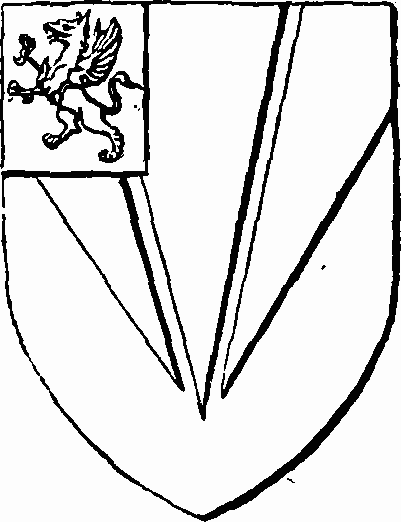
Arms: — Or, three piles, diverging from the chief of the escutcheon, Gules; a canton, Argent, charged with a griffin, segreant, of the second.
Crest:—Out of a ducal coronet, Or, a boar's head, Gules.
Bate, of Foston and Little-Chester. — The name of this family occurs in the list of gentry; temp.Hen.VI. At a later period we meet with two families of the name who appear to have been not immediately connected. In the reign of Charles II., one of these families became, by purchase, possessed of Foston, which had been the seat of the Agards. Brownlow Bate, Esq., the last of this family died at Bath in 1815. Coheiresses of Draper and Chambers married into this family. The other family of Bate had been of Little-Chester for three generations in 1662, Nathaniel Bate, the representative of the family, whose name appears in the intended list of Knights of the Royal Oak, was then unmarried; Richard, a younger brother, had four sons.
Arms: — Sable, a fesse engrailed, Or, between three dexter hands, Argent.
Crest: — A stag's head, issuing from a wreath, transfixed through the neck with an arrow.
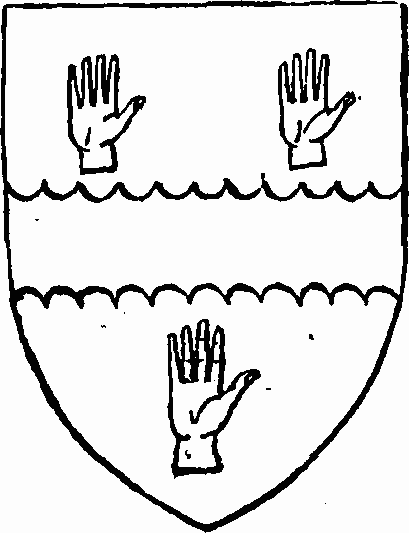
Bate, of Little-Chester, bore the fesse plain j and for a crest, a cross patee.
Beard, of Beard-hall. — Richard Beard, first-mentioned in the pedigree, lived about the year 1400; his eldest son had an only daughter, who brought the manor of Beard to two brothers of the Leigh family, whom she successively married. The posterity of a younger son continued at Beard-hall four descents later. The grandfather of the last Beard of Beard-hall, had four sons; the two elder died without male issue, each of them having an only daughter and heir; Alice, daughter of Nicholas, married Blackwell; Alice, daughter of Richard, married Bowden. William, son of John, the third son, was of Beard-hall, and had three daughters married to Ashenhurst, Holt, and Yeavely. The Ashenhursts inherited Beard-hall. Ralph, fourth son, had four sons, but we know nothing of their posterity.
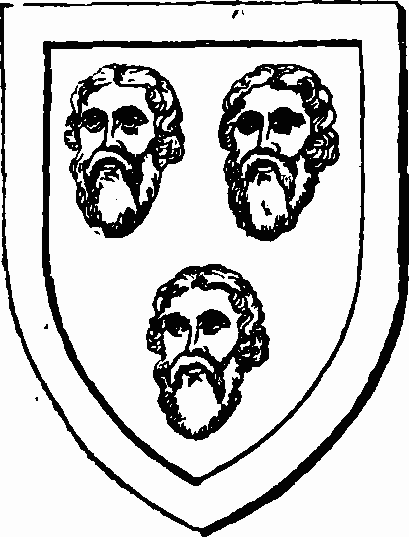
Arms of Beard: — Argent, three men's heads, couped and bearded, Proper, within a border, Azure.
Beighton, of Wirksworth. — A family which rose to opulence by the lead mines, and soon became extinct.
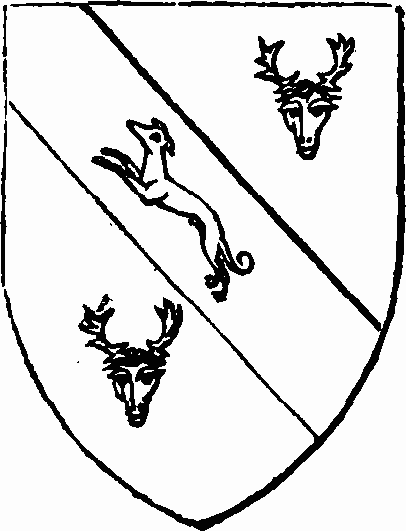
Arms granted in 1675.—Sable, on a bend, Argent, a greyhound current of the first between two stags' heads caboshed, of the second.
Crest: — A greyhound, Ermine, collared, Or; issuing out of a mural crown, of the second.
Bentley, of Derby and Breadsall descended from the Bentleys of Staffordshire.— Sir John Bentley of Breadsall, who died m 1622, left two daughters coheiresses, one of whom married Cutler.
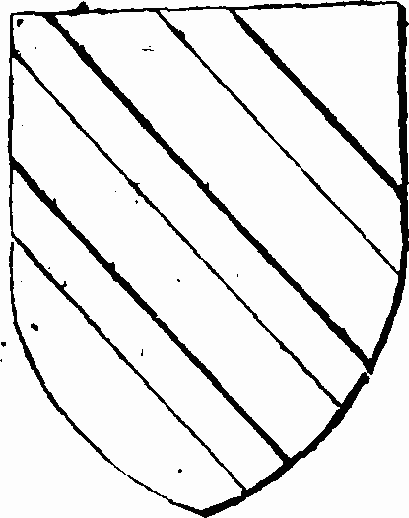
Arms: — Or, three bendlets, Sable.
Crest: — A lion statant, Argent.
There was also a family of Bentley of Hungry-Bentley. Edward Bentley, Esq. of this family, was convicted of high-treason m 1586.
Bird, of Over and Nether-Lockoe. — The family of Bride, or Bird, possessed Nether-Lockoe, as early as the reign of Henry IV., and sold it in the reign of Elizabeth. Thomas Bird, Esq., of a younger branch of this family, died in the reign of James I., leaving four daughters, coheiresses.
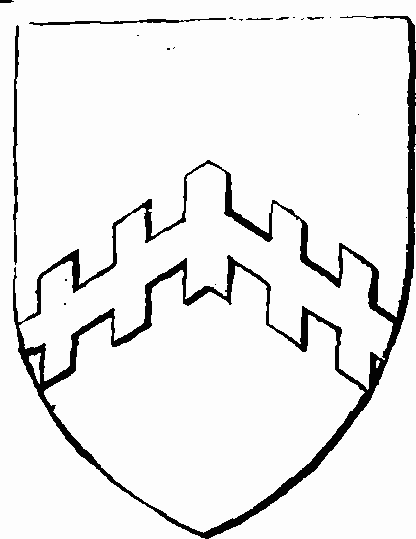
Arms: — Sable, a chevron, embattled, counter-embattled, Argent.
Crest: — A stump of a tree, issuing from a wreath, thereon, a falcon rising, Proper.
Blackwall, of Blackwall — This ancient family was of Blackwall in the Peak, in the reign of Henry III. There were four brothers of this family in the reign of HenryVIII. Adescendant of the elder married the heiress of Wensley, andwas fatherof Wensley Black wall, and grandfather of Sir Thomas Blackwall, a zealous loyalist, who became impoverished in the civil war, and died in reduced circumstances in the reign of Charles II. We know nothing more of this elder branch, than that George Blackwall, brother of Sir Thomas, was a citizen and Skinner, of London, and had younger brothers. Richard, the second of the brothers above-mentioned, (temp. Hen. VIII.) married a coheiress of Boyvill, and left an only daughter; Thomas, the next brother left two coheiresses, married to Hurt, and Eyre of Hassop; Ralph (fn. n3), the younger, married one of the coheiresses of Stafford of Eyam, and left posterity, which we have not been able to trace.
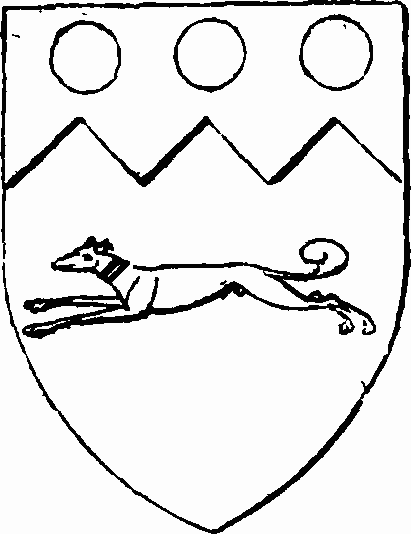
Arms of Blackwall, of Blackwall in the Peak: — Argent, a greyhound current, Sable, collared, Or, on a chief indented, of the second, three bezants.
Crest: — Two arms in mail issuing from a wreath, holding in the hands a greyhound's head, couped and erect, Sable, collared cheeky, Or and Gules.
Bonell, of Duffield. — The late Thomas Porter Bonell, Esq., descended from an ancient family of that name in Flanders, succeeded to an estate at this place, as heir at law to Henry Porter, Esq., who took the name of Sherbrooke, and died without issue: the only daughter and heir of the late Mr. Bonell married Sir Charles Henry Colvile, representative of the ancient family of that name in the Isle of Ely.
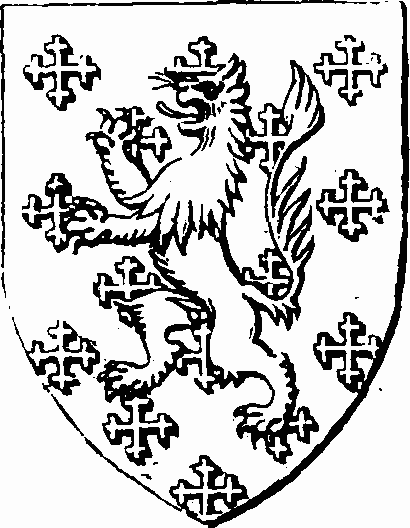
Arms of Bonell: — Or, Semee of cross crosslets, and a lion rampant, Sable.
Crest: A demi-lion rampant, Sable.
Bosville, of Beighton. — The family of Bosville, of Gunthwaite in Yorkshire, sometime resident at Beighton in this county, became extinct by the death of Colonel William Bosville, in 1813. His nephew and legatee, the Honourable Godfrey Macdonald, younger brother of Lord Macdonald, has taken the name.
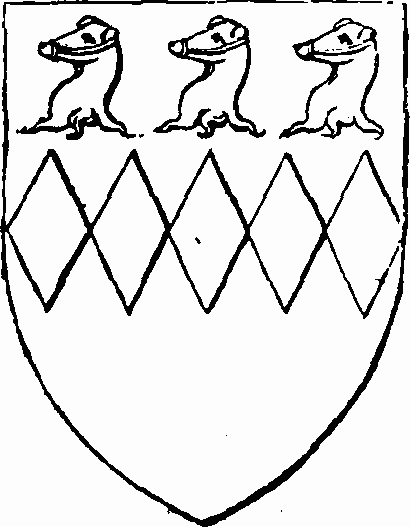
Arms: — Arg. five fusils in fesse, Gules, in chief, three bears heads erased, Sable, muzzled, of the field.
Bowden, of Bowden. — This family was for several generations of Bowden in Chapel-en-le-Frith. George Bowden, of Bowden, and of Barnby in Yorkshire, who died in 1680, appears to have been the last heir male of the family. There were, at that time, younger branches settled in Leicestershire.
Arms:—Quarterly, Sable and Or, in the first quarter a lion passant, Arg. langued, Gules.
Crest: — An eagle's head erased, Sable.

Brailsford, of Brailsford, and of Senior, in Hucknall. — This ancient family was of Brailsford in the reign of Henry II. Nicholas, the first who assumed that name, was son of Elsinus, who lived in the reign of William the Conqueror. In the reign of Richard II., the heiress of the elder branch married Bassett of Chedle. John Brailsford, the representative of a younger branch, settled at Senior in the reign of Edward VI. was servant to Sir John Harpur, in 1662; his father had sold the family estate, but Senior was then possessed by a cousin, as appears by Dugdale's Visitation of Derbyshire. The representatives of Brailsford of Senior, or rather, probably of the younger branch, are opulent yeomen in the neighbourhood of Mansfield in Nottinghamshire.
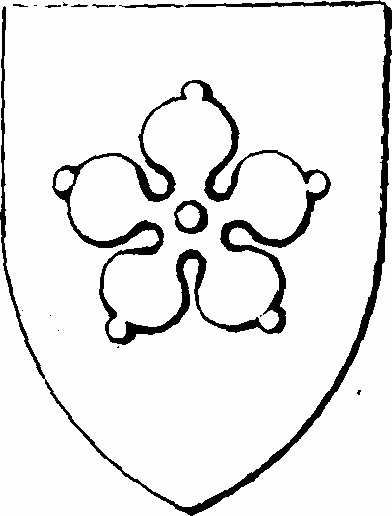
Arms: — Or, a cinquefoil, Sable.
Brereton, of Hurdlow in Hartington. — Three descents are described in Dugdale's Visitation. William Brereton, the representative, who was thirty-two years of age in 1662, died without issue; is sister and heiress married Barker, and the heiress of Barker, married Bossley. Mr. Bossley of Bakewell is the present representative.
Arms: — Argent, two bars, Sable.
Crest: — A camel's head erased.
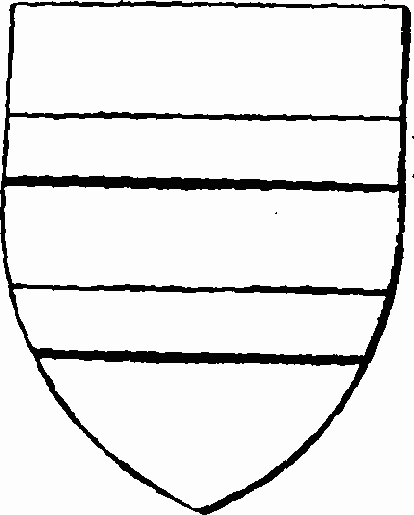
Browne, of Stretton. See Cave Browne, Baronet.
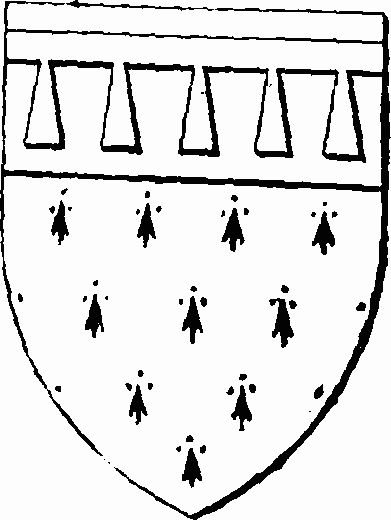
Bullock, of Norton, Onston, and Darley. — This family was of Norton in the reign of Henry VI. The elder branch, after five descents, settled at Onston: the heiress of this branch, in the seventeenth century, married Latham, whose heiress married Mower. Another branch continued at Norton. John Bullock, Esq., the last of this branch died in 1682. A younger branch of the Bullocks of Onston, settled at Darley, near Derby, and afterwards removed to Brampton. The heiress of this branch, about the middle of the seventeenth century, married Hayne,whose heiress married Dale.
Arms of Bullock:— Ermine, a chief; Gules, a label of five points, Or.
Crest:— Seven arrows, six in saltier and one in base, feathered and headed, Arg. enfiled with a mural crown of the last.
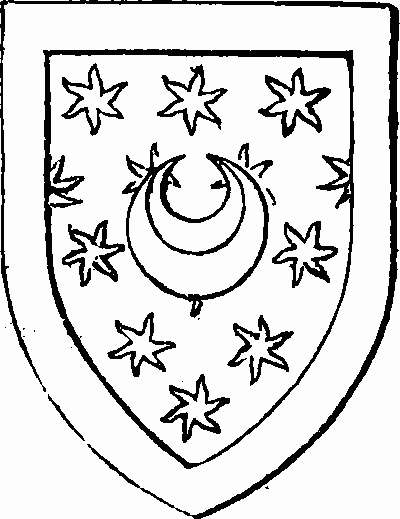
Burton, of Dronfield. — This family was descended from Richard Burton, of Chesterfield, a younger brother of Sir William Burton, of Lindley, in Leicestershire, who was slain at Towton-field, in 1461. Francis Burton, of Dronfield, who was sheriff of Derbyshire in 1666 (fn. n4), married the heiress of Burton, of Lindley: his son Ralph died without issue in 1714. William Burton, of Sheffield, who died in 1798, was descended from a younger branch of the Burtons of Dronfield: he had a son living in Staffordshire a few years ago, who is supposed to be the present representative of the family.
Arms: — Azure, semée of etoiles, and a border, Or; a crescent, Argent.
Crest: — On a ducal coronet, a wyvern, Az., collared, Or.
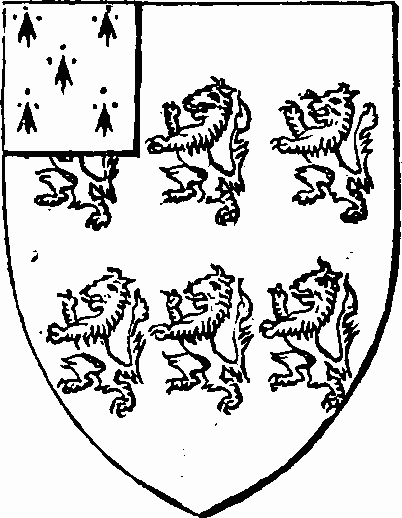
Cheney, of Ashfbrd, Monyash, and Kirk-Langley. — The present representative of this family, who were of Ashford somewhat more than a century ago, is Major-General Robert Cheney, who resides at Beverley, in Yorkshire.
Arms: — Azure, six lions rampant, three and three, Argent; a canton, Ermine.
Crest: — A Bull's scalp, Proper.
Chetham, of Ash and of Mellor-hall. — James Chetham, Esq., grandson of James Chetham, of Smedley, in Lancashire, and great-nephew of Humphrey Chetham, the munificent founder of the Blue-Coat Hospital at Manchester, married one of the daughters and coheirs of Sir Samuel Sleigh, of Etwall and Ash. This branch of the family became extinct by the death of Humphrey, the younger of three sons, who all died without issue.
James Chetham, of Lancashire, probably of the same family, married a daughter of Radcliffe, of Mellor, (eventually heiress of her nephew.) Thomas Chetham, Esq., his great-grandson, who sold his Derbyshire estate, and died in 1799 at Highgate, in Middlesex, was the last of the family who resided at Mellor-hall. His son of the same name, who in 1808 took the name of Strode in addition to that of Chetham, is the present representative of this branch of the family.
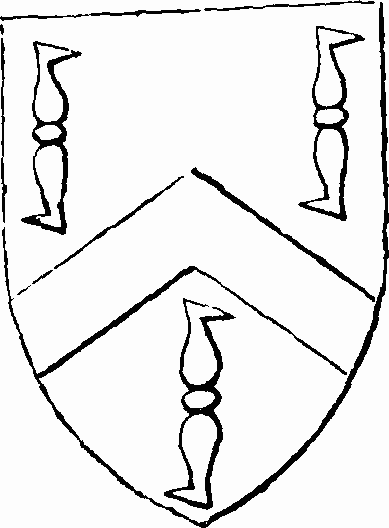
Arms of Chetham, of Smedley in Lancashire, and of Etwall:— Argent, a chevron, Gules, between three fleams or lancets, Sable.
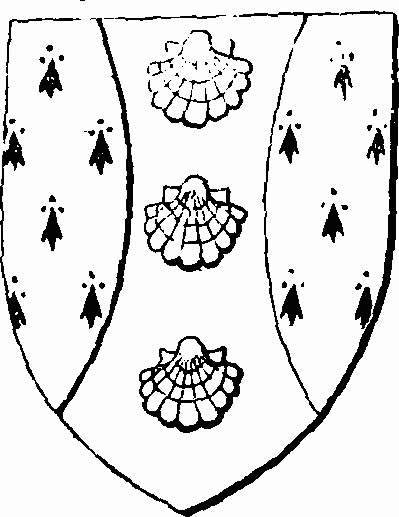
Clarke, of Somersall, afterwards of Chilcote and of Sutton. — The first of this family mentioned in the pedigree was of Chesterfield; his son was of Somersall in Brampton: Chilcote was purchased in 1672; Sutton between 1736 and 1740. Godfrey Bagnall Clarke, Esq., the last of the family, died in 1786: his sister and heir married Job Hart Price, Esq., who took the name of Clarke in 1787, and left a daughter and heir, now Marchioness of Ormond.
Arms: — Azure, three escallops in pale, Or, between two flaunches, Ermine.
Crest: — Within an annulet, Or, enriched with a ruby, a pheon, Argent.
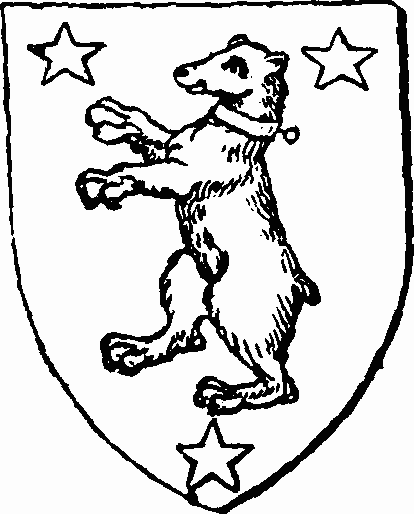
Clarke, of Ashgate in Brampton, and of Norton-hall. — This family settled at Ashgate in the reign of Queen Elizabeth. It became extinct by the death of Cornelius Clarke, Esq., then of Norton-hall, in 1696: his sisters and coheirs married Offley, Bright, Nevil, Heathcote, &c.
Arms: — Gules, a bear rampant, (collared of the field,) between three mullets, Argent.
Crest: — A bear rampant, collared and chained, Sable, holding a battle-axe, Gules.
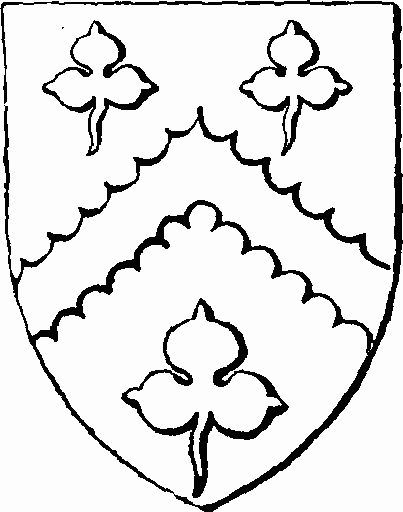
Clay, of Criche. — Two generations only are inserted in the Visitation of 1611. The coheiresses, who were then living, married Brailsfbrd of Senior, Pwisey, and Clarke of Mansfield.
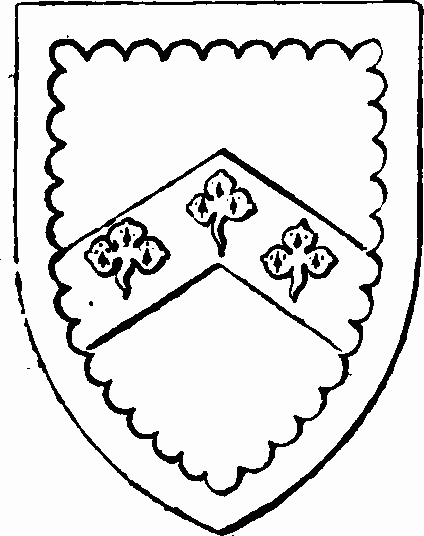
Arms:— Argent, a chevron engrailed between three trefoils, slipped, Sable.
Crest:— Two wings issuing from a wreath, Argent, charged with trefoils, Sable.
Coape, of Duffield. — Henry Coape, Esq., of this place, whose family had been originally of Shatton in Hope, was sheriff of the county in 1703: his only son died unmarried in 1778; his only daughter married into the family of Porter. (fn. n5)
Arms borne by Coape, of Duffield: — Arg., on a chevron, Az., between three roses, Gules, stalked and leaved, Vert, as many fleurs-de-lis of the field.
Crest: — A fleur-de-lis, Argent.
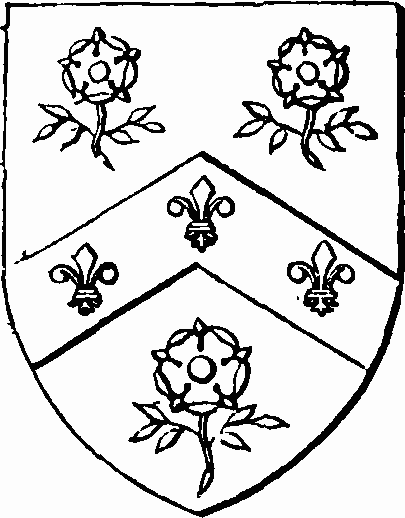
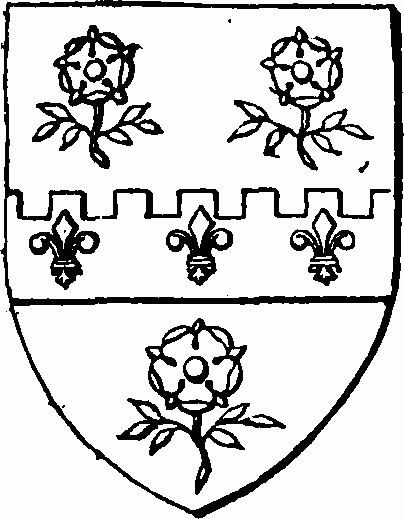
There was another family of Coape, of Farnah, in Duffield, of which William Sherbrooke, Esq., of Oxton (fn. n6) in Nottinghamshire, (late Coape,) is the representative. The following coat was confirmed to this family in 1810: —
Arg., on a fesse embattled, between three roses, Gules, slipped, Proper, as many fleurs-de-lis, Or.
Cokaine, of Ashborne. — This ancient family was settled at Ashborne as early as the reign of Henry III. Edmund Cokaine, the fifth in descent, married the heiress of Herthill; his brother John was ancestor of the Cokaines of Cokaine-Hatley, in Bedfordshire. Francis Cokaine, who was of Ashborne in the sixteenth century, married the heiress of Marow. On the death of his grandson, Francis, in 1594, Sir Aston Cokaine, the poet, grandson of his younger brother Edward, became the head of the family, and died in 1684. The elder line became extinct by the death of his son Thomas, who married a coheiress of Stury. The family had resided for two or three generations at Pooley in Warwickshire. The coheiresses married Henslow and Turville. From a younger son of Sir John Cokaine, who died in the reign of Henry VI., was descended the family of Cokaine, Viscount Cullen, of the kingdom of Ireland, lately extinct.
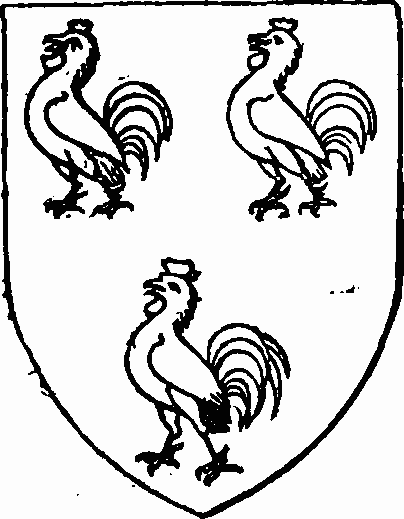
Arms: — Argent, three cocks, Gules; the combs and wattles, Sable.
Crest: — A cock's head, issuing from a wreath, Gules; comb and wattles, Sable.
Columbell, of Darley. — This family was settled at Darley in or before the reign of Richard II. John Columbell, Esq., the last heir male, died in 1659: his daughter and heir married Marbury, of Marbury in Cheshire. The heiress of Stockwith, of Lincolnshire, married into this family.
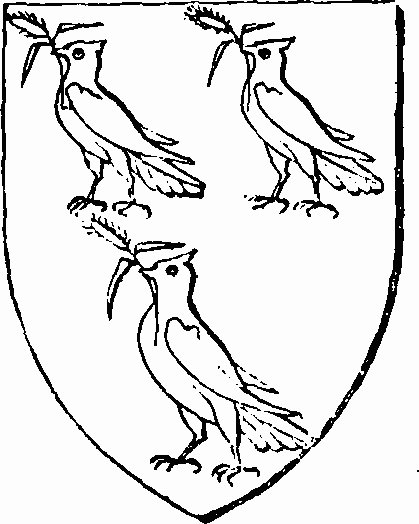
Arms: — Sable, three doves, Argent, with ears of wheat in their beaks, Proper.
Crest: — On a chapeau, Argent, turned up, Sable, a dove of the first, with an ear of wheat in its beak, Proper.
Criche, of Stubbing-Edge. — It appears by deeds that this family was settled in Derbyshire as early as the reign of Edward II., and they were probably originally of Criche. (fn. n7) The Cliches had been settled for several generations in the parish of Ashover. William Criche, father of Ralph, who was living in 1634, married the heiress of Sandford; his second wife was one of the Hunlokes, of Wingerworth. Cornelius Criche, the last of the family, died in very reduced circumstances, at the age of 101, in 1789.
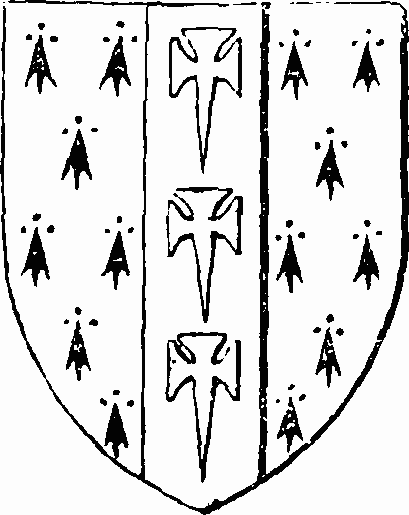
Arms: — Ermine, on a pale, Sable, three crosses patee fitchée, Or.
Dakeyne, or Dakins, of Biggin, and afterwards of Stubbing-Edge. — The first in the pedigree is Robert Dakins, of Biggin, grandfather of Robert who married the heiress of Dowlis, and great-grandfather of Arthur Dakins, who was of Stubbing-Edge in 1611. His descendant Arthur, who was living in 1708, left a daughter and heir, married to Hopkinson, of Bonsall. Mr. John Dakeyne, of Mansfield, descended from a younger brother, is said by Dr. Pegge, to have been the last of this family j but there are still some of the name in Derbyshire. (fn. n8)
Arms: — Gules, a lion passant guardant and two mullets in pale, Or, between two flaunches, each charged with a griffin segreant, Sable.
Crest: — A dexter arm, embowed, Proper, issuing out of a naval crown, Or, holding a battle-axe of the second; on the wrist a ribbon, Azure.
Degge, of Derby. — This family was of Stramshall in Staffordshire in the reign of Richard II., and they continued there tor several generations. Sir Simon Degge, who settled at Derby, was an eminent lawyer, and eventually, one of the Justices for North Wales. In the civil war he was a Royalist, and his name is to be found in the Derbyshire list of intended Knights of the Royal Oak. It is remarkable that he was obliged to serve the office of High-Sheriff, when a barrister in great practice, at the age of sixty-three, and he is said to have served it in his barrister's gown, with a sword by his side. His literary works have been elsewhere spoken of (fn. n9) He died in 1702, at the age of ninety, Whitehall Degge, his son by his first wife, married a coheiress of Beaufeu or Boughey. Simon Degge, M. D., great-grandson of Sir Simon, died in 1729, leaving an only daughter married to Hay. Simon, the second son of Sir Simon Degge, married a coheiress of More: his son Simon married two wives, a coheiress of Williams and a coheiress of Staunton. Simon Degge, the elder son by the first wife, was the last male survivor of this family; he was of Blithebridge in Staffordshire and of Bowden-hall in Derbyshire, and died about the year 1765. The present representative of the family of Degge is Edward Sacheverell Wilmot Sitwell, Esq., son of Dorothy, only daughter of Simon Degge, by the coheiress of Staunton, her two brothers having died without issue.
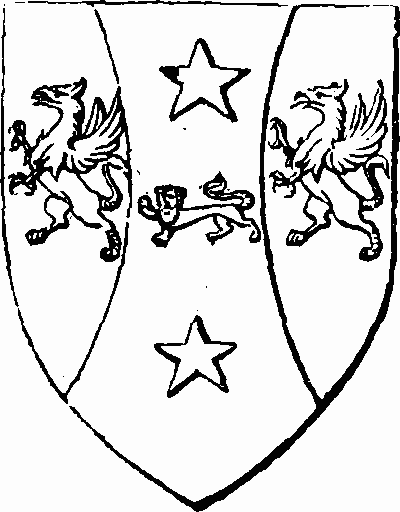
Arms of Degge: — Or, on a bend, Azure, three falcons mounting, Argent, jesses and bells of the field.
Crest: —On a ducal coronet, a falcon reclaimed, Arg.
Dethick, of Dethick, Breadsall, and Newhall. — This ancient family was of Dethick as early as the reign of Henry III.; and we find that in the reign of Edward III., Sir Geoffrey Dethick and Robert Dethick, Esq., married two coheiresses of Annesley: but the pedigrees at the Heralds' College do not carry it higher than Sir William Dethick, whose eldest son Robert was slain in battle, With his only son Thomas, in the reign of Henry VI. The elder line in consequence became extinct: the sisters and coheirs of Thomas married Babington (whose posterity possessed Dethick) and Pole of Heage. The posterity of Roger, the second son of Sir William, settled at Derby, and were ancestors of Sir Gilbert and Sir William Dethick, father and son, successively Garter Kings of Arms. William, one of the younger sons of Sir William Dethick first mentioned, married the heiress of Curzon of Breadsall, and settled at Breadsall, where his family continued for eight generations. John Dethick, who was of Breadsall, in 1569, married a Powtrell, who was,on her mother's side, the heiress of Bassett, of Muschamp. The heiress of Dethick of Breadsall married Harpur about the year 1600.
John and Reginald, two other younger sons of Sir William Dethick, married two of the coheiresses of Meynell alias Ward. (fn. n10) Reginald left an only daughter, who married Bassett. John settled at Newhall in Staplehill, which had been the seat of the Meynells: this branch continued at Newhall for seven generations. Humphrey Dethick, who was living in 1569, and who seems to have been the last of the family, married one of the coheiresses of Longford. The heiress of this branch married Reddish; the elder coheiress of Reddish married Darcy, and the elder coheiress of Darcy, Sir Erasmus Philipps, Bart., who died in 1696.
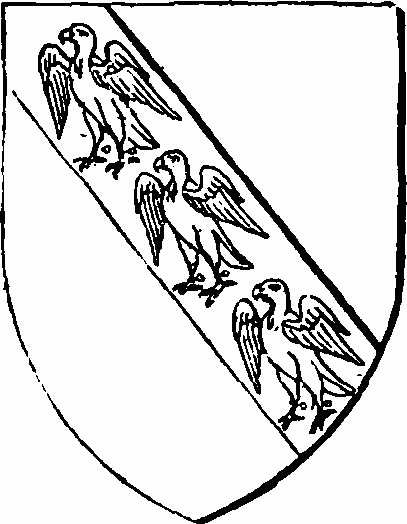
Arms: — Argent, a fesse, Vaire, O. and G. between three water bougets, Sable.
Crest: — A nag's head erased, Argent,
Draper, of Culland. — The name of this family occurs in the list of Gentry, temp. Hen. VI., they are said to have been originally of Hampshire. Robert Draper, Esq., the last heir male, died in the year 1683. The coheiresses married Roe, Jasson, and Bate.
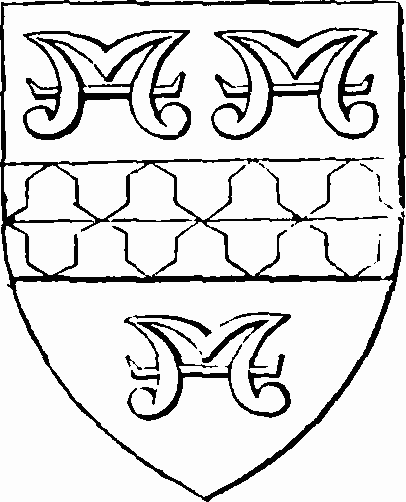
Arms: — Argent, on a fesse between three annulets, Gules, as many covered cups, Or.
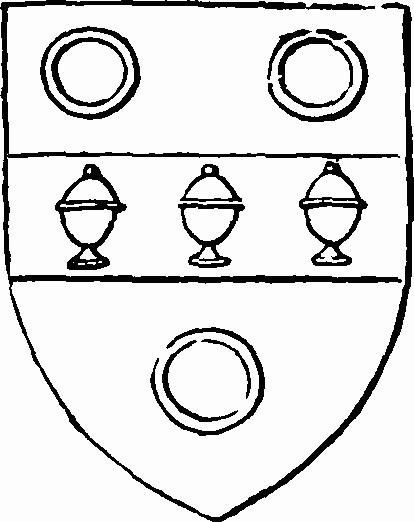
Durant, of Durant-hall. — This ancient family became extinct about the year 1600: the heiress married Alsop.
Arms: — Sable, a cross crosslet, Ermine.
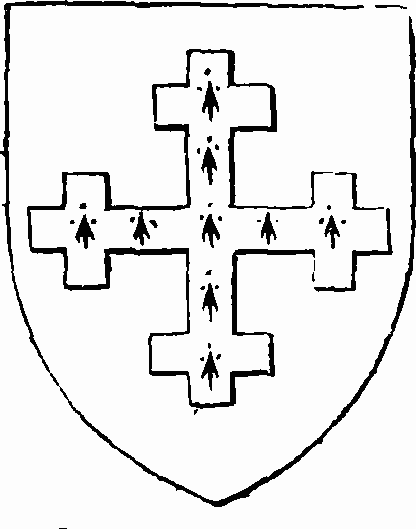
Fanshawe, of Fanshawe-gate in Dronfield. — The Fanshawes of Warepark, in Hertfordshire, from whom descended the Viscounts Fanshawe of the kingdom of Ireland, and the Fanshawes of Parsloes and Barking in Essex, derived their descent from the family above-mentioned, who probably had been settled at Fanshawe-gate at an earlier period, although we find no mention of them before the middle of the sixteenth century. It is long since any of the family have resided in Derbyshire; the present representative of the elder branch, who, as such, is governor of the grammar-school at Dronfield, founded by his ancestor, is Henry Fanshawe, Esq., of St. Petersburgh, a General in the Russian service, father of Captain Henry Fanshawe of the British navy.
Arms: — Or, a chevron between three fleurs de lis, Sable.
Crest: — A dragon's head, erased, Vert, flames of fire, Proper, issuing from his mouth.
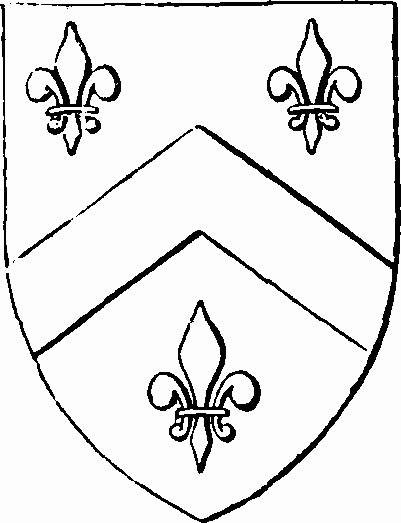
Ferne, of Parwich, Bonsall, and Snitterton. — William Feme, son of Thomas the first mentioned in the pedigree, was of Parwich about the year 1500; his grandson was of Temple-Belwood in Lincolnshire. This elder branch probably is extinct. Robert Ferae of Bonsall, supposed to have been descended from a younger branch of this family, although the descent could not be certainly ascertained, had a grant of arms, somewhat differing from those of Feme of Parwich. Henry Feme, Esq., son of Robert, became possessed of Snitterton by purchase, and died without male issue in 1723; one of his coheiresses married Tumor of Lincolnshire.
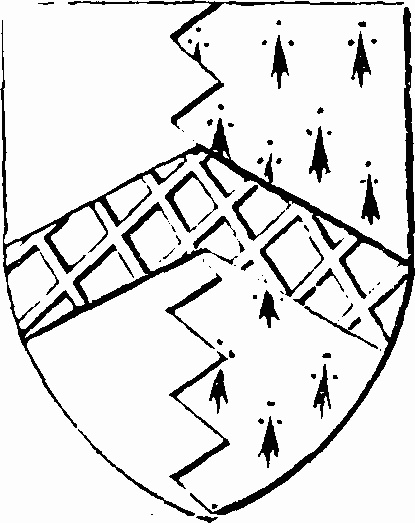
Arms of Feme of Parwich: — Per bend indented, Or and Gules.
Crest: — A garb, Or, between two wings expanded, per pale indented, Or and Gules.
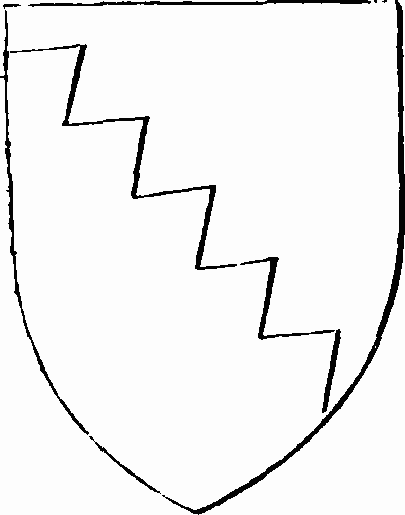
Feme, of Bonsall: — Per bend indented, Argent and Gules, two lions heads erased, counterchanged, crowned, Or.
Crest: — A mount of Feme, Proper, thereon a garb, Or, banded, Gules.
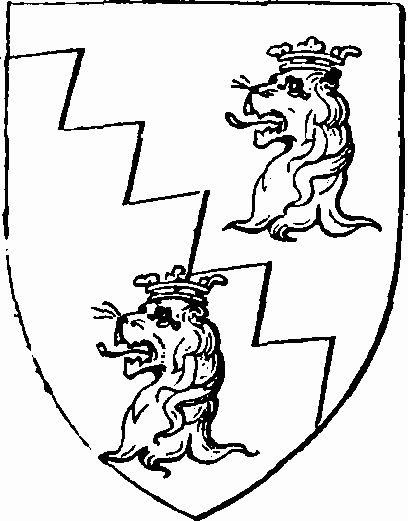
Finderne, of Finderne. — This family was of Finderne, for nine generations, from the reign of Edward III. to that of Henry VIII., when the heiress married Harpur.
Arms: —Argent, a chevron betwen three crosses formée fitchee, Sable.
Crest: — An Ox yoke, Or.
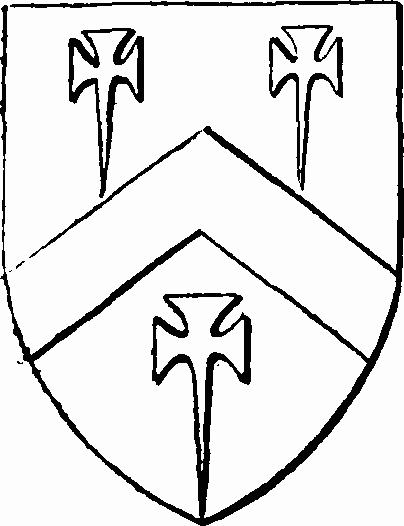
Fisher, of Foremark. — The representative of this family, which has quitted the county, is the Reverend Thomas Fisher.
Arms confirmed in 1730. —Argent, a fesse wavy between three fleurs de lis, Sable.
Crest: — A king's-fisher, Proper, holding in the dexter claw, a like fleur de lis.

Fitzherbert, of Norbury. — The ancestor of this ancient family settled at Norbury in the year 1125; and it continued to be their chief seat till the extinction of the Norbury branch, by the death of Sir John Fitzherbert, about the middle of the seventeenth century. Richard Fitzherbert, who lived in the reign of Henry VII., married the heiress of Marshall of Leicestershire; his son, Sir Anthony, the celebrated judge, a coheiress of Cotton of Rid ware. Sir Thomas, the elder son of the judge, married the heiress of Eyre of Padley, by whom he had a son, who died without issue. John, the second son of the judge, continued the Norbury line, which became extinct by the death of his grandson, Sir John Fitzherbert, beforementioned. William, the fourth son of the judge, married the heiress of Swinnerton, and settled at Swinnerton in Staffordshire. Tho mas Fitzherbert, Esq., his immediate descendant, and the present representative of the family, is still possessed of Norbury. John Fitzherbert, an uncle of the judge, was of Etwall: his grandson left two daughters coheirs, married to Smith of Campden, and Smith of Dunmowr.
Arms: — Argent, a chief, Vaire, O. and G., over all a bend, Sable.
Crest: — A gauntlet erect, Proper.
Fitzherbert, of Somersall. — See Fitzherbert, of Tissington, Baronet.
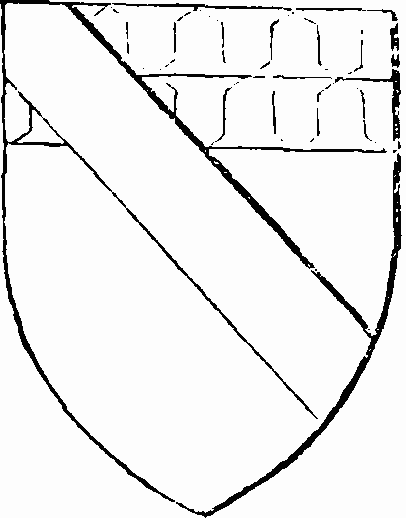
Fletcher, of Steynesby. — John Fletcher, Esq., whose family had made a fortune by the collieries, was sheriff of the county in 1732. Samuel Fletcher, Esq., the last of the family died about the year 1795.
Arms granted in 1731: — Argent, on a cross engrailed, Sable, a compass-dial in the centre between four pheons, Or; a chief, Gules, charged with a level-staff between two double coal-picks of the third.
Crest: — A horse's head, couped, Argent, guttee de sang.
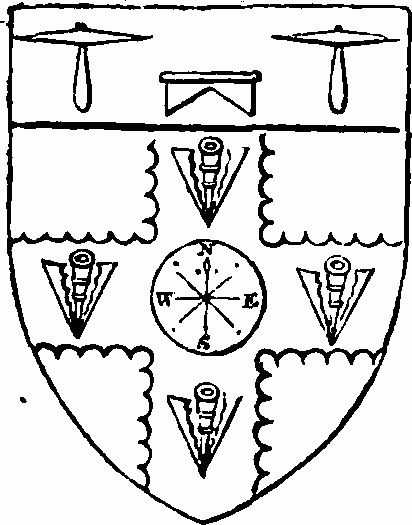
Franceis, or Francis, of Foremark. — The ancestor of this family purchased Foremark in or about the year 1360. The heiress of William, the eighth in descent, married the ancestor of Sir Francis Burdett, Bart. A coheiress of Babington, of Dethick, married into this family. A younger branch of the Franceis's was settled for several generations at Coxbench: one of the coheiresses of this branch married William Brookes, Esq., grandfather of William Brookes Johnson, M.D., now of Derby.
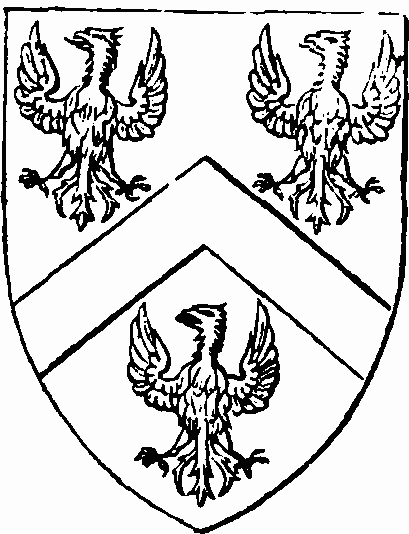
Arms: — Argent, a chevron between three eagles displayed, Gules.
Crest: — A falcon rising, Or; in its beak a vine-branch, fructed, Proper.
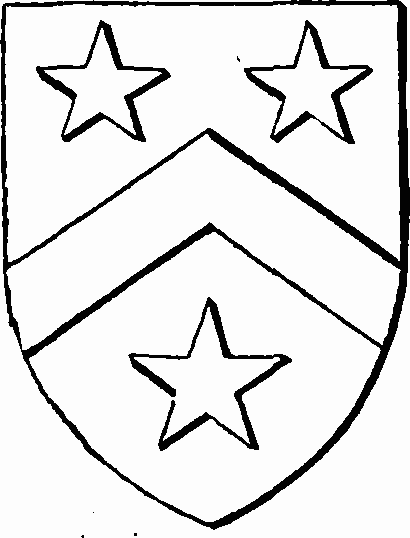
Fulwood, of Middleton. — A younger branch of the Lancashire family of this name settled at Middleton in the sixteenth century. Middleton was sold by the Fulwoods before the year 1719; and this branch is said to be extinct. Sir George Fulwood, a younger son of the Fulwoods of Middleton, was of Holborn in 1611, and gave name to Fulwood Street: his son Christopher was of Grey's-Inn, Another younger branch of these Fulwoods was of Hemington, in Leicestershire. This branch became extinct in 1736 by the death of William Fulwood, Esq., who left three daughters.
Arms: — Gules, a chevron between three mullets, Argent.
Crest: — A" stag, statant, with an oak branch in its mouth, Proper, fructed, Or.
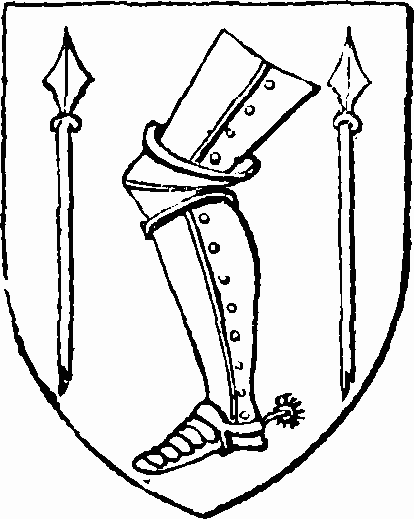
Gilbert, of Locko. — This ancient family was originally of Gilbert's-place (fn. n11), in the parish of Lullington, where they appear to have been settled for twelve generations in the reign of Edward III. They were afterwards of Barrow. William Gilbert, Esq., of Barrow, purchased Locko in the reign of Queen Elizabeth. His descendant, John Gilbert, Esq., became possessed of Thurgarton Priory, in Nottinghamshire, by bequest from the Coopers, took the name of Cooper by act of parliament in 1736, and, having about the same time sold Locko, removed to Thurgarton. The representative of this family is John Gilbert Cooper, Esq., of Thurgarton Priory, who married the heiress of Roe: his father married a coheiress of Wright, of Leicester. The heiress of Saville, and coheiresses of Harpur and Bainbrigge, have married into this family. The heiress of a younger son of the Gilberts of Locko, settled at Mickle-Over, married Newton in the reign of Queen Elizabeth.
Arms as confirmed by Dethick, Garter King of Arms, in 1576: —Sable, a leg armed in pale, between two shivered spears, Argent, the heads, Or.
Crest: — A dexter arm embowed, in armour; the hand, Proper, darting a broken lance in bend sinister, the point Argent, the staft' Or.
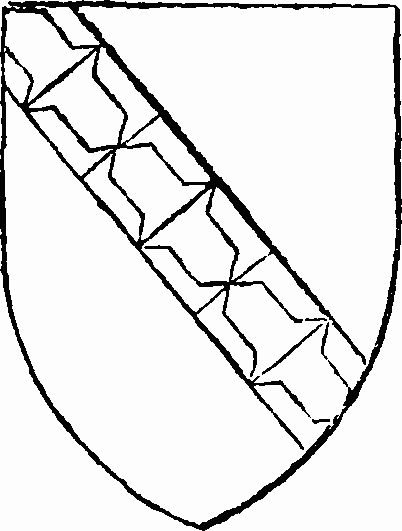
Gilbert, alias Kniveton, of Youlgrave. — This family, which from its arms and name seems to have had some connection with the ancient family of Kniveton, settled at Youlgrave about the year 1300, and continued there for nine or ten generations. The heiress married Barnesley in the reign of Charles I. (fn. n12) The second of the Gilberts, of Youlgrave, married a coheiress of Rossington. A younger brother of Humphrey Gilbert, of Youlgrave, who lived about the year 1500, was ancestor of the Gilberts of Tackbere, in the county of Cornwall, the heiress of which branch married Amy.
Arms of Gilbert, alias Kniveton: — Gules, a bend Vaire, Arg. and Sable.
Crest: — A griffin's head, Gules, beaked, Or, issuing out of a ducal coronet of the second.
Gill, of Norton. — This family who, by their arms, appear to have had some connection with the Gells, were of Norton in the reign of Queen Elizabeth. The elder son of Leonard Gill (by a sister of Bishop Saunderson) was M.P. for the West Riding of Yorkshire in 1653, married the heiress of Westby, of Car-house near Rotheram, settled at that place, and left a daughter and heir, married to Gregge, of Lancashire: his younger brother, Henry Gill, Esq., was of " the Oaks," in Norton, and left an only daughter, who brought the Oaks in marriage to Richard Bagshaw, Esq., of Castleton. The Gills of Chesterfield, whose heiress married Slater, are said to have been of this family, claiming their descent from Philip Gill, elder brother of Leonard, whose posterity lived for several generations in the parish of Norton.
Arms: — Per bend, Or and Vert, three mullets in bend counter-changed.
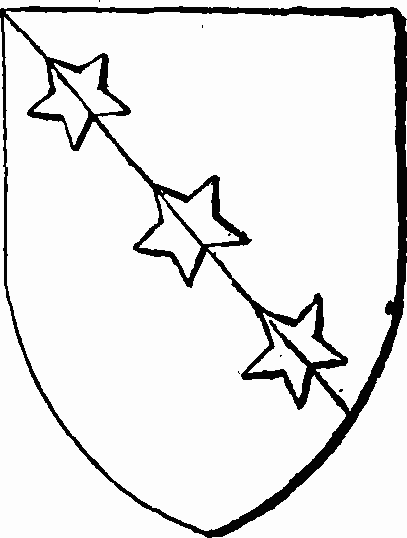
Gisborne, of Derby. — This family was of Derby early in the last century. John Gisborne, jun., Esq. was sheriff of the county in 1742. The representative of the family, the Rev. Thomas Gisborne, the wellknown author of an Inquiry into the Duties of the Female Sex, and other valuable works, resides at Yoxall-Lodge in Staffordshire.
Arms granted in 1741: — Erminois, a lion rampant, Sable, collared Arg. j on a canton, Vert, a garb, Or.
Crest: — A demi-lion, Ermines, collared dovetail, Or, and issuing out of a mural coronet, Argent.
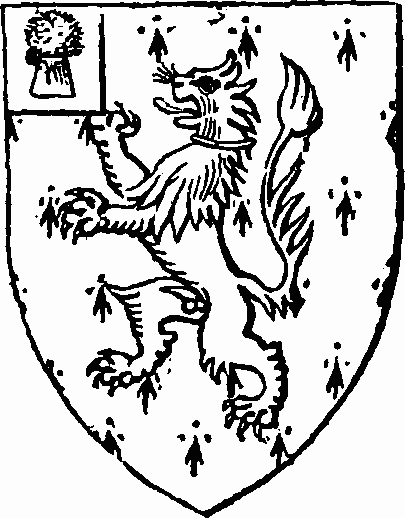
Gregg, of Ilkeston, descended from a family of that name settled at Bradley, in Cheshire, into which the heiress of Starkey had married. — John Gregg, who settled at Ilkeston, married the heiress of Overtoil, alias Horton: his son, Francis Gregg, was of Lees-hall in Norton, and of Hammersmith, near London; Foot Gregg, the grandson, was of Derby. The present representative of this family is Henry Gregg, Esq., Barrister at law.
Arms granted to Gregg, of Derby, in 1725: — Or, three trefoils, slipped, between two chevronels, Sable; in the dexter chief point, an eagle regardant, with the wings expanded, of the second; being varied from the coat of Gregg of Bradley, their descent from which family was proved.
Crest: — Out of a ducal coronet, Or, an eagle's head and neck, couped, per pale, Argent, guttée de sang, and Sable, holding in its beak a trefoil, slipped, Sable.
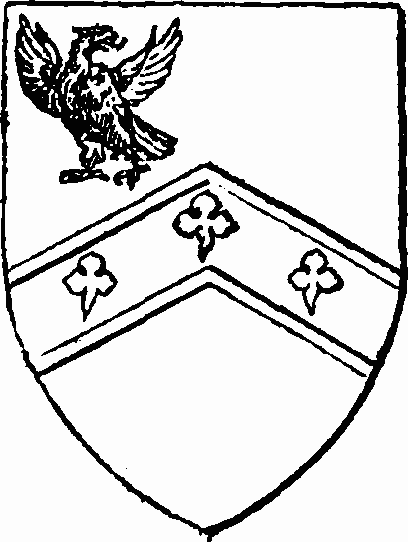
Hardinge, of King's–Newton,— This family is said to have been descended from the Melbournes,of Melbourne. They were of King's–Newton in Melbourne, in the reign of Queen Elizabeth. The late George Hardinge, Esq., one of his Majesty's Justices for South Wales, was the representative of this family; now his next brother, the Reverend Henry Hardinge, rector of Stanhope, father of the brave Captain George Hardinge, of the navy, for whom a public monument has been voted. Mr. Hardinge's younger brother Richard, created a Baronet in 1801 resides in Ireland. The family had quitted King's–Newton many years. The heiress of Webb, of Warwickshire, married into this family.
Arms: — Gules, on a chevron, Argent, fimbriated, Or, three escallop shells, Sable, (granted in 1711, and varying from the ancient coat of Melbourne.)
Crest:— A mitre, Gules, banded and stringed, Or, thereon a like chevron, charged and fimbriated as above.
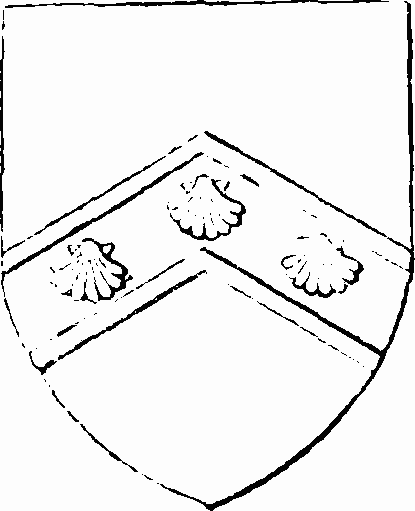
Hardwick, of Hardwick. — Six generations of this ancient family are described in the Visitation of 1569. John Hardwick, Esq., then living, was the last heir male. The two elder of his sisters and coheirs married Wingfield and Boswell; the youngest, Leigh. Elizabeth, the third sister, married four husbands, Robert Barley, Esq., Sir William Cavendish, Sir William Saintloe, and George Earl of Shrewsbury. Hardwick passed to the descendants of Elizabeth's second husband, Sir William Cavendish, and is now one of the seats of the Duke of Devonshire.
Arms: — Argent, a saltier engrailed, Azure, on a chief of the second, three cinquefoils of the field.
Crest: — On a mount, Vert, a stag current, Proper; charged on the neck with a chaplet of roses, Argent, between two bars, Azure.
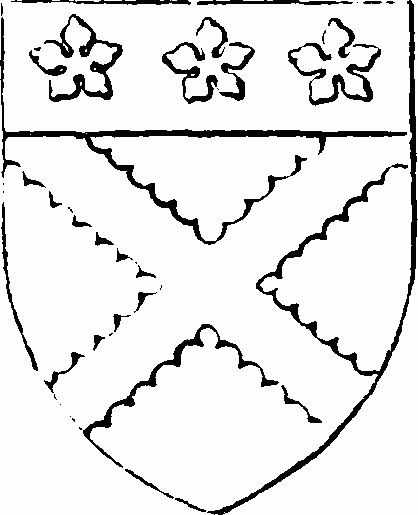
Hodgkinson, of Overton–hall in Ashover. — This place was purchased by the Hodgkinsons in 1556. William Hodgkinson, the last heir male, died in 1731; his heiress married the grandfather of the Right Honourable Sir Joseph Banks, Bart., G. C. B.
Arms: — Or, on a cross couped between four cinque foils, Vert, a cinquefoil of the first.
Crest: — On a wreath, a garb, Or, between two dra gons wings, displayed, Vert.
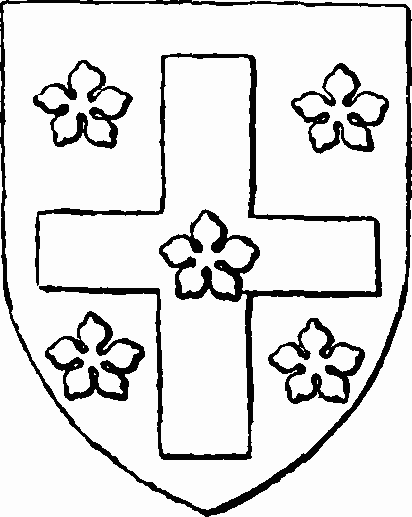
Hopkinson, of Bonsall. — This family, which had been settled at Bonsall as early as the reign of Henry V., became extinct about the latter end of the seventeenth century. A coheiress of Lumby married into this family. There are no arms assigned to the Hopkinsons, in Dugdale's Visitation.
Horne, of Butterley–park. — Charles Home, who died in 1784, was the last heir male of this family. Edward Thomas Warren, Esq., his sister's son, took the name and arms of Home by sign-manual, the same year, in pursuance of the will of Captain Edmund Home of the navy, (brother of Charles,) who died in 1764.
Arms: — Argent, three bugle–horns, Sable, garnished, Or, stringed, Gules, each inclosing an etoile, Azure.
Crest: — A bugle horn inclosing an etoile, as in the arms.

Jodrell, of Duffield. — This family are descended from the Jodrells of Moorhouse in Staffordshire, a younger branch of the Cheshire Jodrells, who are said to have removed from Derbyshire to Cheshire in the early part of the fifteenth century. The present representative is R. P. Jodrell, Esq., of Portland–place, and of Lewknor in Oxfordshire.
Arms granted in 1707: — Ermines, three round buckles, the tongues pendant, Argent; in the fesse point, a trefoil slipped, Or.
Crest: — A cock's head and neck couped, the wings, erected, Or.
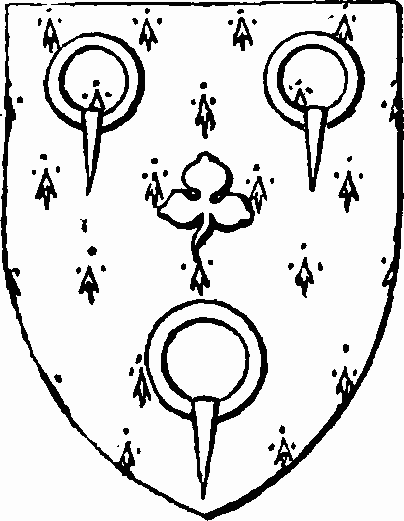
Ireton, of Little–Ireton. — This ancient family derived its descent from the younger brother of an ancestor of the Shirleys, who settled at LittleIreton in the parish of Kedleston, and took that name. Nine descents are described in the Visitation of 1611. They appear to have removed to Attenton in Nottinghamshire, where Henry Ireton, Cromwell's son–in–law, who was the representative of the family, was born. His son Henry died without issue, his daughters married Polhill, Lloyd, Bendish, and Carter. Henry Ireton had three younger brothers, one of whom, John, was Lord Mayor of London in 1658.
Arms: — Ermine, two bends, Gules.
Crest: — A squirrel.
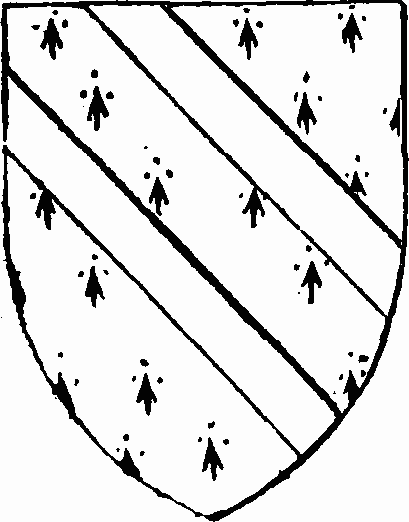
Kendall, of Smithsby. — Five descents of tins family (who possessed Smithsby by marriage with the heiress of Shepëy) are described in the Visitation of 1611. The Smithsby estate was sold in the reign of Charles I. The present representative of this family is John Kendall, Esq., of ThorpeLangton in Lincolnshire.
Arms: — Gules, a fesse cheeky, Or and Azure, between three eagles displayed, of the second.
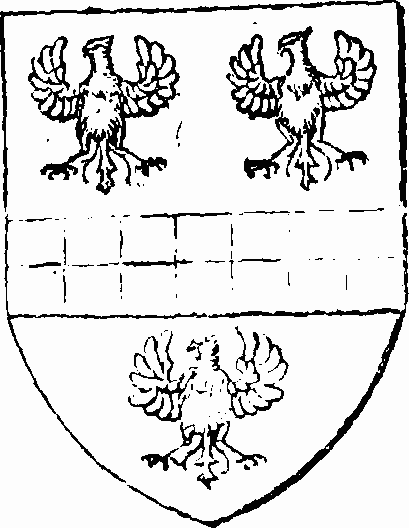
Leche, of Chatsworth. — The ancestor of this family was one of the surgeons to King Edward III. They were of Chatsworth many years before they became possessed of the manor. This branch became extinct by the death of Francis Leche, who sold the estate in or about the reign of Edward VI., his uncle Ralph had three daughters, married to Kniveton of Mercaston, Wingfield, and Slater of Sutton in Lincolnshire. A younger branch of this family is still settled at Garden in Cheshire. There was also a family of Leche or Leech of Shipley, whose heiress married Miller: the heiress of Miller brought Shipley to the Mundy family.
Arms: — Ermine, on a chief dancettee, Gules, three ducal coronets, Or.
Crest: — Out of a ducal coronet, Or, an arm erect, Proper, grasping a leech environed round the arm, Vert.
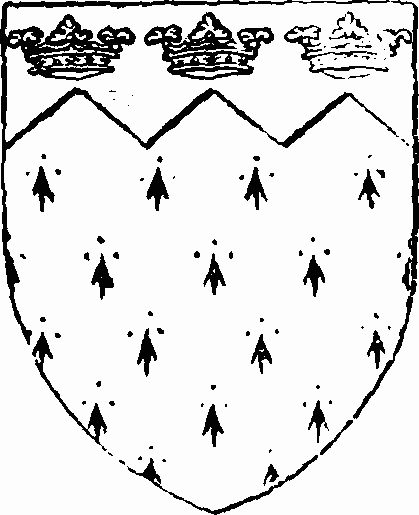
Lee, of Lady–hole. — Three descents of this family are described in Dugdale's Visitation. Thomas Gresley, Esq., of Nether–Seale, married the daughter of John Lee, Esq., of Lady–hole, and heir of her brother William, who was the last heir male of this family. This lady died in 1732.
Arms: — Azure, three ducal coronets, Or, a border, Argent.
Crest:— An arm in armour, bent, Proper, bandaged, Or gauntlets, Azure, holding in the hand a battle–axe, the staff, Or.
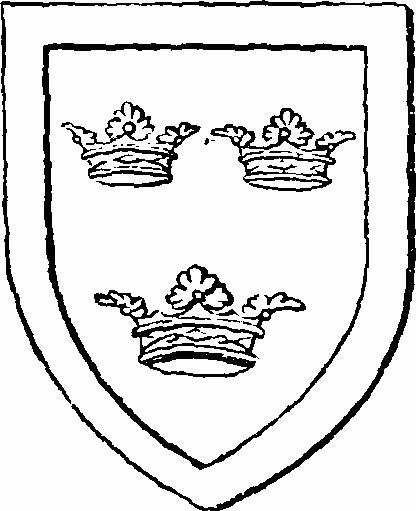
Leigh, of Egginton.— Robert Leigh, son of Reginald Leigh of Annesley in Nottinghamshire, descended from the Leighs of Adlington in Cheshire, married a coheiress of Lathbury, and settled at Egginton in the fifteenth century. Sir Henry Leigh, the last of this branch, died in the reign of James I. the heiress married Every.
Arms: — Azure, a plate between three ducal crowns, Or, within a border, Argent.
Crest: — An armed arm couped at the shoulder, Or, the scarf, Azure, grasping a halbert, Proper.
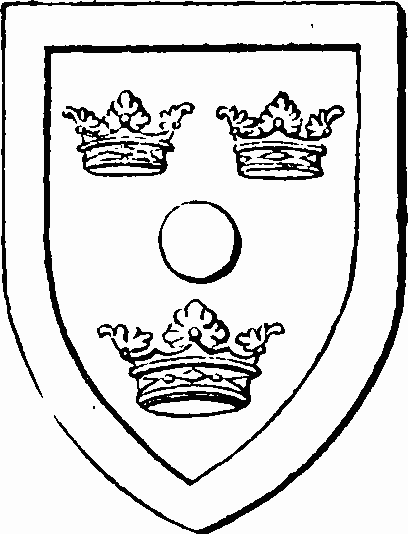
Linacre, of Linacre–hall. — Twenty descents of this ancient family are described in Vincent's Derbyshire Pedigrees. It appears to have been extinct about the year 1600. The heiresses of Hakenthorpe and Plumley and a coheiress of Bakewell married into this family. The last–mentioned match took place before the year 1400. The coheiresses of John Linacre of Hasland–hall, who died in 1488, married Rollesley and Cooke.
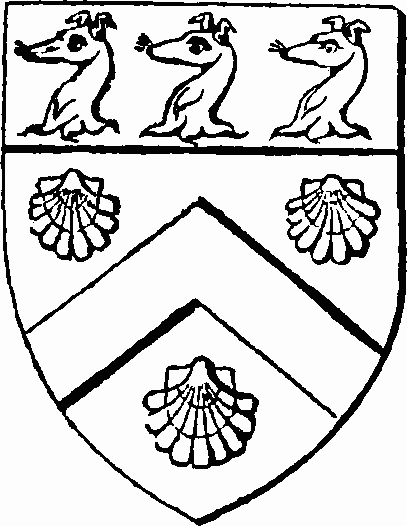
Arms: — Sable, a chevron between three escallops, Argent, on a chief, Or, three greyhounds heads, erased, of the field.
Crest: — A greyhound's head, erased, quarterly, Arg. and Sable, charged with four escallop shells, counterchanged.
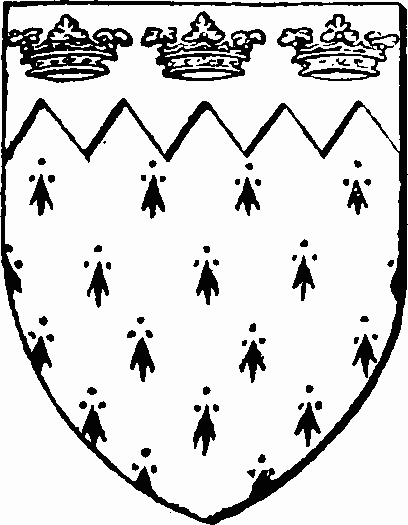
Litton or Lytton, of Litton. — This ancient family was of Litton near Tideswell, as early as the reign of Henry III. Sir Robert Lytton, who was under–treasurer of England, in the reign of Henry VI., purchased the manor of Knebworth in Hertfordshire, whither the family removed some time before Litton–hall was sold by Rowland Lytton, Esq., in 1597. W. R. Lytton, Esq., of Knebworth is the present representative of this family.
Arms: — Ermine, on a chief, indented, Azure, three ducal coronets, Or.
Crest: — A bittern among reeds, Proper.
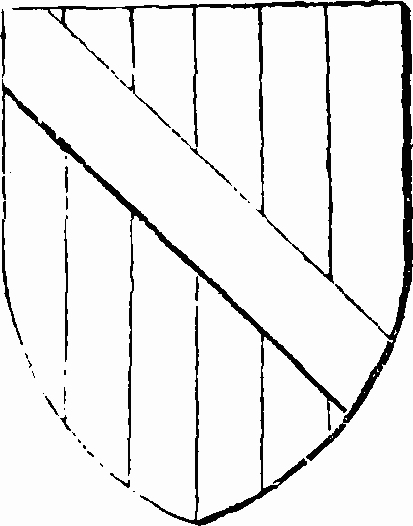
Longford, of Longford. — Fourteen generations of this ancient family are described in the Visitation of 1569. Sir Nicholas Longford, who died in the year 1610, was the last heir male of the family; his sisters and coheiresses married Hastings and Dethick of New–hall. The coheirs of Fitz–Ercald, Hathersage; Deincourt, and Appleby, (who married the coheiress of Solney,) married into this family.
There were several families of Longford or Langford descended from younger branches of this family, some of which probably are still in existence.
Arms:— Paly of six, Or and Gules, over all. a bend, Argent.
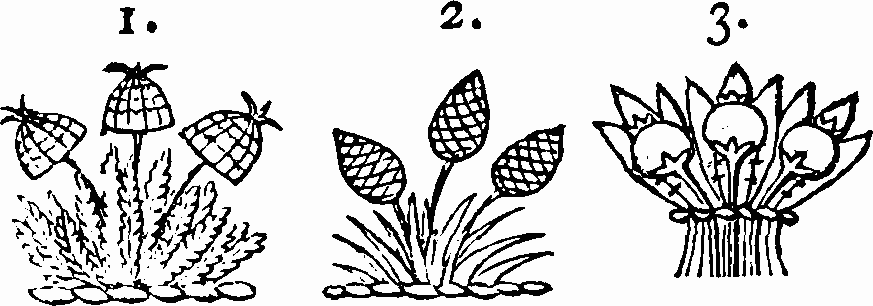
Crest: —Three several crests, as here represented, which it would be difficult to describe, have been borne by this family. The fruit in No. 3, is called by some of the old heraldic writers Chebules, an obsolete French word for a sort of large plum.
Mackworth, of Mackworth. — This ancient family was settled at an early period at Mackworth. Thomas Mackworth, Esq., who was one of the representatives of the county in the reign of Henry VI., married the heiress of Basinges, of Normanton in Rutlandshire, whither the family afterwards removed, but continued to possess Mackworth in 1640. Thomas Mackworth was of Normanton when created a Baronet, in 1619. The present representative of the family is Sir Henry Mackworth, Bart.
Arms: — Per pale, indented, Sable and Ermine, a chevron, Gules, fretty, Or.
Crest: — A wing, indented per pale, as in the arms.
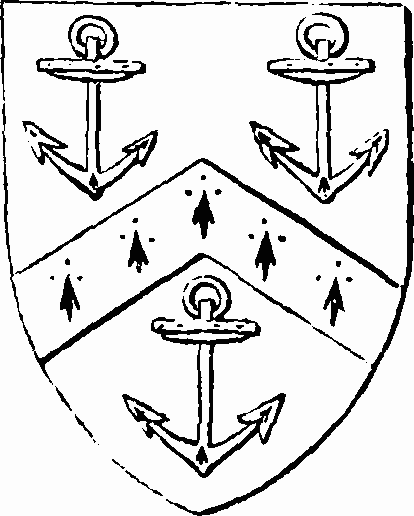
Manlove, of Ashborne, descended from the Staffordshire family of that name. The Rev. Thomas Manlove, the representative of this family, died without issue in 1802: he had a brother in business in London.
Arms: — Azure, a chevron between three anchors, Ermine.
Crest:— Out of a mural coronet, Gules, a cubit arm erect, habited, Erminois, cuffed, Argent, the hand, Proper, holding a flaming sword of the third, hilted Or.
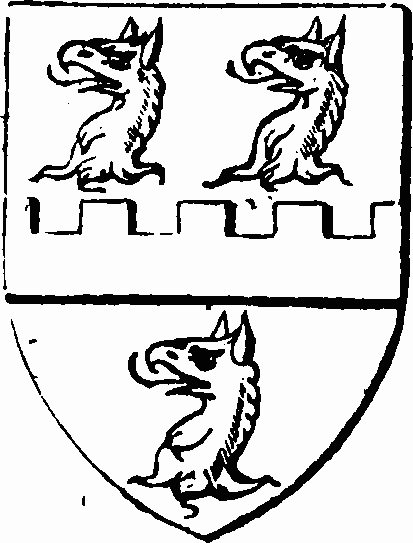
Master of Codnor–Castle. — Sir Streynsham Master, who purchased Codnor in 1692, was sheriff in 1712. Charles Legh Hoskins Master, Esq., is representative, and the present owner of Codnor Castle.
Arms: — Azure, a fesse embattled, between three gryphons' heads, erased, Or.
Crest: — An unicorn's head, Argent, issuing out of a mural crown, Or.
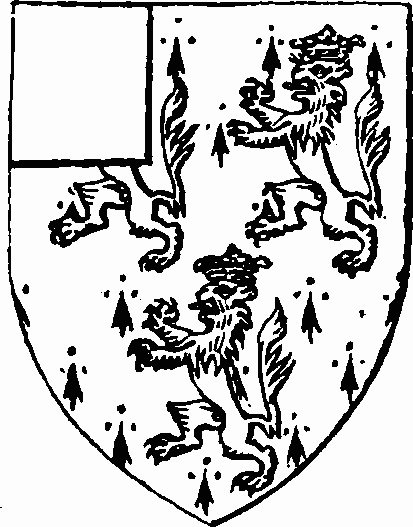
Merry, of Barton. — The grandfather of Sir Henry Merry, who was of Barton in 1611, purchased and settled at this place. Valentine Merry, the representative, who was of Radborne in 1663, had a son, then four years of age. The heiress of this family married Simpson about the year 1700.
Arms: — Ermine, three lions rampant, Gules, crowned, Or; a canton of the second.
Crest: — A demi–lion rampant, Ermine, crowned, Or, issuing out of a ducal coronet of the second.
Meverell, of Tidswell. — The ancestor of this family married a coheiress of Daniell, about the middle of the fourteenth century. Robert Meverell, Esq., the last heir male, died in 1626, and lies buried at Ham, in Staffordshire: his daughter and heir married Thomas Lord Cromwell, afterwards Earl of Ardglass.
Arms: — Argent, a gryphon segreant, Sable, beaked and legged, Gules.
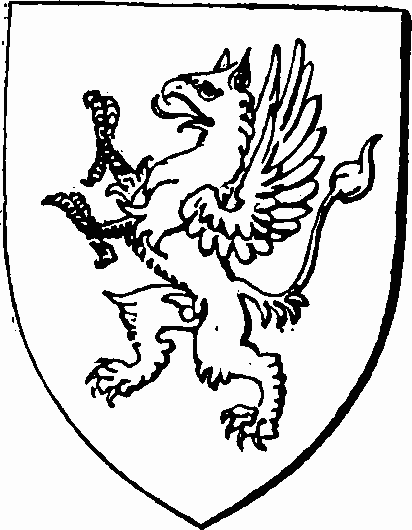
Milward, of Eaton–Dovedale. — Six generations of this family are described in the Visitation of 1611. The heiress married Clarke of Somersall, ancestor of the Marchioness of Ormond. A younger branch of this family was of Snitterton, in Darley. John Milward, Esq., the last of this branch, died in 1670. The coheiresses married Boothby, Jennens, and Adderley.
Arms: — Ermine, on a fesse, Gules, three plates.
Crest: — A lion's paw, issuing out of a wreath, Sable, grasping a sceptre, Or.
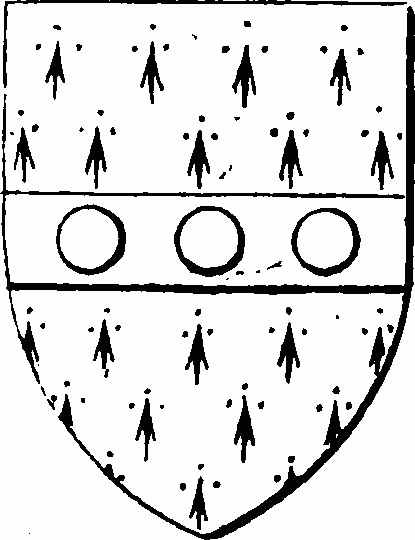
Offley, of Norton–hall. — This family settled in Derbyshire in consequence of becoming possessed of the Norton estate under the will of Cornelius Clarke, Esq., Stephen Offley, Esq., son of the devisee, who was sheriff of the county in 1716, married the heiress of Smyth, of Norfolk; Joseph, his grandson, the heiress of Bohun, of Beccles; Edmund, son of Joseph, died unmarried in 1754: his sisters and coheirs married Shore, and Edmunds of Yorkshire.
Arms: —Argent, a cross flory, Azure, between four Cornisli choughs, Proper.
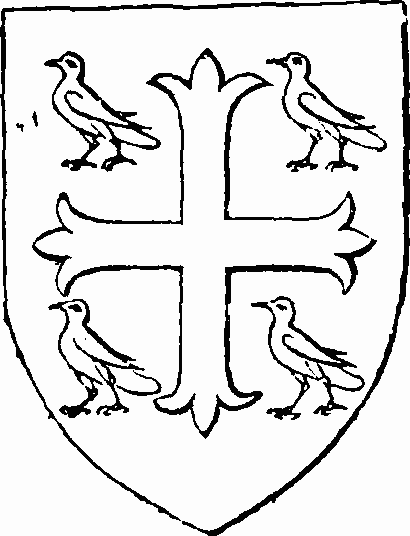
Osborne, of Derby.— A Nottinghamshire family settled for a short continuance at Derby. William Osborne, Esq., the last of the family, died in 1752. One of the coheiresses married the grandfather of Sir Hugh Bateman, Bart.
Arms: — Or, on a bend between two wolves heads, erased, Sable, three dolphins embowed of the field.
Crest: — A pelican in her nest, feeding her young, Or.
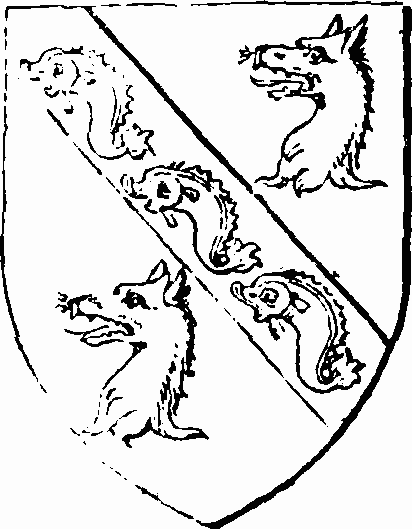
Parker, of Norton–Lees. — Thomas Parker, the ancestor of this family, settled at Norton–Lees in consequence of a marriage with the heiress of Gotham, in the reign of Richard II., his grandson married a coheiress of Birley. John, the sixth in descent from Thomas, died without male issue in or about the reign of Charles I. Anne, his daughter and heir, who married Barker, died in 1671. From a younger son of this family was descended Thomas Parker, the first Earl of Macclesfield, sometime Lord High Chancellor, whose father was of Leake in Staffordshire, his grand father of Parwich in this county; his great-grandfather of Ashborne. The chancellor, before he attained that high office, resided several years in Derby, and was twice elected one of the representatives of that town in the reign of Queen Anne.
Arms: — Gules, a chevron between three leopards faces, Or.
Crest: — A leopard's head, affrontée, erased, Or, ducally gorged, Gules.
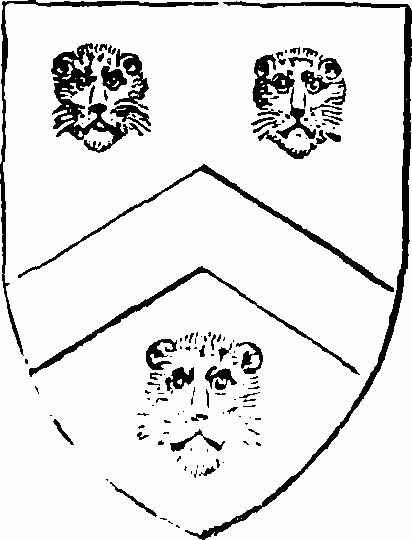
Pilkington, of Stanton. — The arms only are described in the Visitation of 1611. The pedigree is not entered. Matthew Pilkington, LL.B., prebendary of Lichfield, was buried at Stanton in 1785.
Arms: — Azure, a cross patée, voided, Argent.
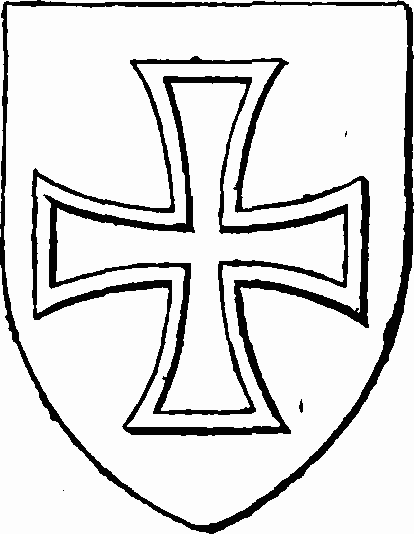
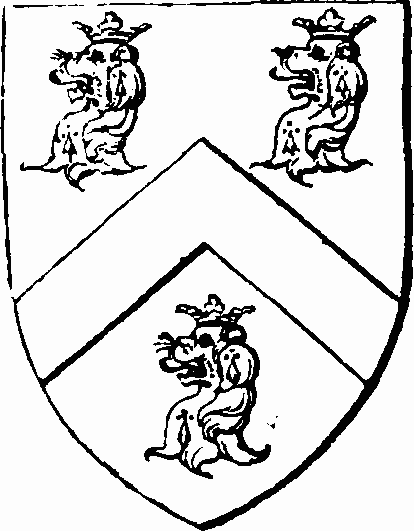
Pindar, of Duffield. — The name of this family appears in the list of gentry, temp. Hen. VI. Reginald Pindar, of Duffield, was sheriff of the county in 1684: either he or a son of the same name removed to Kempley in Gloucestershire. Reginald, the representative of this family, who died in 1788, had taken the name of Lygon on succeeding to the estate of Madresfield in Worcestershire; his son, William Lygon, Esq., was, in 1806, created Lord Beauchamp of Powick, and in 1815, Earl Beauchamp and Viscount Elmley; he died in 1816, and was succeeded by his son, the present Earl, who is representative of the Pindar family.
Arms of Pindar: — Azure, a chevron, Argent, between three lions heads erased, Ermine, ducally crowned, Or.
Crest: — A lion's head, as in the arms.
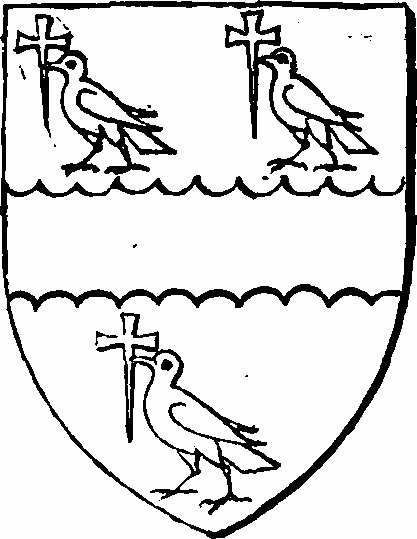
Port, or Porte, of Etwall. — Sir John Port, one of the Justices of the King's Bench, married the heiress of Fitzherbert of Etwall: his son, Sir John Port, who married the heiress of Gifford of Staffordshire, left three daughters, coheirs, married to Gerard of Bryn, Hastings, Earl of Huntingdon, and Stanhope.
Arms: — Azure, a fesse engrailed, between three pigeons, each having in the beak a cross formée fitchée, all Or.
Pott, of Stancliffe. — Descended from the Cheshire family of that name. John Pott, who died in 1613, married the heiress of Newsam of Stancliffe by the heiress of Columbell: his son married the heiress of Newcome. This branch of the family of Pott appears to be extinct. Stancliffe was sold before the year 1658.
Arms: — Barry of ten, Argent and Sable, on a bend, Azure, three trefoils, Or.
Crest: — A mount, Vert, thereon a greyhound couchant, Gules, collared, Or.
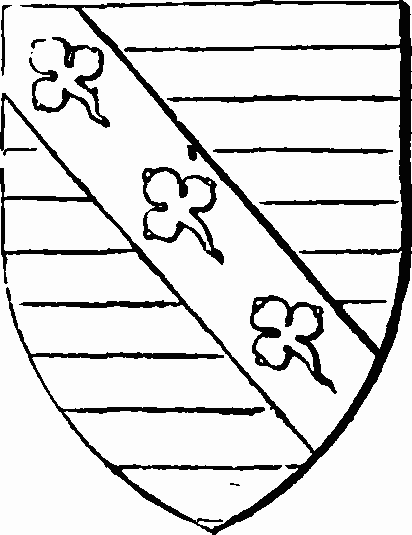
Powtrell, of West–Hallam.— This ancient family was of Thrumpton in Nottinghamshire, where eight generations had resided previously to the reign of Henry V. The male line then became extinct. The heiress married Smith, whose son took the name of Powtrell. Soon afterwards, Thomas Powtrell, a younger son of this family, settled at West–Hallam; his son John married a coheiress of Strelley of Nottinghamshire. Thomas his grandson (by his first wife a coheiress of Bassett) left an only daughter, married to Dethick of Newhall. Henry Powtrell, Esq., the last heir male of this branch, who died in 1666, left seven daughters.
Arms: — Argent, a fesse between three cinquefoils, Gules.
Crest: — A hedge–hog, Gules, chained and quilled, Or.
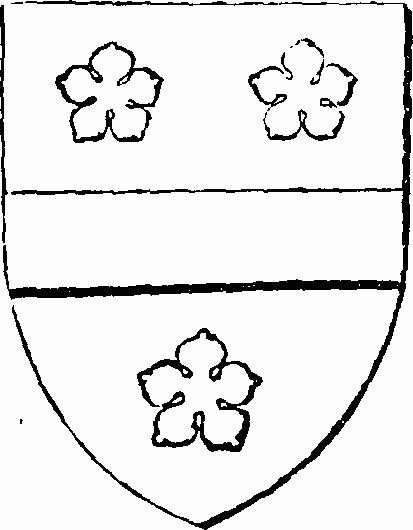
Radcliffe, of Mellor. — Robert Radcliffe, a younger brother of the family of Radcliffe of Ordeshall in Lancashire, married the elder coheiress of Mellor in the fourteenth century. Ten generations of the Radcliffes of Mellor are described in the Visitation of 1611. Peter Radcliffe, then the representative of the family, who died in 1662, left a daughter and heir, married to Horsfall. The present–representative, in the male line, of the Radcliffes of Mellor is the Reverend Edward Stringfellow Radcliffe, Vicar of Walton-in-the-Dale, Lancashire. Some younger branches are still resident in the chapelry of Mellor.
Arms; — Argent, two bends engrailed, Sable, a label of three points and a crescent, Gules.
Crest: — A bull's head erased, Sable, armed, Or, ducally gorged, and charged with a pheon, Argent.
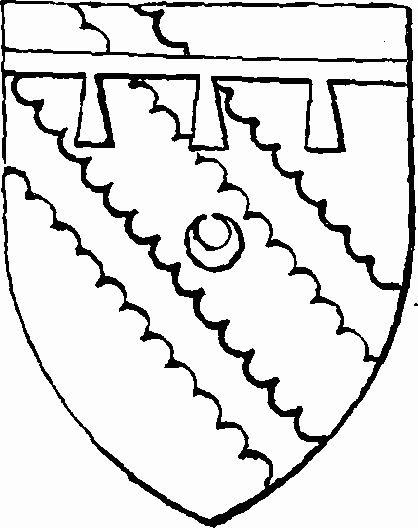
There was a younger branch of the Radcliffes settled at King's-Newton, and afterwards at Mugginton. This branch bore — Argent, a bend engrailed, Sable, between three pellats.
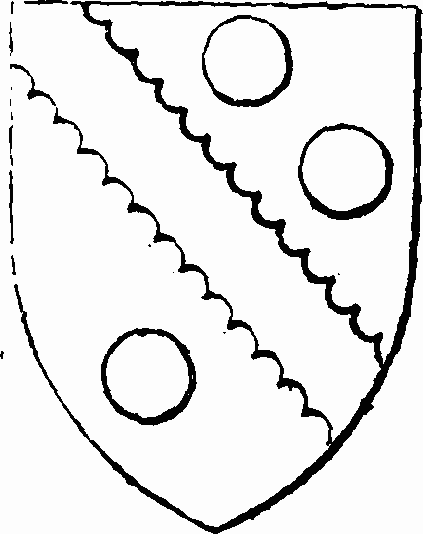
Reresby, of Eastwood-hall in Ashover in the reign of Henry III. — a Lincolnshire family —married a coheiress of Dejncourt. Sir Thomas Reresby who was of Thribergh in Yorkshire, sold the Ashover estate in the reign of James I. This Sir Thomas was created a Baronet. The title became extinct by the death of Sir Leonard Reresby, the last of the family, in 1748.
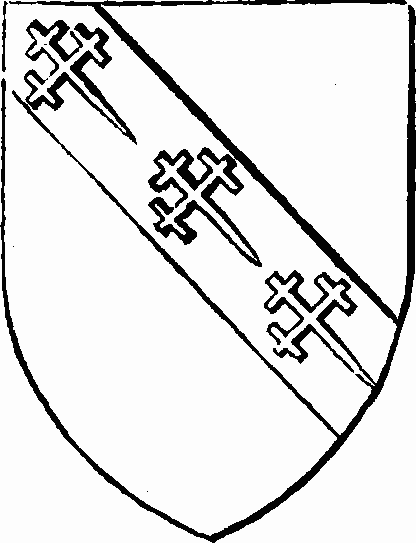
Arms: — Gules, on a bend, Argent, three cross crosslets, fitchée, Sable.
Crest — On a chapeau, Gules, turned up Ermine, a goat passant, Argent.
Revel, of Ogston and Carnfield. — This ancient family was originally of Newbold-Revel in Warwickshire. The Visitation of 1569 makes the Derbyshire branch to have descended from Simon, third son of Sir William Revel, Knt. John, the elder son of John Revel, (the first of the family who came into Derbyshire,) settled at Ogston in the fourteenth century. William Revel, the last heir male of this branch, died in 1706; his sisters and coheirs married Richard Turbutt, Esq., and Sir Paul Jenkinson, Bart., of Walton.
Hugh Revel, a younger brother of John Revel, the younger, abovementioned, settled at Carnfield or Carnthwaite in South-Normanton. This branch became extinct, in the legitimate line, by the death of Edward Revel, Esq., who was living at the time of the Visitation in 1634. Robert Revel, Esq., who was sheriff of the county in 1700, being descended from a natural son of Edward above-mentioned, had a grant of arms in 1711, differing from the old arms of the family, by having a border compony, Or and Sable. Edward Revel, Esq., his descendant, died without male issue in 1770.
Arms of Revel of Ogston and Carnfield (fn. n13) :—Argent, on a chevron, Gules, three trefoils, Ermine, all within a border engrailed, Sable.
Crest: — A bowed arm, in armour, garnished, Or, holding in the hand a dagger, the point downwards, between two bats wings, Or, membraned, Gules.
Rollesley or Rowlesley, of Little-Rowlesley. — Jordan, son of Henry de Rollesley, who lived in the reign of Richard I., had a daughter and heir, whose husband Peter, took the name of De Rollesley. Nicholas, his grandson, married the heiress of Hopton; John, the fourth in descent from Nicholas, a coheiress of Cheney. John Rowlesley, the twelfth in descent from Peter above-mentioned, died in his infancy in the reign of Queen Elizabeth. His sister and heir married Kniveton.
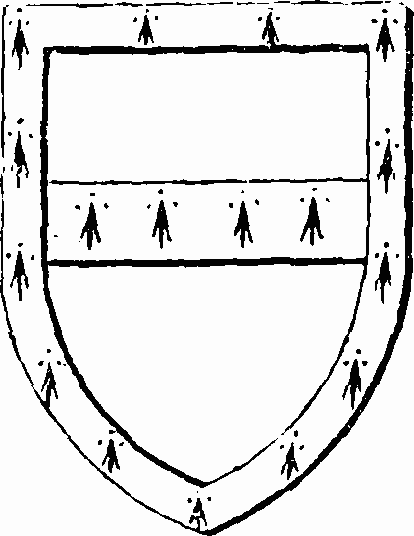
Arms: — Gules, a fesse and border, Ermine.
Crest: — A demi-lion rampant issuing from a wreath, party per pale, Arg. and Gules, holding in his paws a rose of the last, stalked and leafed, Vert.
Rolleston, of the Lea and of Swarkston.— A younger son of Sir Ralph Rolleston, of Rolleston in Staffordshire, settled at the Lea in the parish of Ashover, where the family had resided for eight generations, at the time of the Visitation of 1569; William Rolleston, the second of the Lea family, married the heiress of Winckfield; George Rolleston, the last mentioned in Glover's pedigree, died without issue in the latter end of Queen Elizabeth's reign, one of his sisters and coheirs brought Lea-hall to the Pershalls.
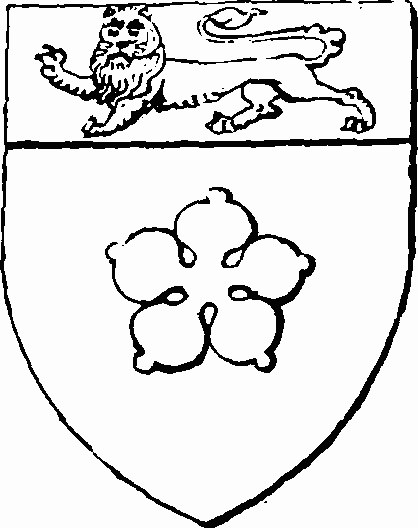
Arms: — Argent, a cinquefbil, Azure, on a chief, Gules, a lion passant-guardant, Or.
Crest: — An eagle's head issuing from a wreath, Proper.
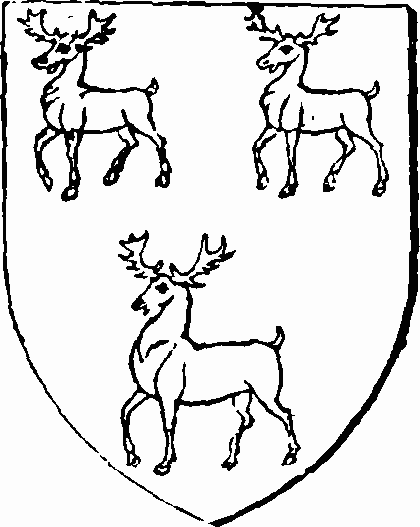
Rotheram, of Dronfield. — John Rotheram, Esq., who purchased the estate was sheriff of the county in 1750: his family had been settled at Rotheram about a century before; his son, Samuel Rotheram, Esq., who was sheriff in 1772, died without issue in 1785.
Arms: —Vert, three bucks trippant, Or.
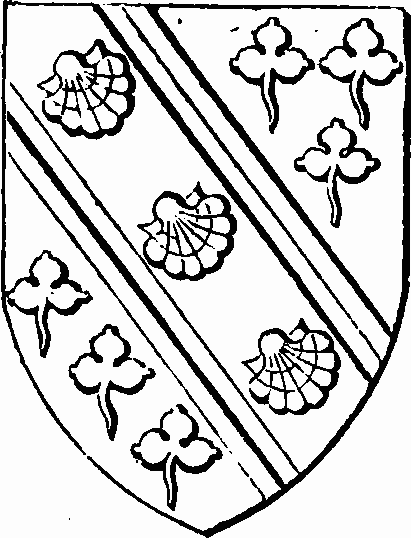
Rowe, of Windle-hill. — Robert Rowe of Windle-hill, and Roger Rowe of London, his brother, had a grant of arms in 1612. The family became extinct in the elder branch in 1640, by the death of John Rowe, one of whose coheiresses married Owen. The heiress of a younger branch, into which one of the coheiresses of Draper had married, married Newell.
Arms: — Or, on a bend, cottised, Azure, between six trefoils slipped, Vert, three escallops of the first.
Crest: — An arm vested, Erminois, the hand, Proper, holding a trefoil, slipped, Vert.
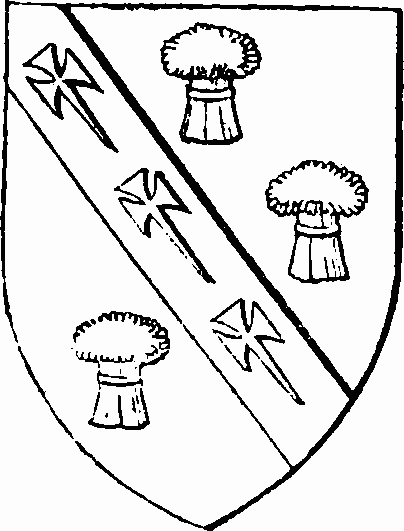
Roo, or Rowe, of Alport. — Five descents of this family are described in the Visitation of 1611. John, son and heir of Roger, was ten years of age at that time, and had two younger brothers.
Arms: — Gules, on a bend between three garbs, Or, as many crosses patée fitchée of the field.
Crest: — An arm in armour, Argent, round the wrist a scarf, Gules; in the hand a sword of the first, hilted, Or, holding up a wreath, Vert.
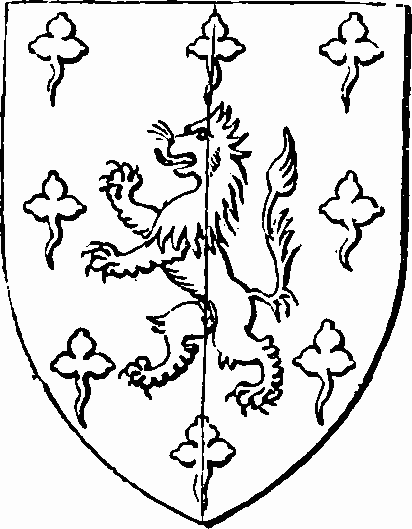
The above arms are described in the Visitation, and are, or were, in Youlgrave church, on the monument of Roger Rowe, Esq., who died in 1613; yet we find the following coat of Rowe at the Heralds' College, as granted by St. George to Roger Rowe, of Alport: — Per pale, Or and Gules, a lion rampant, within an orle of trefoils, all counterchanged.
Crest: — An arm embowed, vested, Gules, holding a garb, Or.
Sacheverell, of Hopwell and Morley. — This family was originally of Hopwell, in the parish of Sawley. The pedigree, in the Visitation of 1569, begins with Patrick Sacheverell, lord of Hopwell in the reign of Edward I. Thoroton's pedigree of this family describes John de Sacheverell as having married a coheiress of Fitz-Ercald, five generations before 15 Edward I. John Sacheverell, fifth in descent from Patrick above-mentioned, married a coheiress of Leche, of Chatsworth: his grandson, John, who died in 1485, married the heiress of Statham, of Morley. Jonathas Sacheverell, Esq., the last heir male of the elder branch, died in 1662. A younger branch, settled at Barton in Nottinghamshire, succeeded to the Morley estate, and removed thither. Robert Sacheverell, Esq., the last of this branch, died in 1714; his daughters and coheirs married Pole and Clifton.
A younger branch of the Sacheverells of Morley settled at Radcliffe, in Nottinghamshire; the heiress of this branch, after four generations married Columbell, of Darley: a younger son of this branch was ancestor of the Sacheverells, of Rearsby in Leicestershire.
William, a son of Sir Henry Sacheverell, of Morley, who died in 1558, married the heiress of Lowe, settled at Stanton-by-Bridge, and had several sons in the reign of Queen Elizabeth.
William, a younger son of John Sacheverell of Hopwell, by the coheiress of Leche, married the heiress of Snitterton, and was of Ible and Snitterton. Thomas Sacheverell, his grandson, sold Ible about 1498; Snitterton was retained longer. Thomas Sacheverell, son of Tbomas, was living in 1574 at Kirkby, in Nottinghamshire, which had been acquired in marriage with the heiress of Kirkby: he had an only daughter and heir, married to Coke of Trusley. Thomas Sacheverell, the younger, had three brothers. The celebrated Dr. Henry Sacheverell is said to have been of this family; but it is not clear how he was descended from them: his immediate ancestors were of Dorsetshire: his great-great-grandfather and great-grandfather wrote their names Cheverell; and it is more probable that he was descended from the Cheverells, of Wiltshire. Dr. Sacheverell possessed an estate in Derbyshire, at Callow in Wirksworth, by gift from George Sacheverell, Esq., of that place, who admired his political zeal, and esteemed him as a cousin. (fn. n14)
Arms of Sacheverell: — Argent, on a saltier, Azure, five water-bougets, Or.
Crest: —A goat statant, Proper.
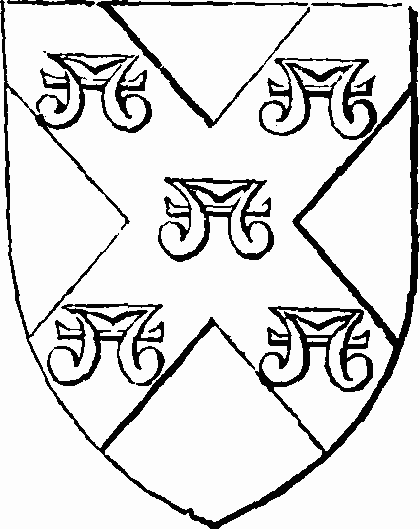
Sale, of Barrow and of Shardlow. — Three descents of each are described in the Visitation of 1662. The heiress of Sale of Barrow married Dalrymple.
Arms: —Argent, on a bend engrailed, Sable, three fleurs-de-lis of the field.
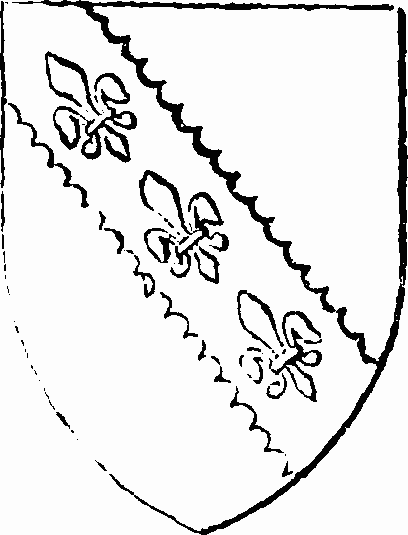
Savage, of Steynesby. — This ancient family settled at Steynesby in the reign of Henry III., having, as is supposed, married the heiress of Steynesby. The elder branch removed, about the middle of the fourteenth century, to Clifton, in Cheshire, (afterwards called Rock-Savage,) acquired by marriage with the heiress of Daniel. A younger branch continued at Steynesby, which after a time reverted to the elder branch. Steynesby was sold about 1582, The elder branch became extinct by the death of John Savage, Earl Rivers and Viscount Savage, in 1728.
Arms: — Argent, six lions rampant, Sable.
Crest: — Out of a ducal coronet, Or, a lion's jamb erect, Sable.
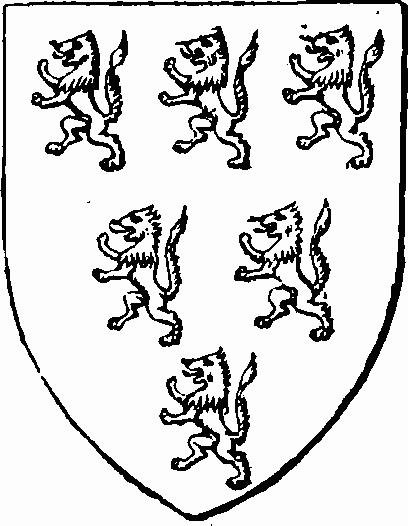
Saville, of Hill-top. — A branch of the Savilles of Howley, in Yorkshire, settled in Derbyshire about the year 1600. George Saville, Esq., the last of this branch, died in 1734; the heiress married Gilbert, of Locko. The heiress of Stevenson, of Matlock, married into the Saville family.
Arms: — Argent, on a bend, cottised, Sable, three owis of the field.
Crest: — An owl, Argent, charged with a trefoil, Gules.
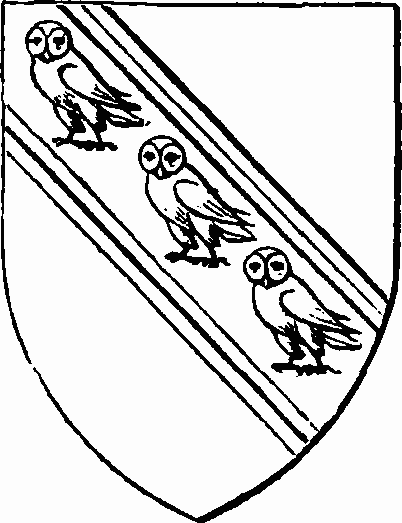
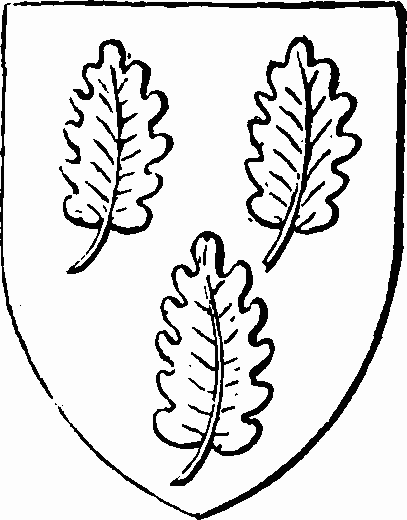
Selioke, of Haselbarow. — Ten generations of this ancient family are described in the Visitation of 1569. Thomas, the first mentioned in the pedigree married the heiress of Salvin. This family removed to Hertfordshire after the sale of Haselbarow. We find no mention of them after the death of John Selioke, Mayor of St. Alban's, which happened in 1709.
Arms: — Argent, three oak-leaves, Vert.
Crest: — Out of a mural coronet, Or, a cubit arm, vested, Argent, holding in the hand, Proper, an oak-branch, Vert, fructed of the first.
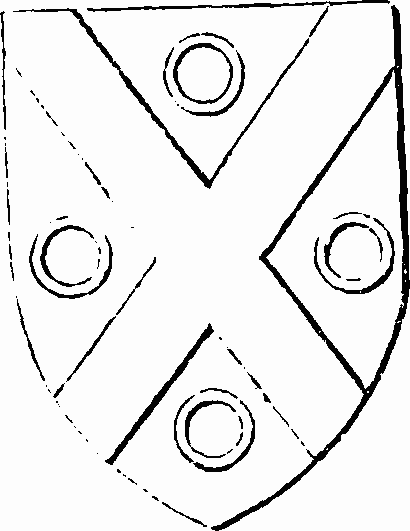
Shalcross, of Shalcross. — Six generations of this family are described in the Visitation of 1611. John Shalcross, Esq., the last heir male, who was sheriff of the county in 1686, died in 1733: two of his daughters (fn. n15) and coheirs married Fitzherbert, of Somersall, and Jacson. The Fitzherbert family is extinct. The late Reverend Simon Jacson, of Tarporley in Cheshire, married his cousin, sister and heir of the last Mr. Fitzherbert; and his son, the Reverend Roger Jacson, of Great-Bebington in Cheshire, is the present representative of both families.
Arms: — Gules, a saltier between four annulets, Or.
Crest: — A martlet, Or, holding in his bill a cross patée fitchée, Gules.
Sheldon, of Monyash. — Nine descents of this family are described in the Visitation of 1662, when Richard, the representative, was 30 years of age. The arms are not described. This family is said to be extinct.
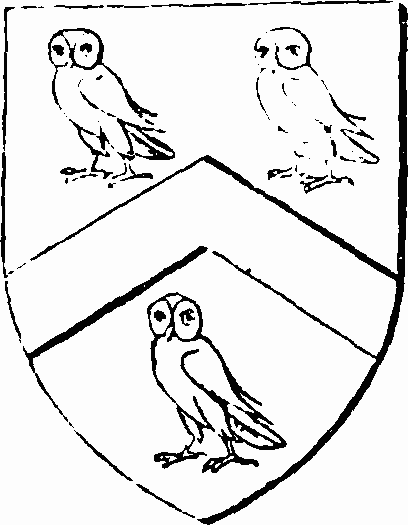
Sleigh, of Ash and Etwall. — This family settled at Ash about the year 1600, and became extinct by the death of Sir Samuel Sleigh in 1679. The coheiresses married Cotton and Chetham.
Arms: — Gules, a chevron between three owls, Argent.
Crest: — A demi-lion rampant, Argent, crowned, Or, holding in his dexter paw a cross crosslet fitchée, Gules.
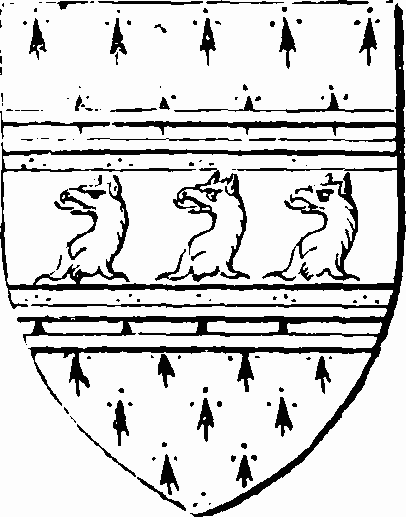
Spateman, of Rodenook, in Morton. — Three generations are described in the Visitation of 1662. One of the coheiresses married Wigley, of Wigwell.
Arms: — Ermine, on a fesse, Gules, between two bars, gemelles, Sable, three griffons' heads erased, Or.
Crest: — Out of a ducal coronet, Argent, a griffon's head, Or, gutté de sang.
Statham, of Morley, Tideswell, &c. — This was an ancient Cheshire family, which derived its origin from Statham in that county, and settled at Morley, in consequence of marrying the heiress-general of Morley about the middle of the fourteenth century. Henry Statham, the last of the elder branch died in 1481; his heiress married Sacheverell. Thomas Statham, of Tideswell, son of Captain John Statham, of Tansley, is said to have been descended from a younger son of the Stathams of Morley; but no evidence has been adduced of such descent. This Thomas Statham married the heiress of Cromwell Meverell, by a coheiress of Denham; his son, Sir John, married a coheiress of Wigley, of Wigwell. Sir John's elder son, Wigley Statham, Esq., who was sheriff of the county in 1735, and John his younger son, both died without issue; the latter about the year 1784.
Arms of Statham of Morley: — Gules, a pale fusilly, Argent.
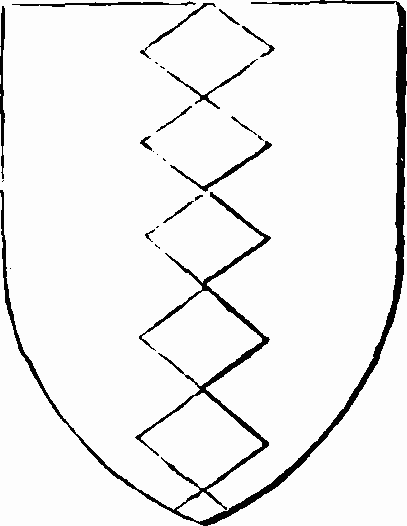
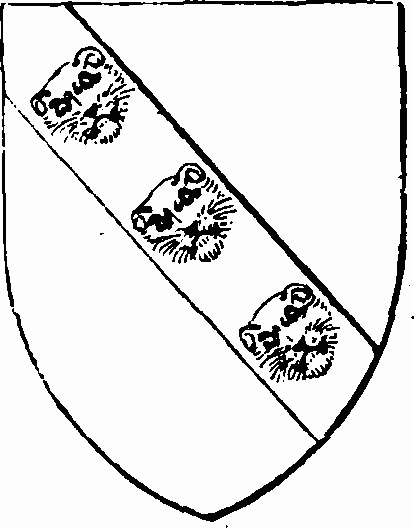
Stevenson, of Ounston, or Unston, in Dronfield. Four descents are described in the Visitation of 1662. Rowland, the representative, had then a son of the same name, aged four years. This family became came extinct, at least in its elder branch, in 1723. Sir Christopher Pegge, Knt., who is the present owner of Unston, is the representative.
Arms: — Gules, on a bend, Argent, three leopards' faces, Vert.
Crest: — A garb, Or.
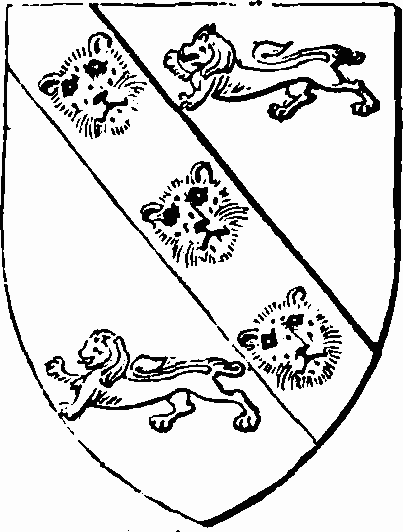
Stevenson, of Stanton, Rowsley, and Elton in the Peak. — This family resided chiefly at Rowsley; the heiress married Holden, whose heiress married the grandfather of the present Hylton Joliffe, Esq.
Arms granted to John Stevenson, Esq., in 1688: — Azure, on a bend, Argent, between two lions passant, Or, three leopards' faces, Gules.
Stevenson, of Matlock. — The heiress, about the latter end of the seventeenth century, married Saville, whose heiress married Gilbert.
Stones, of Mossborough. — This family became extinct, in 1797, by the death of Thomas Stones, Esq., of the Derbyshire militia.
Arms granted in 1693: — Vert, on a bend counter-embattled, Or, between six doves, Argent, three crosses humettée, Sable.
Crest: — A demi-dragon pean, holding a cross humettée, Vert, gorged with a collar, Argent, charged with three roses, Gules.
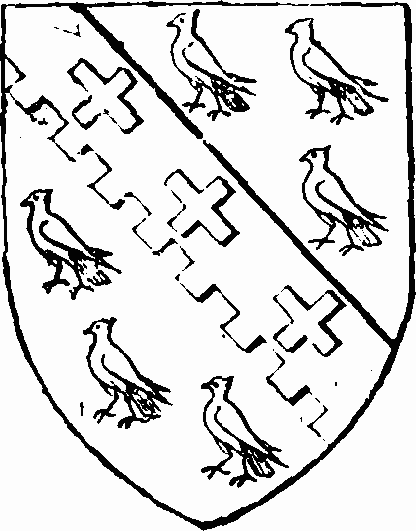
Stubbing, of West-Broughton. — Thomas Stubbing, Esq., was sheriff of the county in 1711. One of the coheiresses married the grandfather of the Reverend George Buckston, of Ashborne.
Arms granted in 1712: — Quarterly, Azure and Argent; in bend, five bezants.
Crest: — A lamb seiant, Proper, collared, Gules, reposing his dexter foot on a trefoil, slipped, Vert.
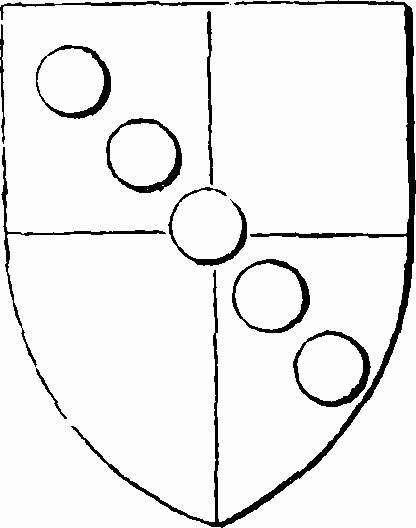
Stuffin, or Stuffyn, of Shirbrook, in Pleasley, an ancient and well connected family, traced to the reign of Edward I. John Stuffin, the last heir male, died in 1698. The heiress married Hacker, of Trowell in Nottinghamshire.
Arms not known.
Sutton, of Over-Haddon. — A younger branch of Sutton, of Sutton in Cheshire, settled at Over-Haddon in the reign of Henry VI. Thomas Sutton, the fifth in descent, was of King's-Mead, Derby, in 1611, and then 84 years of age; he married the heiress of Burnell, by the heiress of Blundeville, but appears to have had no issue. Barnard Sutton, the son of a younger brother, was then living at Doncaster in Yorkshire.
Arms: — Or, a lion rampant, double queued, Vert.
Crest: — It was resolved, at a chapter of Heralds in 1566, that it should be at the option of the Suttons of Over-Haddon to bear for their crest, a demi-lion rampant, Vert, within a ducal crown, Or, as descended from Sutton, of Sutton; or three annulets interlaced in triangle, two in base and one in chief, Or.
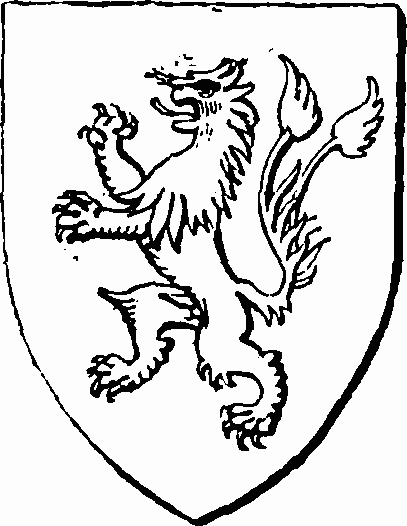
Taylor, of Walton-on-Trent. — This family was settled for four generations at Walton-hall. William Taylor, Esq., the last of the family, at Walton-hall. William Taylor, Esq., the last of the family, was sheriff of the county in 1727; his last surviving sister died in 1773; when Edward W. Disbrowe, Esq., M.P., Vice-Chamberlain to Her Majesty, succeeded to the Walton-hall estate as heir at law.
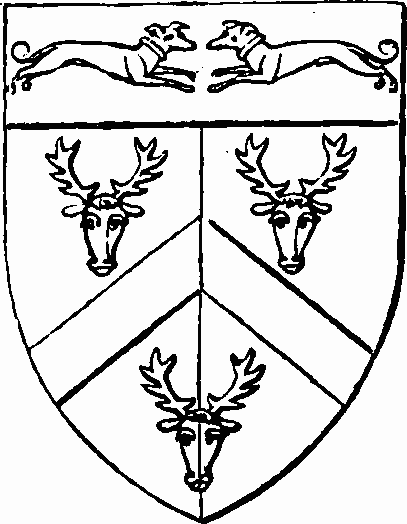
Arms: — Per pale, Azure and Or, a chevron, between three bucks' heads, all counterchanged; on a chief, Gules, two greyhounds meeting, Argent, collared of the second.
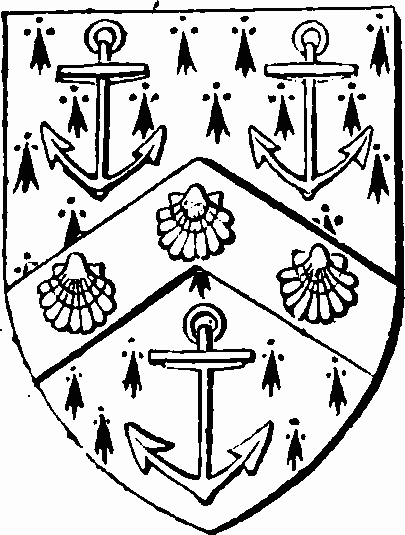
Taylor, of Durant-hall. — The heiress married Sir Charles Skrymsher, or Scrimshire, about the middle of the seventeenth century.
Arms: — Ermine, on a chevron, Gules, between three anchors, Sable, as many escallop-shells, Argent.
Thacker, of Repton. — Thomas Thacker, Esq., a servant of King Henry VIII., had a grant of Repton Priory in 1540. Gilbert Thacker, Esq., the last of the family died in 1712.
Arms: — Gules, on a fesse, Or, between three lozenges, Erm., a trefoil slipped, Azure, between two eagles' heads, erased, of the field, beaked, Arg., and about their necks a leash of the last.
Crest: — A bittern sitting among reeds, Proper.
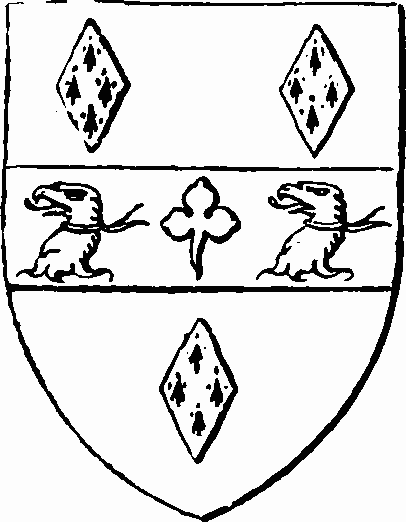
There was another Thomas Thacker, (probably a cousin,) who was of Heage, in 1538, to whom arms, similar to the above, were granted by William Fellow, Norroy. Instead of lozenges, the coat had three mascles, each charged with three drops, Sable: the heads on the fesse were bitterns' heads. Some of this family still remain at Heage in reduced circumstances. Thacker-hall, formerly their seat, has been sold many years ago, and was the property of the late Henry Richardson, Esq., of Derby.
Turner, of Derby. — The family of Turner is described as having been for four descents at Derby, in the Visitation of 1634. Exuperius Turner, Esq., who resided at Barrowcote-hall, and sold that estate to the late Robert Newton, Esq., (who died in 1789,) is supposed to have been the last of the family.
Arms of Turner of Derby: — Ermine, on a cross, Arg. quatre-pierced, four mill-rines, Sable, quatre-pierced; in the centre, a fleur de lis, Argent.
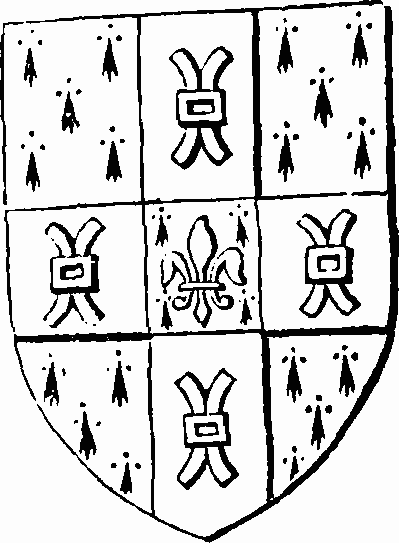
Turner, of Swanwick. — George Turner, Esq., the last heir male of this family, which had been settled for several generations at Swanwick, died about the year 1780; he left two daughters, coheirs, both of whom married Browne.
Arms borne by Turner of Swanwick, being the same as those of Turner of Surrey: Vaire, Argent and Gules, on a pale, Or, three trefoils, slipped, Vert.
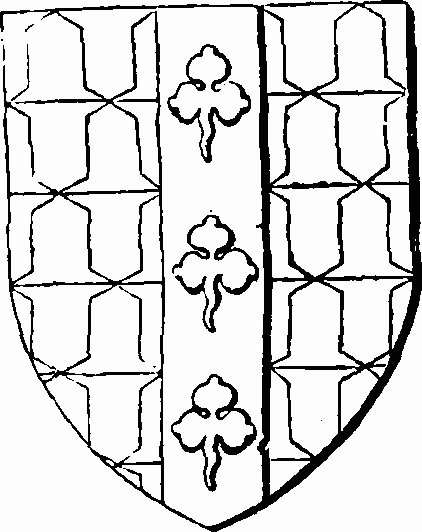
Wells, of Holme: — Bernard Wells of Holme, son of T. Wells, Esq., of Ashton-under-hill in Gloucestershire, had a son and heir, Bernard, aged 22 in 1634; the son died without issue; the daughters and coheirs married Bradshaw and Eyre.
Arms: — Ermines, on a canton, Or, a buck's head caboshed, Sable.
Crest: — A demi-talbot, Ermines.
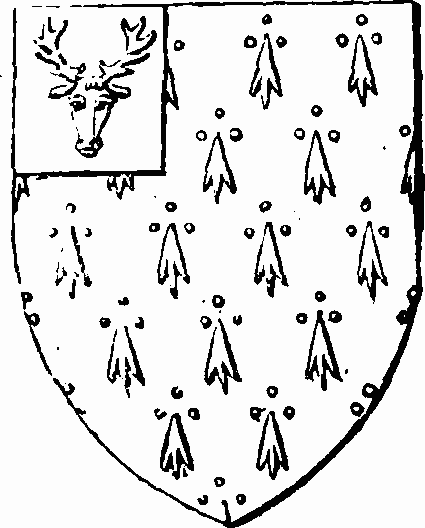
Wendesley or Wensley, of Wendesley in Darley. — This ancient family was of Wendesley before the reign of King John. Richard Wensley, Esq., the last of the family, died before the year 1591. The heiress married Blackwall.
Arms:—Ermine, on a bend, Gules, three escallop shells, Or.
Crest: —A man's head in profile, bearded, Proper, couped at the shoulders.
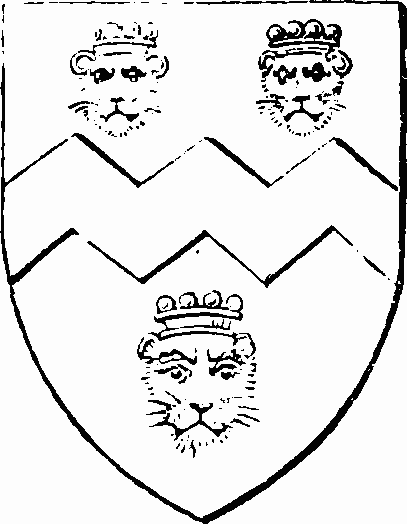
West, of Darley-Abbey. — Sir William West, was grantee of the Abbey, 32 Hen. VIII. The estate was sold by his son in 1574.
Arms: — Argent, a fesse, dancetté, Sable, between three leopards' faces, of the second, crowned with barons coronets, Or.
Crest: —A demi-griffon, Vert, collared, Or, holding a sword upright, Argent, hilted of the second.
Whitehall, of Yeldersley. —The name of this family appears in the list of Derbyshire Gentry temp. Hen. VI., it is supposed to have been extinct more than a century. A daughter, but it does not appear whether she was an heiress, married into the Meynell family before the middle of the seventeenth century.
Arms: — Arg. a fesse cheeky, G. and S., between three helmets, Proper.
Crest: — Out of a mural crown cheeky, G. and S., a demi-lion, Or, collared of the second, in his dexter paw, a faulchion, Proper, hilted, Or.
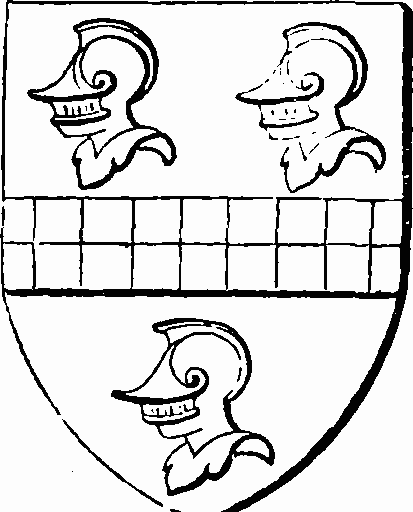
Another branch of the family of Whitehall or Whitehaugh, bearing the same arms and crest, being the younger branch of a Staffordshire family, settled at Pethills in Kniveton, in consequence of a match with the heiress of Jackson, of that place. The heir of this branch was twenty-one years of age at the time of Dugdale's Visitation in 1662.
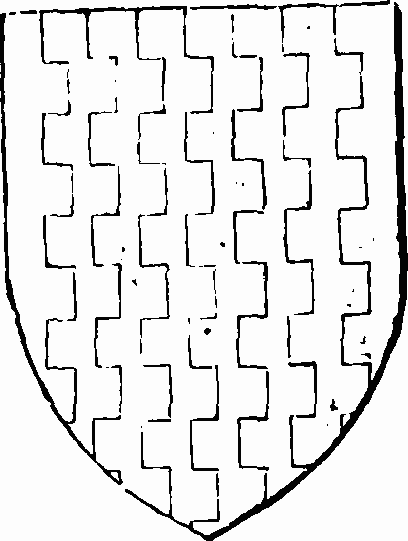
Wigley, of Middleton and Wigwell. — This family was originally of Brampton, where we find mention of them as early as the year 1328. (fn. n16) About the middle of the fifteenth century they were of Wirksworth and Middleton. The elder branch removed to Scraptoft in Leicestershire: James Wigley, Esq., who was representative of this branch, died in 1765 : his heiress married Hartopp, whose grandson took the name of Wigley. The present representative of this branch, in the male line, is Edmund Wigley, Esq., sometime M.P. for Worcester. The Wigleys of Wigwell were a younger branch, the coheiresses of which married Rosel, Statham, and Burton.
Arms: — Paly of eight embattled, Argent and Gules.
Crest: —A tiger's head, Argent, maned and tufted, Sable, issuing out of flames, Proper, gorged with a collar, embattled, Gules.
Woodroffe, of Hope. — The name of this family appears in the list of Derbyshire gentry, temp. Hen. VI. They were originally of Yorkshire. Ellis Woodroffe, barrister-at-law, in 1634, had five daughters, coheirs, one of whom married Foljambe of Yorkshire.
Arms: — Arg. a chevron between three crosses formée fitchée, Gules.
Crest: — A woodpecker, russet.
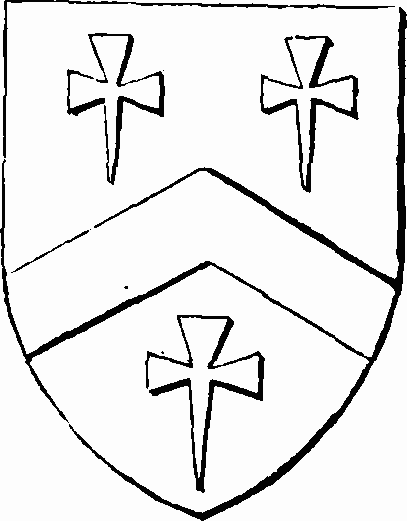
Woolhouse, of Glapwell. — This family was settled at Glapwell before the year 1400. The heiress of Thomas Woolhouse, about the latter end of the seventeenth century, married Hallowes.
Arms: — Per pale, Azure and Sable, a chevron, en grailed, Ermine, between three plates.
Crest: — An eagle's head erased, Ermine, ducally gorged, Argent.
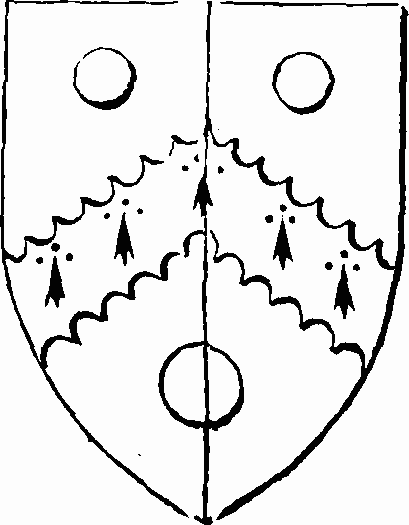
Wright, of Longstone-hall. — The representative of this ancient family which was settled at Longstone-hall, as early as the middle of the fourteenth century, is John Thomas Wright, Esq., now resident at Exeter.
Arms: — Sable, on a chevron, engrailed, between three unicorns' heads erased, Or, as many spears heads, Azure.
Crest: — A cubit arm vested, Sable, doubled, Argent, (issuing from a wreath) holding in the hand, Proper, a broken spear, Or, headed, Azure.
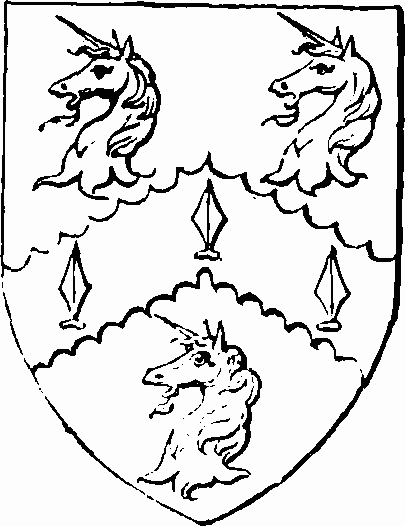
Wright, of Ripley. — A coheiress of this family married Eyre of Ripley, who died in 1694, and left a son, John Eyre, Esq., living in 1708.