Survey of London Monograph 16, College of Arms, Queen Victoria Street. Originally published by Guild & School of Handicraft, London, 1963.
This free content was digitised by double rekeying. All rights reserved.
Walter H Godfrey, Anthony Wagner, 'Additional officers', in Survey of London Monograph 16, College of Arms, Queen Victoria Street(London, 1963), British History Online https://www.british-history.ac.uk/survey-london/bk16/pp229-306 [accessed 7 May 2025].
Walter H Godfrey, Anthony Wagner, 'Additional officers', in Survey of London Monograph 16, College of Arms, Queen Victoria Street(London, 1963), British History Online, accessed May 7, 2025, https://www.british-history.ac.uk/survey-london/bk16/pp229-306.
Walter H Godfrey, Anthony Wagner. "Additional officers". Survey of London Monograph 16, College of Arms, Queen Victoria Street. (London, 1963), British History Online. Web. 7 May 2025. https://www.british-history.ac.uk/survey-london/bk16/pp229-306.
In this section
VII. ADDITIONAL OFFICERS WITH THEIR TITLES ARRANGED ALPHABETICALLY
Agincourt King of Arms
King of arms created by Henry V in memory of and soon after the great victory on St Crispin's day 1415. Occurs several times down to 1419, but name nowhere given. Uncertain whether rank was merely honorary or whether, as Spelman thought, he had a province in France.
Aiyl Fauste Faire
See IL FAUT FAIRE.
Ambleteuse
See NEWHAVEN.
Anjou King of Arms
King of arms retained by John, Duke of Bedford and Anjou. Sent to Dover to meet the Burgundian ambassadors in 1425. Title lapsed in 1436. Name of the 1425 Anjou not found.
1. WILLIAM BOYS (1427). See Norroy (8).
Antelope Pursuivant
Pursuivant named from the badge given by Henry IV in right of his wife Mary de Bohun, coheiress of Humphrey, Earl of Hereford, namely, a white antelope with gold horns and hooves, a gold crown about its neck and pendant chain. Office said to have been instituted by Henry IV, but its only certain appearance is c. 1419. Lant misnames Wrexworth, W. Boys senior and Tonge as Antelope under Henry IV, V and VI respectively.
1. THOMAS BOYS
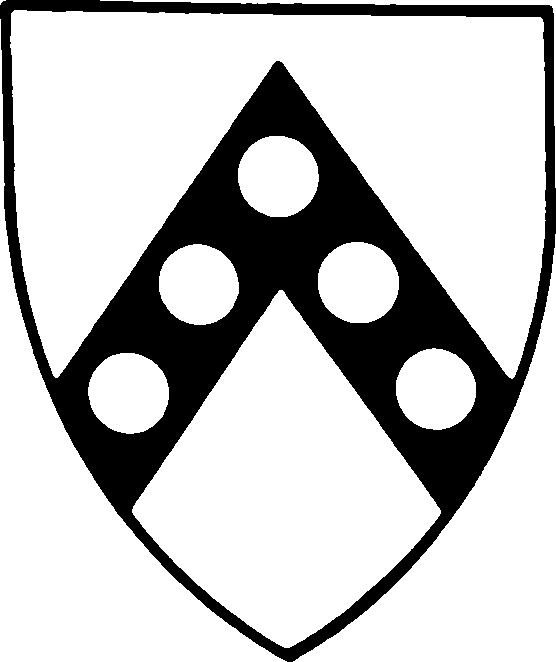
Boys
Antelope c. 1418.
Younger s. of William Boys, Lancaster; probably the Antelope who attended Henry V to Agincourt (Nicolas, Agincourt, App. 6, note).
2. THOMAS MORE (temp. Hen. V). See Guyenne (8).
3. JOHN WRYTHE (temp. Hen. V). See Garter (3).
4. ROBERT ASHWELL (temp. Hen. V). See Windsor (4).
5. JAMES BILLETT (temp. Hen. VI). See Chester (3).
6. JOHN MORE (temp. Hen. VI). See Norroy (12).
Aquitaine
See GUYENNE.
Arundel Herald
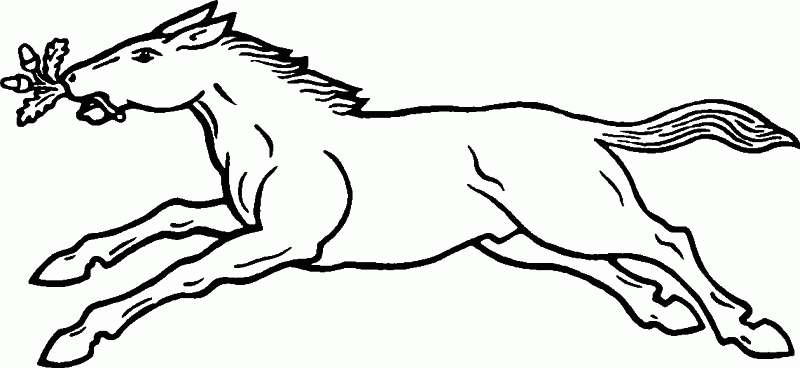
Under Henry V Arundel was the private herald of Thomas Fitzalan, Earl of Arundel (d. 1415). The title was revived in 1727 as that of a herald extraordinary.
Badge, assigned 1958: A horse at speed argent with an oak-sprig proper in its mouth.
I. HERALD OF THE EARL OF ARUNDEL
1. JOHN COSOUN (temp. Hen. V). See Clarenceux (4).
II. HERALD EXTRAORDINARY
2. CHARLES GREENE (1727). See Lancaster (32).
3. FRANCIS HUCHENSON (1735). See Chester (28).
4. JOHN CHEALE (1741). See Norroy (41).
5. THOMAS BEWES
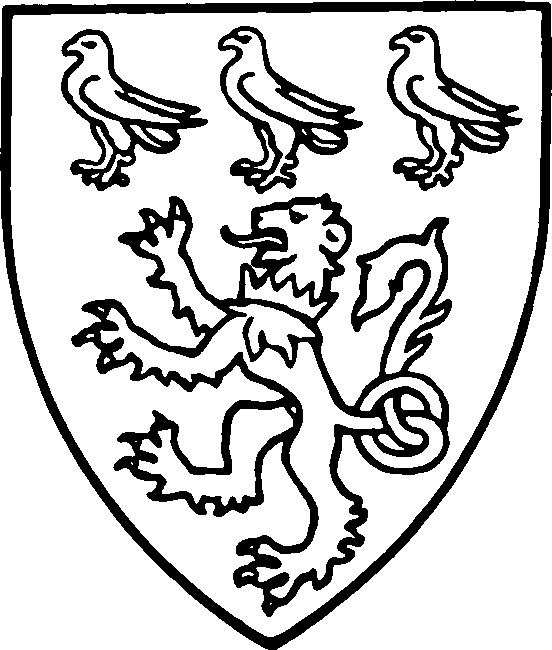
Bewes
Arundel, nom. c. 1754, R. wt. 24 March, cr. 26 May 1762.
S. of Thomas Bewes of St Neots, Cornwall, by Hannah, sister of the elder Anstis; married Catherine, sister of the younger Anstis; d. 1768; burd at Duloe. Nom. Arundel in lifetime of younger Anstis, but not created until 26 May 1762.
(Maclean, Trigg Minor, pp. 68, etc.; Alum. Oxon.)
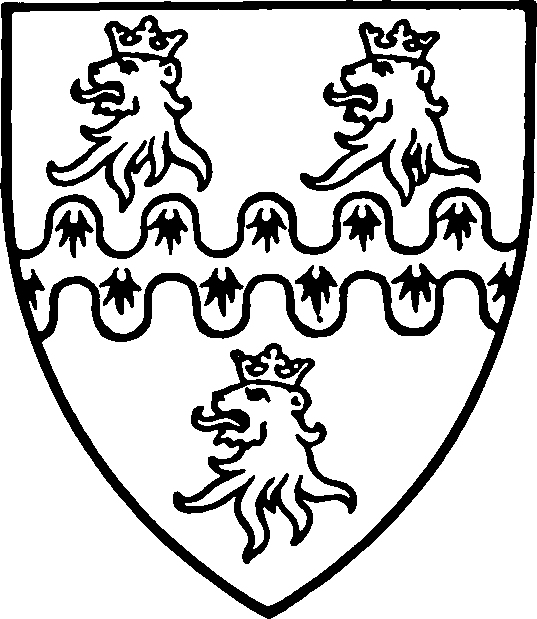
Arms granted 1726: Argent, a lion with tail knotted gules, an eastern crown or about its neck & 3 falcons proper, belled or in chief. Crest: On a chapeau gules turned up ermine a Pegasus rising of a bright bay colour, mane & tail sable, wings displayed or, in its mouth a laurel slip vert. Motto: Major Ab Adversis.
6. WALTER ASTON BLOUNT (1830). See Clarenceux (38).
7. DERMOT MICHAEL MACGREGOR MORRAH
Arundel, E.M. wt. 16, R. wt. 27 April 1953.
B. Ryde, I.O.W., 26 April 1896, s. of Herbert Arthur Morrah and Alice Elise dau. of Major C. A. Macgregor, R.E.; educ. Winchester and New College, Oxford; sometime Fellow of All Souls; Lieutenant R.E. First World War; 1922 F.R. Hist. Soc.; 1932 editorial staff of The Times; 1944 editor The Round Table; 1947 special correspondent of The Times on royal tour, S. Africa; writer on history, constitutional law, imperial affairs and heraldry with especial reference to coronation and other ceremonial; contributor to various periodicals (sometimes anonymous or under pseudonyms Yorkist and Blancherose); Arundel 1953.
Athlone Pursuivant
Pursuivantship instituted by Edward VI in 1552. At first treated as an officer extraordinary in England, but from 1566 solely appropriated to Ireland.
1. PHILIP BUTLER
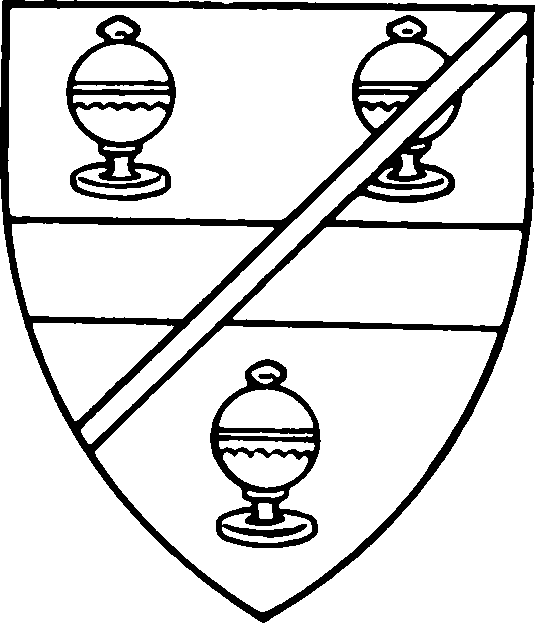
Butler
Athlone, pat. 28 June 1552.
Natural s. of B. Butler, Ulster; appd for duty in Ireland, but remained for a certain time in England where he ranked as pursuivant extraordinary; d. 1566.
Arms: Gules, a fess between 3 covered cups argent with a baston sinister azure (? sable) over all.
Aulet (aurtt) Pursuivant
In 1383 Aulet pursuivant and Northampton herald were sent to France by Sir Peter Courtenay (Rot. Franc. 7 Ric. II, m. 16, 23 November). Not known whether Aulet was retained by Courtenay or by another, nor whence the name was derived.
Is this the same as Aurtt, a pursuivant who occurs on 15 February 1448 (Warrants for Issue, 26 Hen. VI)?
Bardolf Herald
On 20 March 1399 Bardolf herald authorized Robert Baynard and his heirs to omit the label from their arms (B.M. MS. Lans. 860, fo. 263; H. of N., pp. 46, 53; H. & H., pp. 73, 162–3). He was the officer of Thomas, Lord Bardolf.
Barnes Pursuivant
Pursuivant of John Bourchier, Lord Barnes or Berners, when deputy of Calais (1520–33).
1. RICHARD RATCLIFFE (c. 1532). See Somerset (6).
Bath, King of Arms of the Order
Bath, king of arms of the Order of the Bath, was instituted at the creation of the Order by pat. of 18 May 1725. He was not and never has been a member of the College, but by an additional Statute dated 14 January 1726 (cf. Blanc Coursier and Brunswick) Grey Longueville, then Bath, was constituted Hanover herald and Gloucester king of arms and principal herald of the parts of Wales, with precedence before the provincial kings. These additional titles were, however, soon dropped, see below s.v. Gloucester.
Later kings of arms were attached to the Orders of St Michael and St George and the British Empire. These had and have no functions outside the respective orders and have no special names of office.
Bedford Herald
Herald of John, Duke of Bedford; occurs from 14 November 1428 (Sureau 691) to February 1435 (H. of N., p. 54).
Bellesme Pursuivant
Pursuivant of Thomas de Montagu, Earl of Salisbury and Lord of Bellême, near Alençon; sent by the Earl with a message to the King and slain by brigands on his way back before 21 June 1421 (H. of N.).
Bensilver Pursuivant
Sent to France by the King in 1443 (Issue Roll, Easter, 22 Hen. VI); name of his master unknown. See Biencele.
Berwick Pursuivant
Pursuivant appointed for service on the Scottish border and attached to the Governor of Berwick. Occurs frequently from time of Edward IV to Elizabeth I. As garrison pursuivant title lapsed on the death of Harry Ray, but it was revived for a few moments in 1602 as preliminary to St George's appointment as Windsor. Lant misnames Benolt, Wall the younger and Charles Wriothesley as Berwick temp. Edward IV, Henry VII and VIII respectively.
1. RALPH GOSSE
Berwick appd temp. Ed. IV, confirmed 12 August 1484.
Granted salary of £10 a year 12 August 1484; on duty 1485 when Jasper Tudor was cr. Duke of Bedford (Pat. 2 Ric. III; Coll. of Arms MS. O.A. III, 244).
2. WILLIAM JENYNS (temp. Ed. IV). See Chester (12).
3. LEONARD WARCOP (c. 1513). See Carlisle (5).
4. PETER RAY or RA
Pursuivant, c. 1527.
Attached to Berwick garrison and sent to Scotland April and August 1527 (L.T.A., v, 318, 325). Perhaps the 'Raa Inglisman' mentioned 1532–41 bringing messages from Berwick (ibid. vi, 100, vii, 449 passim). After May 1541 the messenger is named as 'Harry Ra' (perhaps Peter's son).
5. THOMAS STEVENSON (c. 1536). See Rouge Croix (33).
6. HARRY RAY or REE
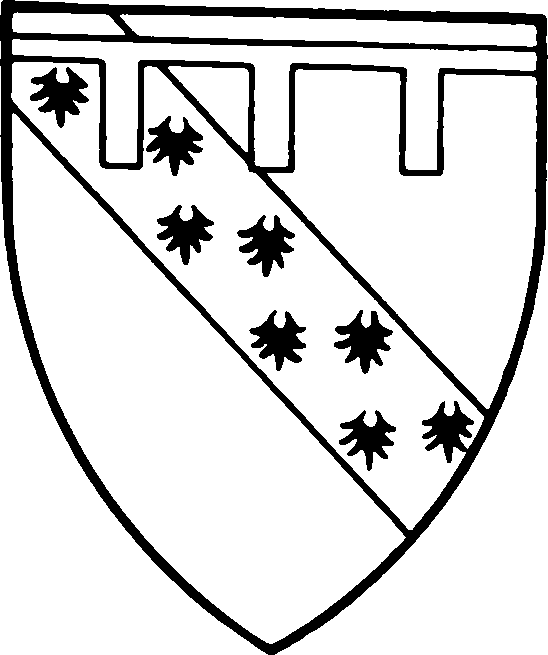
Ray
Berwick, c. 1539.
1532–41 according to Accounts of the Lord High Treasurer of Scotland (v, 100 to vii, 449 passim) 'Raa Inglisman' took frequent messages between Berwick and Scotland; does that mean Harry or Peter, q.v.? After May 1541 messenger is called Harry Raa (ibid. vii, 446, etc.). In English records Harry Ray occurs from September 1536 (L. & P. Hen. VIII, xi, 400) and is different person from Berwick the King's herald (ibid. 922, etc.), i.e. Stevenson; April 1537 Harry Ray is called 'pursuivant of Berwick' (ibid. xii, 1, 839), but by February 1539 he is 'otherwise called Berwike' (ibid. xiv, 1, 275, ii, 749) having succeeded as Berwick pursuivant on Stevenson's removal to Rouge Croix. Thereafter he occurs repeatedly down to April 1565 (Ashmole, Inst. of Garter, 615), acting throughout the period as the usual means of communication between the Council of the North, Scotland and London; also for some time confidential agent between Queen Margaret of Scotland and the Duke of Norfolk; November 1542 was with Treheron, Somerset, when latter was murdered, but escaped unhurt; December 1543 declared war on the Scots; 1544 accompanied Gilbert Dethick on his mission to Scotland; named in Heralds' Charter of June 1549; was not promoted.
Arms: Gules, a bend ermine & over all a label or.
7. RICHARD ST GEORGE, pursuivant extraordinary (1602). See Clarenceux (17).
Besoure Pursuivant
Rewarded by John of Gaunt at Kenilworth 2 January 1380–1 (John of Gaunt's Reg. 1379–83, no. 327). Not known who retained him.
Beul Pursuivant
Pursuivant to Matthew Goch, Captain of Bayeux Castle; attended the duel between Chalons and du Breuil in 1446 (H. of N.).
Bien Alaunt Pursuivant
In reign of Henry VI was sent by the Earl of Warwick from Calais to Ostend to secure the release from prison of Thomas Desseforde, vintner (H. of N.).
Probably the Earl's pursuivant though the title, whether interpreted as 'allant bien', quick moving, or as 'bon alant', good hound, has no apparent reference to Warwick.
Biencele (Biendelle) Pursuivant
Biencele, Biencole, or Bientele occurs in 1434 carrying letters to and from John, Duke of Bedford, and in 1455 du Bien Delle describes himself as 'le poursuivant serviteur de Monsr de Rivieres'. Rivieres is Sir Richard Wydevill, Lord Rivers, who had married the Duke of Bedford's widow, Jaquetta of Luxembourg. It is therefore likely that Biencele and du Bien Delle are variants of the same title (H. of N.). Bensilver and Bien Colier are perhaps other variants.
Bien Colier Pursuivant
Pursuivant sent to Henry VI with despatches from the Council in France in 1444 (Issue Roll, Easter, 22 Hen. VI). Is this a variant of Biencele, q.v.? Not known whose officer he was.
Blanc Coursier Herald
The office of Blanc Coursier herald was founded by a statute of 14 January 1726 and was to be perpetually united with the office of Genealogist of the Order of the Bath which had been instituted a few months earlier by the original statutes of the Order. The title was abolished when the Order was remodelled in 1857.
The office was semi-private, like Blanch Lyon under Henry VIII, for Blanc Coursier is described in the statute as 'Our Herald of Arms with... Prince William, the First and Principal Companion of Our said... Order...' and the tabard worn by Anstis and now in the Victoria and Albert Museum displays the Royal Arms differenced by Prince William's label.
No officer of arms for the Hanoverian Guelphic Order was instituted by the foundation statutes, but an additional statute of the same date, 12 August 1815, entrusted 'Our Blanc Coursier Herald' with various duties in connection with the order, and thereafter Nayler is habitually styled Blanc Coursier king of arms, or Blanc Coursier, king of arms of Hanover.
The name is taken from the white horse in the arms of Hanover. The badge worn by Blanc Coursier is enamelled gules with a white courser at speed proper on a mount in base vert. The white horse is also prominent in the insignia of the Guelphic Order.
Blanc Coursier was not a member of the College, but three of the five incumbents were officers in ordinary, the exceptions being Fox and Brown.
(See also H. of N., pp. 50, 55; H. S. London, Royal Beasts, p. 55.)
1. JOHN ANSTIS (1726). See Garter (17).
2. SACKVILLE FOX (1754); resd 1757. No further details available.
3. JOHN SUFFIELD BROWN (1757); resd 1792. No further details available.
4. GEORGE NAYLER (1792). See Garter (23).
5. WALTER ASTON BLOUNT (1831). See Clarenceux (38). Title abolished 1857
Blanch Lyon Pursuivant
Under Edward IV Blanch Lyon was a royal pursuivant, being sent to France in 1482 (Cal. Doc. Scot., iv, no. 1474). The title was then taken from the white lion of the Mortimer Earls of March, one of King Edward's favourite badges (Royal Beasts, p. 29). The title lapsed under Henry VII, but it was revived in 1537. Its status was then anomalous, for although James was described as 'Our pursuivant' and was granted a salary by the Crown, he was expressly said to be with the Duke of Norfolk and in the College he was counted as an extraordinary (H. of N., pp. 48, 56). The title in this case clearly refers to the white lion rampant, which was at once arms, crest and badge of Mowbray and which, with a crown about its neck, is now one of the Duke of Norfolk's supporters. Since 1602 the title has been revived from time to time as that of a pursuivant extraordinary. Among the later incumbents a white lion was incorporated in the armorial insignia of Walker, and Rogers-Harrison.
1. JOHN JAMES (1537). See Norfolk (1).
2. FRANCIS THYNNE (1602). See Lancaster (21).
3. NICHOLAS CHARLES (c. 1603). See Lancaster (22).
4. JOHN PHILIPOT (1613). See Somerset (12).
5. JOHN HAMELIN
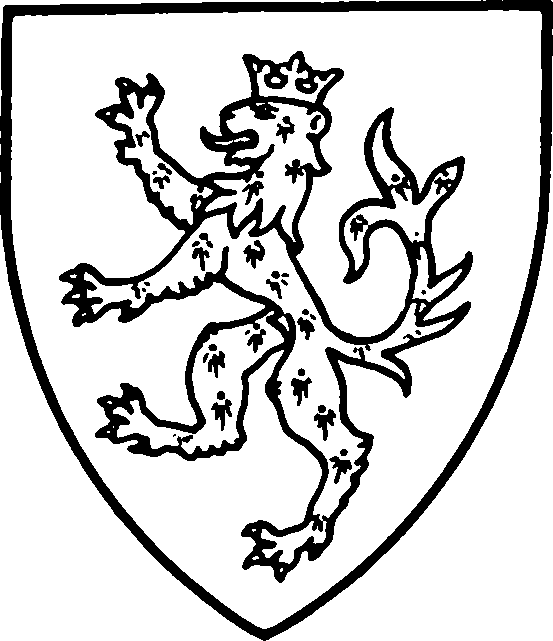
Hamelin
Blanch Lyon, cr. 14 February 1624.
B. c. 1596; sometime herald-painter; of St Clement Danes, London; burd Bradfield, Berkshire, 16 October 1633; second husband of Mary Forster of Aldermaston, Berkshire (marriage licence 1 March 1624), whose fourth heir was Elias Ashmole, Windsor. Sometime miscalled Thomas.
(Genealogist, N.S. xxix, 66; 1665 Vis'n of Berkshire.)
Arms: Gules, a lion ermine crowned or.
6. EDWARD WALKER (1635). See Garter (12).
7. WILLIAM DUGDALE (1638). See Garter (13).
8. ROBERT BROWNE (1640). See Bluemantle (39).
9. CHARLES MAWSON (1680). See Chester (26).
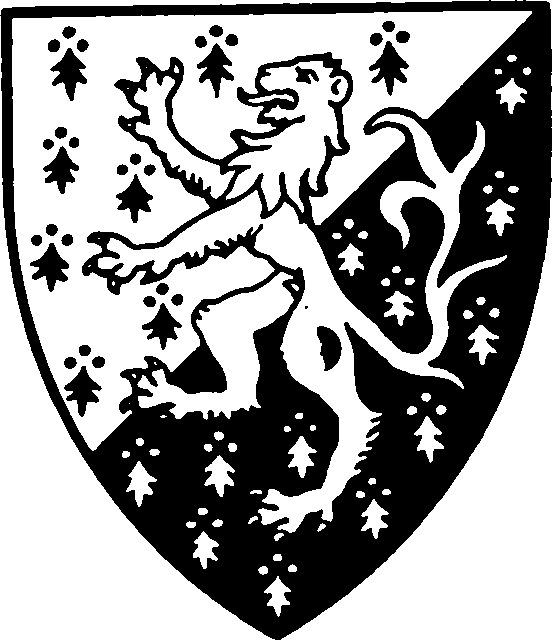
Mawson (1)
10. THOMAS HOLFORD (1686). See Portcullis (16).
11. HUGH CLOPTON (1690). See Rouge Dragon (23).
12. ROBERT DALE (1694). See Richmond (23).
13. JOHN DUGDALE (1707). See Mowbray (15).
14. ARTHUR SHEPHERD (1719). See Rouge Dragon (26).
15. THOMAS BROWNE (1727). See Garter (20).
16. ALEXANDER OCHTERLONY
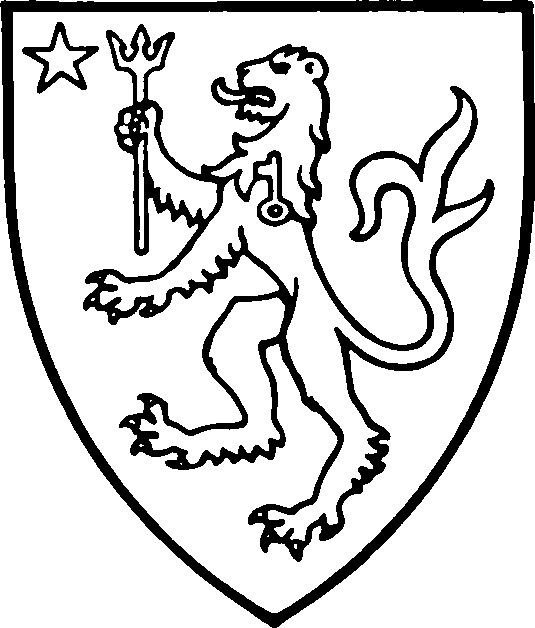
Ochterlony
Blanch Lyon, 1784.
B. Boston, Mass., 11 September 1764; stepson of Sir I. Heard, Garter; s. of Catherine née Tyler by her first husband Alexander Ochterlony, of Pitforthy, Angus; his elder brother David, cr. baronet 1816; 1779 esquire to Sir Edward Hughes, K.B.; Blanch Lyon 1784; d. 1803.
Arms: Azure, a lion argent holding in the dexter forepaw a trident erect or & charged on the shoulder with a key in pale azure, a molet or in chief for difference. Crest: A swan rousant argent crowned, collared & chained or, a molet gules on the breast.
17. GEORGE HARRISON ROGERS-HARRISON (1831). See Windsor (36).
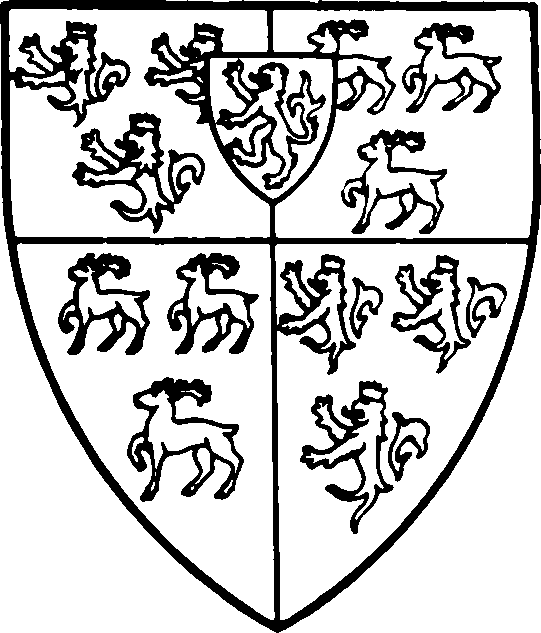
Rogers-Harrison (1)
Blanchlyverer Pursuivant
Title derived from the white greyhound which has been a royal badge since the time of Edward III (Royal Beasts, p. 39; Antiquaries J., xxxiv, 238; Archaeologia...). Only known as borne in 1418 by 'William Boys junior alias dictus Blanchlyverer pursevant', elder s. of William Boys, Lancaster (Fine Roll, 6 Hen. V, co. Buckingham, n. 30, cited in Coll. of Arms MS. O.A. II, 716).
1. WILLIAM BOYS
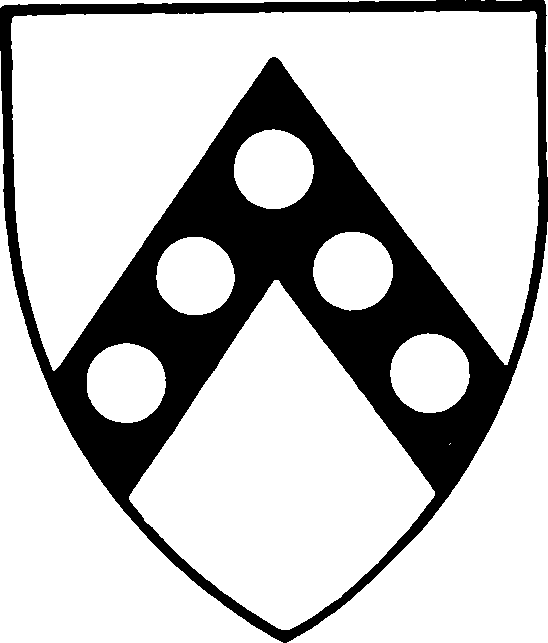
Boys
Blanchlyverer pursuivant, c. 1418–19.
Elder s. of William Boys, see Norroy (8). (Antiquaries J., xxxiv, 238.)
Blanc Sanglier Pursuivant
Pursuivant of Richard III both before and after his accession. The title, held by one More at the time of Bosworth, recalls the King's favourite badge, a white boar with gold tushes, hooves and bristles; whence his nickname 'Dickon the Hog'. This is presumably a differenced version of the blue boar given by Edward III (Royal Beasts, pp. 25, 59; 'Heralds' Titles as Surnames', Genealogists' Mag. (1954), p. 506).
1. ...MORE
Blanc Sanglier, before 1485.
Pursuivant of Richard III before and after accession; rescued Richard's body after Bosworth and carried it to Leicester for burial. Hall's Chronicle, p. 421, calls him 'Blaunche Senglier', but The Great Chronicle of London (1938, p. 238) says 'a pursevaunt callid Norrey'; must therefore have been s. of John More, Norroy 1478.
Arms: As his father.
Blanquefort Pursuivant
Pursuivant of Sir Galiard de Durefort, Seigneur de Duras et de Blanquefort, K.G., c. 1462, a Gascon retainer of Henry VI. Rewarded by the King in 1463 as pursuivant of an Englishman (H. of N.).
Bonaventure Pursuivant
In July 1445 and 1448–50 Bonaventure was pursuivant of Thomas Hoo, Chancellor of France and Bailiff of Mantes and later Lord Hoo (d. 1454). A Bonaventure pursuivant also occurs in July 1494 when he had a reward from the King of Scots; it does not appear whose servant he then was.
Bon Espoir Pursuivant
Sent with Rouge Croix from Rouen to Dinan in 1419. Perhaps pursuivant of John Holand, Earl of Huntingdon (H. of N.).
Bon Rapport Pursuivant
Pursuivant who brought despatches from the Chancellor of France in 1448 and in 1450 was sent to the Duchess of Burgundy and Archbishop of Cologne (Warrants for Issues, 26 Hen. VI, no. 124, 13 February and 28 Hen. VI, no. 164, 9 May).
Bontemps Pursuivant
Pursuivant sent to the Scottish border with letters from the King in 1434 (Issue Roll, Easter, 12 Hen. VI, 14 June; Cal. Doc. Scot., iv, no. 1077).
Bordeaux Herald
Bordeaux, capital of Guyenne, gave title to an English herald under Richard II and Henry VI. Primarily, no doubt, he was attached to the Bordeaux garrison, but he seems to have been used for general service in that part of France (H. of N.).
1. WILLIAM MULTON or MOULTON
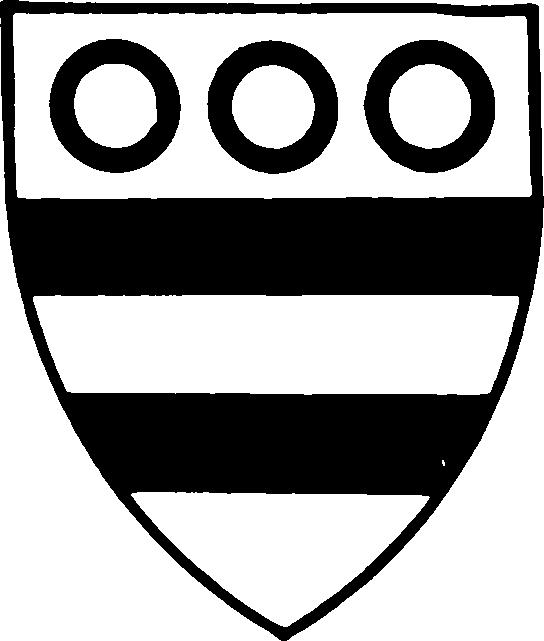
Multon (Moulton)
Bordeaux, c. 1389.
Received robes at Christmas 1389; 1391 granted life annuity of £10; then tenant of house in Bordhaw Lane, London; d. January 1399, will dat. 14 January, pr. 20, leaving wife 'Eleanor Bordeaux' and 2 daughters; burd St Catherine Creechurch; s. Thomas also burd there.
Probably related to John Multon, Mayor of Bordeaux c. 1380.
Arms: Argent, 2 bars & in chief 3 annulets sable.
2. WILLIAM PORTESLADE
Bordeaux, c. 1426.
Attended Sir John Radcliffe, Captain of Fronsac Castle in Aquitaine in 4 Hen. VI, p.s. 5 April 1426.
Boulogne Pursuivant
Pursuivantship instituted by Henry VIII in honour of the capture of the town in 1544; title lapsed when the town was restored to France in 1550.
1. SIMON NEWBOLD (? 1544). See Rouge Croix (38).
2. NICHOLAS NARBOON (temp. Ed. VI). See Ulster (2).
Broke Pursuivant
Pursuivant of Robert Willoughby, Lord Broke, Steward of the Household; accompanied Sir Robert Clifford and Roger Machado, then Richmond king, on mission to Brittany in 1489 (H. of N.).
Brunswick Herald
Brunswick Herald, an officer of the Order of the Bath, instituted like Blanc Coursier by the additional statute of 14 January 1726, was a semi-private officer being described as 'Our Herald of Arms with the Great Master...'. The office was annexed in perpetuity to the office of Gentleman Usher of the Scarlet Rod. It lapsed on the remodelling of the Order in 1857.
Brunswick was not a member of the College though the last four incumbents were all officers in ordinary. His badge was enamelled with the arms of Brunswick, Gules, two lions passant guardant or.
Soon after the office was instituted Sawyer asked Garter Anstis whether he ought to wear a tabard with the arms of the Duke of Montagu, Great Master, namely, Argent, a fess of 3 fusils gules in a border sable quartering Or, an eagle displayed vert. The correspondence was inconclusive and it does not appear that Sawyer ever wore such a tabard.
1. EDMUND SAWYER (1 February 1726). No further details available.
2. CHARLES FREWIN. No further details available.
3. HENRY HILL (1763). See Windsor (31).
4. ISAAC HEARD (1774). See Garter (22).
5. GEORGE FREDERICK BELTZ (1814). See Lancaster (38).
6. ALBERT WILLIAM WOODS (1841). See Garter (27). Office abolished 1857.
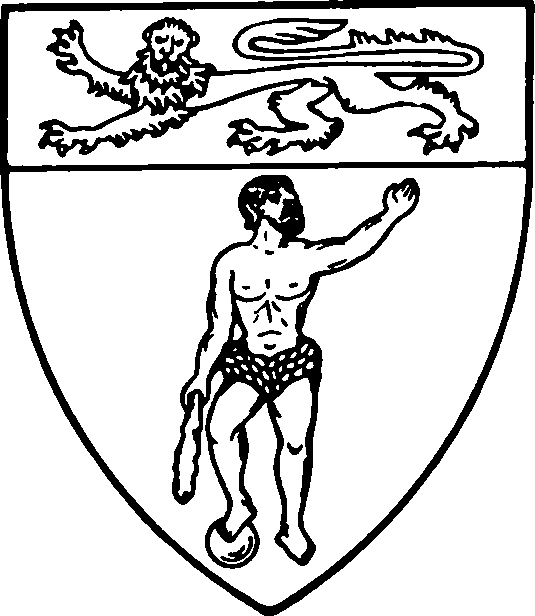
Woods (1)
Buckingham Herald
Buckingham was retained by the first, second and third Dukes of Buckingham. He is called pursuivant in 1447 and 1448 and again in 1508, but herald in 1483 and 1514 (H. of N.).
1. WILLIAM HASYNG or HASTINGS (c. 1508). See Somerset (4).
Bucky Pursuivant
In 1490 'Baudewinus Stepman alias Bukky pursevaunt' was sent to Denmark and in 1491 'John Bukky pursevant' was attached to William Hewster's embassy to the same country (Coll. of Arms MS. O.A. III, 193). From the difference in the Christian names it would appear that Bucky was the pursuivant's name of office, but there is nothing to show to what it alludes or by whom he was retained. At the same time the possibility that it was an alias surname cannot be excluded.
1. BALDWIN STEPMAN alias BUKKY
Pursuivant, c. 1490.
'Baudewine Stepman alias Bukky pursevaunt' sent to King of Denmark 1490 (Coll. of Arms MS. O.A. III, 193, citing 'Liber Compotus Garderobae', Easter, 5 Hen. VII). Anstis seems to identify him with 'Bukky one of our Messagiers' who was attached to William Hewstre's embassy to Denmark in April 1491 (p.s. 10 April, 6 Hen. VII) although immediately above he calls the latter 'John Bukky pursevaunt'. Was Bukky an alias surname or title as pursuivant?
2. JOHN BUCKY
Pursuivant, c. 1490 (Coll. of Arms MS. O.A. III, 193). See above (1).
Cadran Herald
Herald of Thomas Beaufort, Earl of Dorset, in 1415 and pursuivant of his nephew Edmund Beaufort in 1440. In 1416 Cadran was in trouble for running off with four silver cups entrusted to him by a pursuivant of the Chancellor of France, Septfaux, whom he had been charged to conduct to Montmillin (H. of N.).
Anstis thought the title was perhaps chosen from the badge given by the sixteenth-century marquesses of Dorset, of the Grey family, namely, a unicorn lying down amid rays of the sun, where the unicorn's horn might be likened to the gnomon of a sundial (Cadran). But was that badge given by the Beauforts? No evidence of such use has been found.
1. JOHN ASHWELL (temp. Hen. V). See Norroy (7).
2. JOHN MOWBRAY (temp. Hen. V). See Rouge Croix (6).
3. JAQUES COLYER (temp. Hen. VI). See Lancaster (9).
4. RICHARD ASHWELL (temp. Hen. VI). See Ireland (6).
Calais Pursuivant
The pursuivantships of Calais and Guisnes were instituted by Edward IV for the service of the English holdings in Picardy. Hammes and Risebank were erected somewhat later to the same end.
In 1462 an unnamed Calais was sent on missions to and from Burgundy, and Calais, still unnamed, appears in the public records down to 1491.
1. RICHARD CHAMPNEYS (temp. Ed. IV). See Gloucester (4).
2. ROWLAND PLAYNFORD (temp. Ed. IV). See York (4).
3. RALPH LAGO or LAGYSSE (temp. Hen. VII). See York (8).
4. JOHN JOYNER (1510). See Norroy (18).
5. RICHARD JOHNS
Calais, c. October 1528.
Still Calais 1 November 1529, but not so Whitsun 1530.
6. THOMAS MILLER or MILNER (?1529). See Lancaster (16).
7. RICHARD RATCLIFFE (1532). See Somerset (6).
8. MARTIN MARROFFE (1536). See York (12).
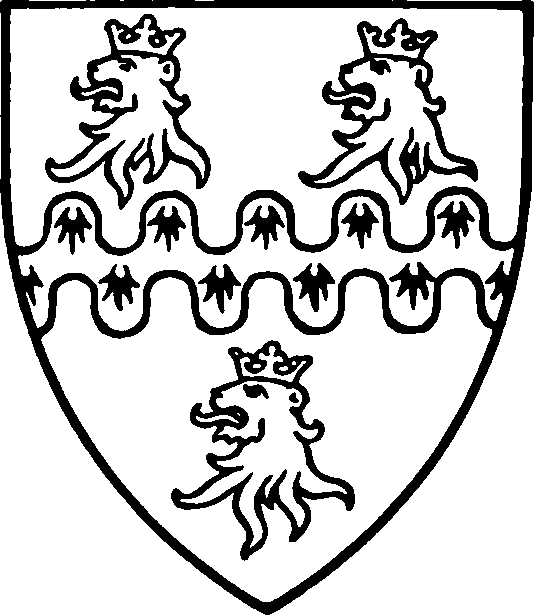
9. NICHOLAS FELLOW, FAIRLEWE or FAIRLOW Calais, c. 1539.
Fellow
First appears March and October 1539 when on the staff of Bishop Bonner, English ambassador in France. Bonner calls him 'Nicholas Fellowe', 'Nicholas Norey' and 'Nicholas Norry alias Calais'. It follows that he was s. of William Fellow, Norroy 1536–46. Probably brother of Henry Fellow, Guisnes, and likely that he was appointed Calais somewhat before October 1539. Thereafter constantly employed in France. Slain during siege of Calais 1558. The last Calais.
Arms: As William Fellow, Norroy.
Calveley Herald
Calveley herald in 1383 brought the King despatches from the Bishop of Norwich in Flanders (Issue Roll, Easter, 6 Ric. II, etc.). He must have been herald of Sir Hugh Calveley who was then serving with the Bishop.
Cambridge Herald
'Cantebrugg le heraude', rewarded by John of Gaunt in 1380, must have been an officer of Edmund Langley, Earl of Cambridge and later Duke of York (John of Gaunt's Register 1379–83, no. 327).
Candalle
See KENDAL
Carlisle Herald
According to Froissart a Carlisle herald was made by Edward III on an expedition to Scotland, probably in 1327. In 1370 one John Carlill was sent overseas with Hereford herald, but in that case Carlill may be his personal surname. Thereafter the title disappears, but Richard III is said to have revived it, and the succession was maintained until the 1550's. Under the Tudors Carlisle was treated exactly like the other heralds, but Hawley and Warcop specialized in Scottish affairs and were mainly employed in the north.
The revival of the title in favour of William Le Neve was suggested in 1624, but in the end he was made Mowbray. It was, however, revived as that of a herald extraordinary in 1703.
1. JOHN CARLILL
? Pursuivant, c. 1370.
June 1370 'Richardus Hereford heraud' and 'Johannes Carlill' were sent overseas (Coll. of Arms MS. O.A. II, 721). Richard was without doubt a herald by the title Hereford, but what of John? Was he an officer of arms, and if so was Carlisle his title? Or was Carlill his personal surname?
2. CHRISTOPHER CARLILL (?temp. Ric. III). See Clarenceux (9).
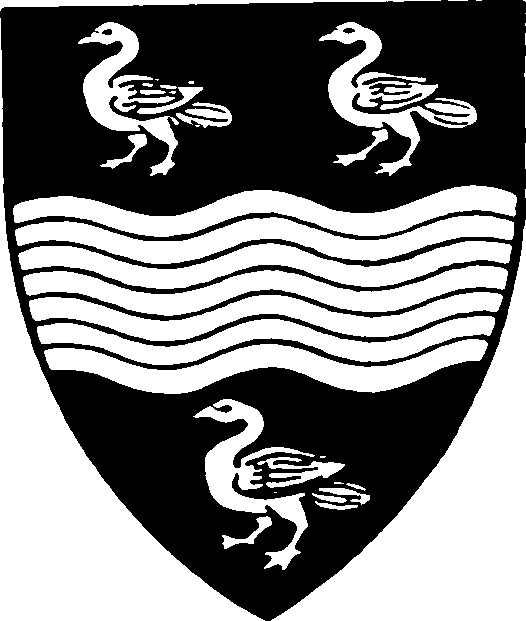
3. THOMAS WATERS
Waters
Comfort, temp. Ed. IV.
Rouge Croix, temp. Ed. IV.
Carlisle, temp. Hen. VII, appd 1493.
If he existed must have been made Carlisle 1493 on Carlill's removal to Norroy.
Arms: As John Water, York.
4. THOMAS HAWLEY (1514). See Clarenceux (12).
5. LEONARD WARCOP

Warcop
Berwick, cr. 5 Hen. VIII, 1513–14.
Carlisle, cr. 2 August, p.s. 18 September, pat. 6 November 1534.
A specialist in Scottish affairs; probably s. or otherwise related to Robert Warcop whose widow, née Agnes Ingleby, was Garter Wriothesley's second wife; as 'messenger of the Chamber' received liveries at Henry VII's funeral and Henry VIII's coronation; May 1509 sent to Calais; 1513 or 1514 Berwick; July 1518 as Leonard Warcop alias Berwick appd bailiff of Busby and Faceby, co. York; 1522 with Lord Dacre at Carlisle; 1529 at Edinburgh; 1533 at Newcastle and Edinburgh (not at Field of Cloth of Gold 1520 nor at Anne Boleyn's creation as Marchioness 1522 or coronation 1523); said to have been Bluemantle but not so; Carlisle 1534; still employed in the north; 1536 at Doncaster; 1544 attached to army against the Scots; 1547 at funeral of Henry VIII, named as senior herald in heralds' charter 4 June 1549; living Whitsun 1552; d. 6 Ed. VI, i.e. before 27 January 1553, when title of Carlisle lapsed; 1538, 1540, 1544, 1546, granted Crown leases of various manors, etc., in Yorkshire.
Arms: Sable, 3 covered cups argent, with crescent or, for difference. Crest: A boar's head argent.
6. JOHN VANBRUGH (1703). See Clarenceux (21).
7. JOHN ANSTIS (1707). See Garter (16).
Carnarvon Pursuivant
One of the only two extraordinary titles in the last two centuries which were not connected with the Earl Marshal. Office erected to gratify Welsh sentiment just before the now Duke of Windsor's investiture as Prince of Wales at Carnarvon Castle on 13 July 1911. Carnarvon pursuivant extraordinary was one of the five officers of arms attached to the Prince on that occasion.
1. KEITH WILLIAM MURRAY (1911). See Portcullis (31).
Carolina Herald
In 1705, by letters pat. dated 1 June, the Lords Proprietors of the Province of Carolina appointed Laurence Cromp, York, to be Carolina herald, with power to grant arms to suitable persons, such arms to be set upon the face of the sun (H. & G., v, 479). The office apparently lapsed on Cromp's death in 1715.
Chandos Herald
Herald of Sir John Chandos, K.G., but a Crown officer after 1370.
1. ...CHANDOS (? 1366). See Ireland (1).
Clarence Herald
Clarence or Clarenceux herald (both forms are found) must be distinguished from Clarenceux king. He was retained by the Dukes of Clarence, and more particularly by Thomas, the second duke, brother of Henry V. Both Horsley, Clarenceux, and Ashwell, Clarence, attended the chapter of English heralds at Rouen 5 January 1420 (H. of N.).
Under Edward IV George, Duke of Clarence, had his own herald, but his title has not been found (Coll. of Arms MS. O.A. II, 710).
Pace Lant it is unlikely that either Collyer or Mallett was Clarence under Henry VI, for there was no duke of Clarence in that reign.
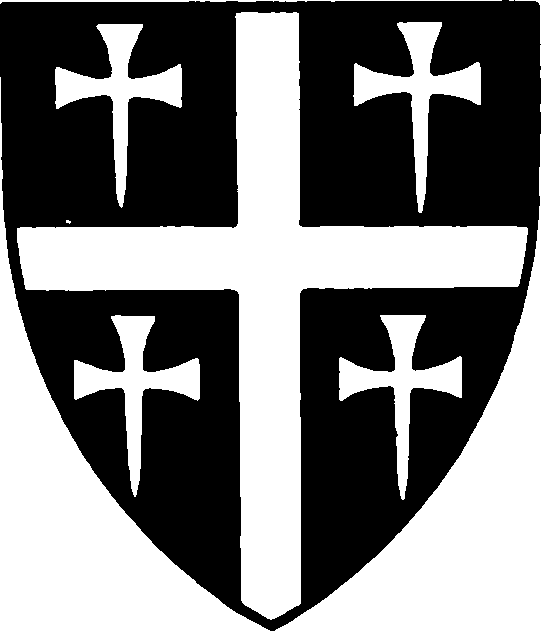
1. JOHN ASHWELL or HASWELL
Ashwell (Haswell)
Wallingford, temp. Hen. V.
Bluemantle, 2 Hen. V.
Clarence, c. 1419.
A John Ashwell or Haswell attended the chapter of Rouen 5 January 1420, with the title of Clarence, herald to the Duke of Clarence. May be the same who was Lancaster king, q.v. Lant's statements that he was Wallingford and Bluemantle and bore these arms lack corroboration.
Arms: Sable, a cross between 4 crosses formy fitchy argent.
2. THOMAS COLLYER (temp. Hen. VI). See Ireland (3).
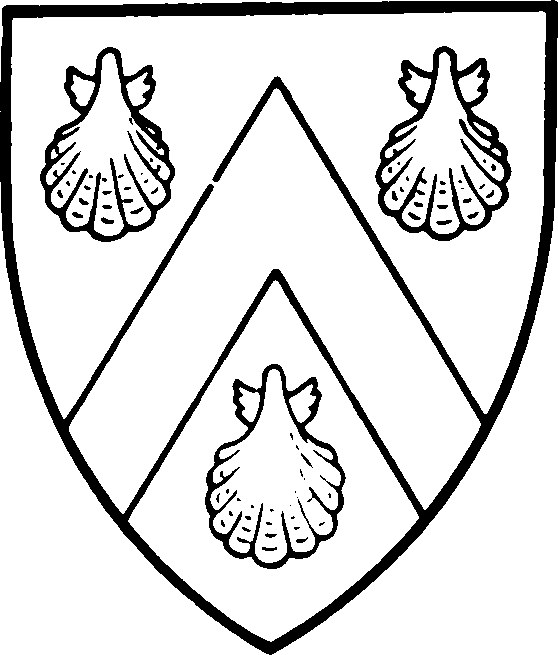
3. JOHN MALLETT
Mallett
Falcon, pursuivant, temp. Hen. VI.
Rouge Croix, temp. Hen. VI.
Clarence, temp. Hen. VI.
Arms: Or, a chevron between 3 escallops azure.
Probably brother or perhaps father of Roger Mallett, Falcon.
Collar Pursuivant
This pursuivantship, of which the title was without doubt inspired by the Lancastrian Collar of SS, occurs at various times from 1436 to 1488.
1. WILLIAM TYNDALE or TENDALE (1436). See Norroy (9).
2. JOHN WREXWORTH (? 1443). See Guyenne (11).
3. RICHARD BENWELL Collar, cr. 6 May, pat. 7 June 1459.
4. JOHN...
? Collar, c. 1465.
'John Coler of London pursevant' named in pat. 5 Ed. IV, p. 1, m. 32, 2 May.
5. LEONARD PARVESYN
Collar, 7 July, p.s. 27 November 1486, pat. 12 March 1487, wages from 7 July 1486.
D. 1488 before 11 November when his annuity was granted to Bluemantle.
A Leonard Parvesyn was a merchant (? English) in Milan in 1409 (Cal. Pat. Rolls, 1408–13, p. 231).
Comfort Pursuivant
The office of Comfort pursuivant is said to have been instituted by Edward IV for the service of his French dominions. He attended the translation of the body of Richard, Duke of York, in 1476 and he was twice sent overseas in 1479. The origin of the title is not known.
1. HENRY FRENCH or FRANKE (temp. Ed. IV). See York (1).
2. RICHARD SLACKE (temp. Ed. IV). See Windsor (9).
3. THOMAS WATERS (temp. Ed. IV). See Carlisle (3).
4. GEORGE BERRY (? temp. Ric. III). See Rouge Croix (24).
Condé Pursuivant
Condé pursuivant is mentioned twice in 1428 and 1429 as serving in Normandy (Sureau, fos. 692, 698). Presumably named from Condé sur Noireau (Calvados), a viscounty under English control in 1443 (Rolls Series 22, 11, 338).
Conke (Concarneau) pursuivant
'Conke oon of oure Pursevants' occurs in the Issue Rolls, Easter, 5 and 6 Hen. VII, 1490–1. The name is derived from Concarneau in Brittany, one of the cautionary towns delivered to Henry VII in 1488.
Corbin Pursuivant
Pursuivant to Richard Gethin, one of John, Duke of Bedford's household in France. Only known from a certificate of 30 August 1431, by Richard Lucas, Keeper of the Duke's signet. Title probably derived from Gethin's arms, argent, a chevron azure between 3 'corbyns' (crows) sable. But at a much later date there was a Seigneurie de Corbin, in Guienne, which in Corbin's day was in English hands and which might conceivably have been held by Gethin.
Cornwall Herald
Herald instituted by Richard II, presumably intended for the Prince of Wales as Duke of Cornwall. Occurs in 1398–9 and again at the coronation of Henry V in 1413.
1. JOHN HILTON
Cornwall, c. Easter Term 1398.
Granted 10 mks a year by Richard II as 'John Hilton Harpour otherwise Cornwall Herald' (Issue Roll, Easter, 22 Ric. II). This grant probably marks his promotion from harper to be Richard's herald for the Duchy of Cornwall.
December 1399 sent to Scotland by Henry IV as John Hilton the herald and John Cornwall herald. Attended coronation of Henry V April 1413.
Crescent Pursuivant
Named by Oswald Barron as a pursuivant of the Percies who gave a crescent as badge (Encyclop. Brit. s.v. Heraldry). Otherwise unknown.
Crosslet Herald
'Croyslett', an English officer, was with Henry, Earl of Derby (Henry IV), at Königsberg in November 1390 and at Danzig on 26 March 1391. In the former case he is called herald of the Duke of Gloucester (Thomas of Woodstock), but it is more likely that he was retained by Thomas Beauchamp, Earl of Warwick, who was in league with Gloucester. In that case the title would be derived from the Beauchamp arms, gules, a fess between 6 crosses crosslet or ('Heralds of Henry IV', in N. & Q., xcxiii, 464).
Derby Herald
Herald of Henry IV as Earl of Derby; royal herald from 1399. Mentioned by Froissart 1384–9, in Henry's household accounts 1390–8 and at the coronation of Henry V 1413 (H. of N.; 'Henry IV's Heralds...', in N. & Q., cxciii, 466, 486).
1. ADAM... (temp. Ric. II). See Vaillant (2).
2. JOHN...
Derby, c. 16 October 1393.
John Derby named as herald of Henry, Earl of Derby 1393; little doubt but that he is the Derby herald who was with Henry at Calais in May 1390 and who remained in his service until his death in March 1413 (John's will pr. 16 March 1414–Broun, 307b); of St Andrew Baynard.
('Henry IV's Heralds in 1390 and 1392', in N. & Q., cxciii (1948), 466.)
Derval Herald
A herald sent from Normandy with despatches to the King in 35 Ed. III, 1361. Was he an officer of Sir Robert Knollys? Knollys was sometimes called 'sire de Derval' though perhaps not until after 1365 (H. of N.).
Desirous Pursuivant
Pursuivant sent by the King to the Chancellor of France in 1435 (Issue Roll, Easter, 14 Hen. VI).
Devoir Pursuivant
Pursuivant of Walter, Lord Hungerford in August 1429 (Sureau, fo. 756). Perhaps Peter Herispin, a native of Normandy, Devoir pursuivant to Lord Hungerford, endenizened in England 18 December 1439 (Pat. 18 Hen. VI, p. 1, m. 7). Lord Hungerford was Captain of Cherbourg in February 1428 (Carte, Catalogue des Rolles Gascons..., 11, 264, cf. 249).
1. PETER HERISPIN
Devoir, c. 1439.
A Norman, Devoir pursuivant to Walter, Lord Hungerford, endenizened by pat. 18 December, 18 Hen. VI (1439), p. 1, m. 7. Perhaps the same who served Lord Hungerford as 'Desir' in 1429 (Accounts of Pierre Sureau, Receiver General of Normandy, 1428–9; Bibl. Nat., Paris, ms. fr. 4488, fo. 756).
Dieu y Pourvoye Pursuivant
Pursuivant of the Provost of Paris in 1430 (Sureau, fo. 771), i.e. of Simon Morhier, Provost of Paris 1422–36 and sometime Councillor of Charles VII (Armorial de Berry, ed. Vallet de Viriville, p. 70 n.; Rolls Series 39 (1422–31), p. 254 citing Cousinot, Chron. de la Pucelle, ed. V. de Viriville, C. 23; Rolls Series 22, 1, 49, etc.).
Diligent Pursuivant
Pursuivant of Sir Ralph Neville, sent by the Council to the Duke of Bedford August 1431 (Coll. of Arms MS. O.A. III, 238 citing document in Bibliothèque Nationale, Paris).
Dorset Herald
Herald of Thomas Beaufort, Earl of Dorset, c. 1411–17. Title revived in 1494 when Henry VII created a Dorset herald for Thomas Grey, Marquess of Dorset (H. of N.).
1. WILLIAM BOYS (c. 1413). See Norroy (8).
Dublin Pursuivant
On 12 August 1502 'Dyvelyn oon of Our officers of Arms' was repaid his expenses in escorting prisoners from Ireland to England (Coll. of Arms MS. O. A. IX, 71). He was probably a pursuivant extraordinary.
The title does not appear again until 1783 when a Dublin herald was instituted as an officer of the Order of St Patrick. He, however, had no armorial functions.
Eagle Pursuivant
The eagle as a royal badge goes back at least to Edward III and it was used as a signet device by Henry V, VI, VII and VIII (Royal Beasts, p. 61). Thomas, Eagle pursuivant, who was sent with despatches to Scotland in 1389, was without doubt the King's officer.
On the other hand Barker, Garter 1536–50, assigned Eagle to the Earl of Derby, and it is probable that the Eagle pursuivant who was sent to France in 1489 and who made a copy of Francis de Foveis' heraldic treatise in 1490, was retained by Thomas Stanley—Stanley had been created Earl of Derby in 1465, and the 'Eagle' alludes to his bird and bantling crest (H. of N.).
1. THOMAS...
Eagle, c. 1389.
Sent to Scotland, Issue Roll, Michaelmas, 13 Ric. II (Rymer, xi, 75; Coll. of Arms MS. O.A. III, 89).
Eagle Vert Pursuivant
Pursuivant of the Earls of Salisbury; title taken from the arms of Monthermer, or, an eagle vert, quartered by the earls. In 1429 Eagle Vert was sent by the then Earl, Thomas de Montagu, to Brittany (Lobineau, Histoire de Bretagne, 1, 538, where he is miscalled 'Anglevert'). In 1455, when he was sent north with despatches (Issue Roll, Easter, 33 Hen. VI), he was retained by Richard Nevile, Earl of Salisbury in right of his wife, Montagu's only dau. and heiress.
Esperance Pursuivant
Esperance, pursuivant of the Percy earls of Northumberland, was named from the motto Espérance, sometimes Espérance en Dieu or Espérance ma Confort.
In 1438 he was employed on the King's service (Pat. 16 Hen. VI, p. 2, m. 30d, 22 May). In 1473 he attended Louis de Bruges' creation as Earl of Winchester and later carried messages to and from James III of Scotland (Cal. Doc. Scot., iv, 408; Scofield, Edward IV, 11, 62).
In 1513 he attended Northumberland on the Thérouanne expedition, two tabards being supplied for his use (Longstaffe, 'Old Heraldry of the Percies', Arch. Aeliana, N.S. iv, 209), and in 1523 he attended Lord Percy on his expedition against the Scots (De Fonblanque, Annals of the House of Percy, 1, 375).
There is in the College of Arms an undated petition from one of this title asking the earl to remember his promise that after a year's probation he should have the wages, etc., of the office like his predecessors in time past (Coll. of Arms MS. M. 16, 154). Indeed as the title was in use for nearly a hundred years there must have been several who held it but their names have not been found.
Esperance Herbert Pursuivant
Pursuivant who attended his master, the Earl of Worcester (Charles Somerset, Lord Herbert) at Arthur Plantagenet's creation as Viscount Lisle in 1523 (Bodleian MS. Wood F. 33, 20).
Espoir Pursuivant
On 6 April 1422 Sir John Lisle certified that he had appointed Thomas de Launey to be Espoir pursuivant (Coll. of Arms MS. O.A. III, 243 citing an unspecified Cotton MS.).
1. THOMAS DE LAUNEY
Espoir, c. April 1442.
Pursuivant to Sir John Lisle who certified his appointment 6 April 1442.
Estoile Volant Pursuivant
Estoile Volant, mentioned in 1515 and sometimes called Toell Volland, was pursuivant to Sir Richard Wingfield as Deputy of Calais 1513–19. The title suggests that Sir Richard gave as badge a winged star, combining the wings from his own arms with the star of Les Baux (Gules, a sun or molet of many rays argent) which was quartered by his first wife Katherine Wydville in right of her mother Jaquetta of Luxembourg (H. of N.).
Exeter Herald
Exeter herald first appears in 6 Hen. V, 1418–19, but the title was probably instituted on the creation of his master, Thomas Beaufort, as Duke of Exeter in 1416. The office seems to have lapsed on Beaufort's death in December 1426, but it was revived by John Holand, cr. Duke of Exeter 1443, and his son Henry, Duke of Exeter 1446–61. In 1460 William Ballard was the Duke's herald, but his name of office is not stated (H. of N.).
Lant lists Wrexworth as Exeter temp. Hen. V and 'John Mowbray' (i.e. Cosoun) temp. Hen. VI, but this seems to be pure imagination.
1. WILLIAM BOYS (c. 1417). See Norroy (8).
2. ROBERT DUNHAM
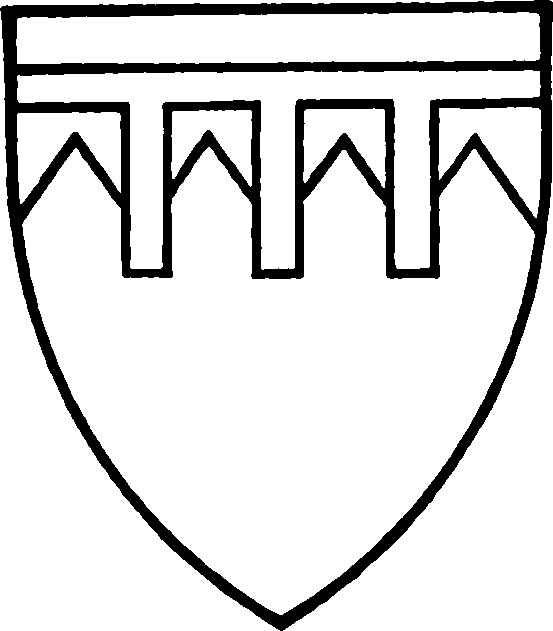
Dunham
Falcon, pursuivant, temp. Hen. VI.
Rouge Croix, temp. Hen. VI.
Exeter, herald to the Duke of Exeter, temp. Hen. VI.
If Dunham was Exeter it must have been between 1443 and 1452.
Arms: Azure, an indented chief or & a label gules.
3. THOMAS EVERARD
Exeter, c. 1452.
On Christmas Day 1452 Henry Holand, Duke of Exeter, granted an annuity of £10 to 'Thomas Everard alias dictus Excestrie Herauld'. Still living 1454, but probably d. before 28 March 1460, when William Ballard was the duke's herald.
(Hist. MSS. Comm., 3rd Rep., 1872, p. 216; etc.)
4. WILLIAM BALLARD (c. 1460). See March (4).
Falcon King of Arms
The falcon as a royal beast goes back at least to the reign of Edward III, but it is best known in its Yorkist combination with the fetterlock (Royal Beasts, p. 21). As the title of an officer of arms Falcon was successively king, pursuivant (but?), herald, pursuivant and herald extraordinary. From about 1359 to 1412 Falcon was a king of arms and was for a time doyen of the office of arms. Under the Houses of Lancaster and York the catalogues name eleven pursuivants by this title, but these are of doubtful authority and there is no real evidence for the existence of Falcon whether as king, herald or pursuivant from 1412 till 1473. Under the Yorkists we meet with Falcon as a herald and under Henry VII as a pursuivant. The title then lapsed until 1813 when it was revived for Stephenson, the only herald extraordinary named after a royal badge.
Spelman and some later writers thought that Falcon pursuivant was attached to the Prince of Wales, but no evidence has been found to support that.
Gerard Legh (ed. 1591, fo. 3) says that blazon by the days of the week was devised by Falcon 'principall Herehaught of England' in the time of Edward III. He probably meant no. 2 below (H. of N.; Coll. of Arms MS. O. A. I, 75; II, 747; etc.).
I. KING
1. COLYNET...
Faucon, king, c. 1389.
'Colynet Faucon' received cloth for Christmas robes 1389, at same time as William Multon, Bordeaux (Coll. of Arms MS. O.A. II, 738 citing Wardrobe Account).
2. JOHN...
Falcon, king, c. 1394.
Of St Botolph's, Aldgate, London. Sent to Scotland 1394 (Issue Roll, Michaelmas, 18 Ric. II); granted 7½d. a day for life 1400 (pat. 1 Hen. IV, p. 6, m. 22, 15 March); 1403 acted as messenger about tourney between Michael d'Orris of Aragon and John de Prendergast of England (Monstrelet, I, c. 2, p. 5); d. 3 February 1412 (P.R.O., E. 404/27, no. 249; will dat. 3 February, Archdeaconry Court of London, 256, Reg. 1).
Doyen of the officers of arms in England between Lake and Richard Bruges.
(See Coll. of Arms MS. O.A. I, 75; II, 748.)
II. PURSUIVANT
3. NICHOLAS SERBY (temp. Hen. IV). See Leopard (2).
4. GILES WASTER (temp. Hen. V). See Mowbray (3).
5. THOMAS BROWNE
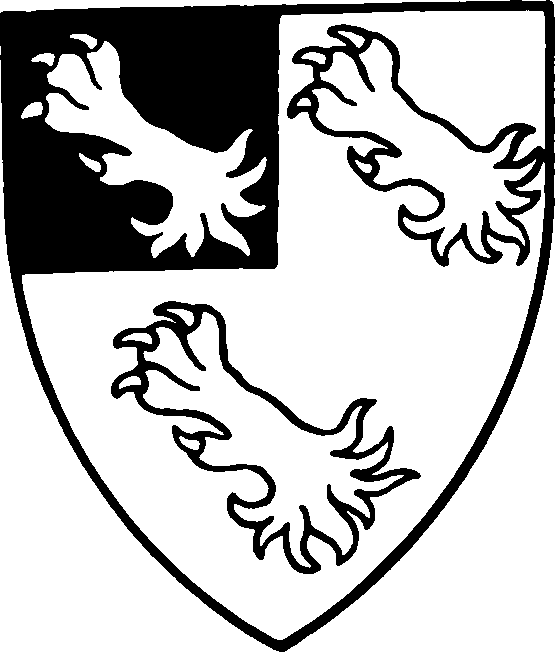
Browne
Falcon, pursuivant, temp. Hen. V.
Arms: Gules, a quarter sable & over all 3 lion paws erased bendways argent.
B.M. MS. Harl. 2169, fo. 45 gives this for 'John Browne, Lyncollchyre'.
6. THOMAS COLLYER (temp. Hen. V). See Ireland (3).
7. JOHN HORSLEY (temp. Hen. VI). See Mowbray (5).
8. JOHN MALLETT (temp. Hen. VI). See Clarence (3).
9. ROBERT DUNHAM (temp. Hen. VI). See Exeter (2).
10. THOMAS HOLME (temp. Hen. VI). See Clarenceux (7).
11. ROGER MALLETT (temp. Hen. VI). See below (15).
12. WILLIAM CARLILL (temp. Ed. IV). See Richmond (4a).
13. ROGER BROMLEY (temp. Ed. IV). See Chester (10).
III. HERALD
14. JOHN WRYTHE (temp. Ed. IV). See Garter (3).
15. ROGER MALLETT
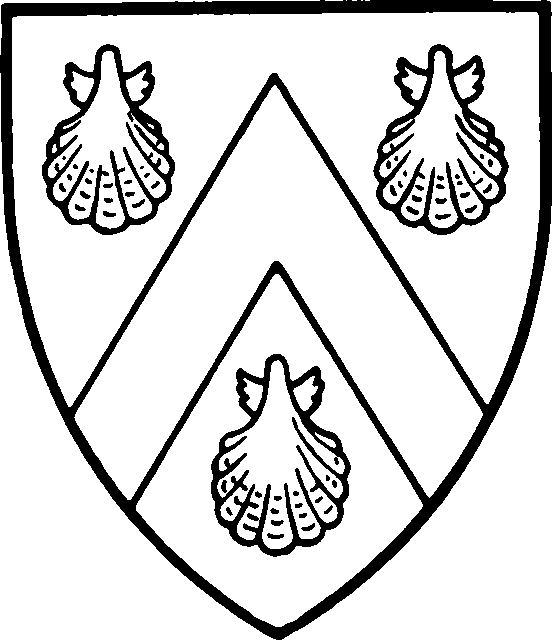
Mallett
Falcon, pursuivant, temp. Hen. VI.
Bluemantle, temp. Hen. VI.
Falcon, herald, temp. Ed. VI.
Arms: Or, a chevron between 3 escallops azure.
Presumably brother or s. of John Mallett, Clarence, to whom Lant gives the same arms.
16. RICHARD CHAMPNEYS (temp. Ed. IV). See Gloucester (4).
17. JOHN WALSHE
Hastings, c. 1480.
Falcon, ? herald, c. 1485.
'John Walsshe alias Hastynges' is one of Richard III's supporters whose property Henry VII confiscated (pat. 7 August 1486). Is no doubt the Hastings pursuivant (retainer of William, Lord Hastings, executed 1483) who occurs in 1480 (Wardrobe Account of Edward IV, ed. N. H. Nicolas, p. 119, etc.). Though Lord Hastings opposed Richard III Walshe evidently supported him for Richard granted to 'John Walshe alias Fawcon' (pursuivant or herald?) £40 a year, the equivalent of Garter's salary, for his true and faithful service (pat. 9 May 1485).
IV. PURSUIVANT
18. JOHN YONGE (temp. Hen. VII). See Norroy (16).
V. HERALD EXTRAORDINARY
19. HENRY FREDERICK STEPHENSON
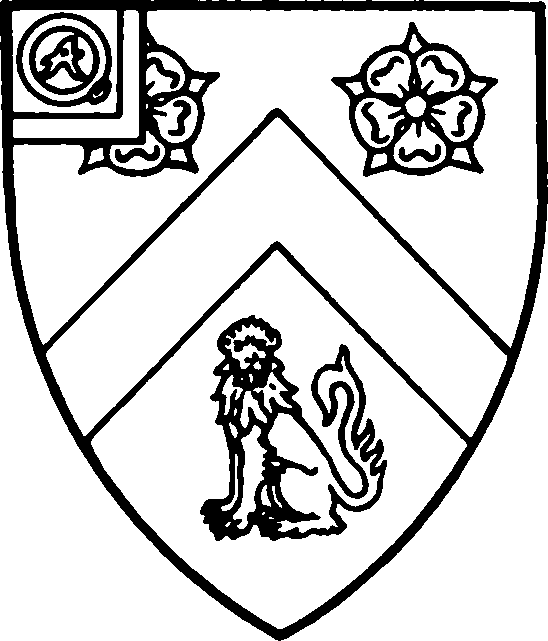
Stephenson
Falcon, herald extraordinary, E.M. wt. 31 July, R. wt. 2 August 1813.
B. 18 September 1790, New St, Spring Gardens; baptized St Martin-inthe-Fields; natural s. of Charles, Duke of Norfolk by Miss Stephenson (a Stephenson of Scaleby, co. Cumberland, descended from a Governor of Jamaica in 1699), companion to the Duchess of Norfolk, then insane. Educ. Trinity Hall and Trinity College, Cambridge; matric. 1808; LL.B. 1814; Barrister Middle Temple 1814; Commissioner of Inland Revenue; Comptroller of the Household to Duke of Sussex; M.P. for Westbury; Falcon on being attached to Garter mission to Czar Alexander 1813; d. suddenly 13 July 1858, at Duff House, Banffshire; burd Mausoleum there; remains later transferred to Quidenham, Norfolk. Married Mary Keppel, dau. of fourth Earl of Albemarle; 15 children all baptized St George's, Hanover Square.
(Coll. of Arms MSS. 12 D. 14, 94 and 18 D. 14, 134; H. & G., vii, 75; A. C. Fox-Davies, Armorial Families, 1902; information from grandson E. M. Stephenson 28 April 1950.)
Arms granted 14 October 1815: Vert, a chevron between 2 roses in chief & a lion sejant guardant in base argent, on a canton argent another azure charged with a capital (script) A or in a gold finger ring gemmed proper, being the ring presented to him by Czar Alexander. Crest: A falcon rising argent, beak & legs or, within a herald's collar of SS proper. Motto: Sola Virtus Invicta.
Fitzalan Pursuivant
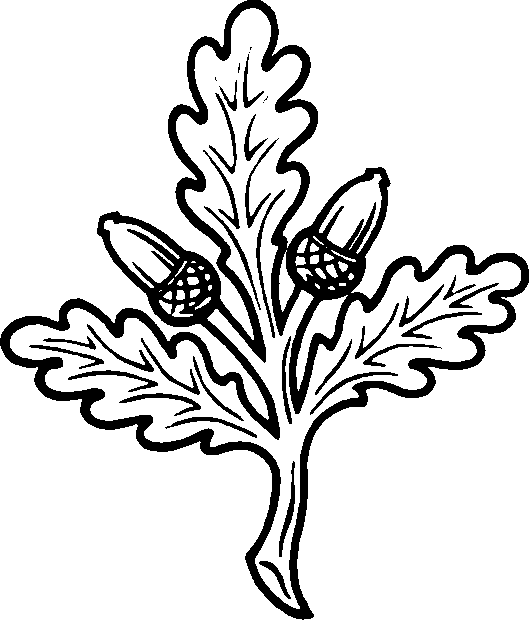
A pursuivant extraordinary named after one of the Earl Marshal's baronies and appointed for the coronations of Queen Victoria and her successors and again in 1957. The first four Fitzalans all became pursuivants in ordinary and the first three were eventually Garter.
Badge, assigned 1958: A sprig of oak proper.
1. ALBERT WILLIAM WOODS (1837). See Garter (27).
2. GERALD WOODS WOLLASTON (1902). See Garter (30).
3. ALGAR HENRY STAFFORD HOWARD (1911). See Garter (31).
4. ALEXANDER COLIN COLE (1953). See Portcullis (36).
5. CHARLES WILFRED SCOTT-GILES, O.B.E.
Scott-Giles
Fitzalan, E.M. wt. 16 July, R. wt. 22 August 1957.
B. Southampton 24 October 1893, s. of Charles Giles, sometime Chairman Parliamentary Press Gallery; educ. Emanuel School and Sidney Sussex College, Cambridge; assumed additional name of Scott by deed poll 25 July 1928; served R.A.S.C. First World War; journalist and sometime member Parliamentary Press Gallery; 1928 Secretary Institution of Municipal Engineers; 1946 Secretary Public Works and Municipal Services Congress and Exhibition Council; O.B.E. 1953; Founder member and Fellow Heraldry Society, Corresponding Fellow Danish Society of Heraldry 1950; Vice-Patron Australian Society of Genealogists 1957.
Published inter alia The Romance of Heraldry (1929); Civic Heraldry of England and Wales (1933); edited Boutell's Heraldry (1950); articles in Coat of Arms, etc.
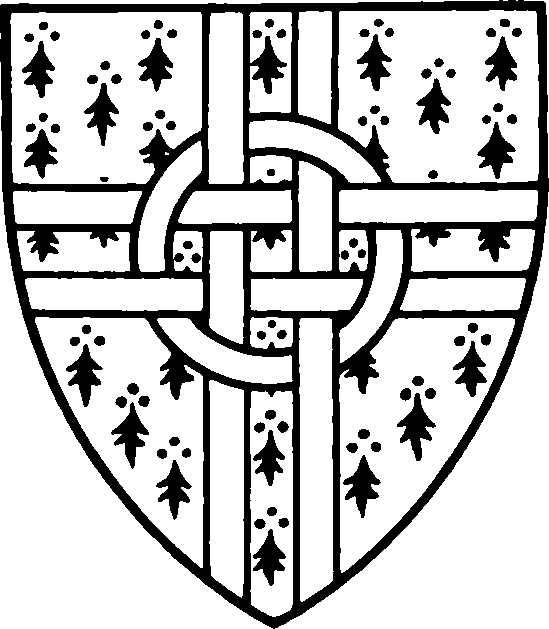
Arms of Giles granted 1936: Ermine, a cross double parted & fretted gules interlaced with an annulet or. Crest: On a torse argent & gules issuing from a circular chain square-linked or a demi-swan rousant the head lowered proper. Motto: Strive and Thrive.
Fitzwalter Pursuivant
'Fewater', pursuivant of Sir John Ratcliffe, K.G., Lord Fitzwalter, attended the creation of Jasper Tudor as Duke of Bedford in October 1485 (Coll. of Arms MS. O.A. III, 244 citing a MS. account of the ceremony probably written by Wrythe, Garter).
Fleur de lis Herald
The fleur de lis of the royal arms of France was often used as a badge by English sovereigns. A Fleur de Lis pursuivant was created herald by the same title at the Garter feast in May 1435, and in the following July was sent on a mission to France (Coll. of Arms MS. O.A. II, 749, 751).
Gloucester King of Arms
Gloucester was herald to several dukes of Gloucester, but there was no duke or earl of that title from 1399 to 1441 and the herald who d. in 1406 (no. 1 below) calls himself in his will herald of the King. He had probably been retained either by Thomas of Woodstock, Duke 1385–97, or by Thomas Despencer, Earl 1397–9, and kept his old name on entering the royal service. The title reappeared in 1415, nos. 2 and 3 being heralds of Duke Humphrey, and again at the end of Edward IV's reign (no. 4).
Under Richard III Gloucester was king of arms, but his province is uncertain, for Clarenceux and Norroy had the south and north parts of England and March the west. The title lapsed on the accession of Henry VII.
In 1726, however, Bath, king of arms of the Order of the Bath, was given the additional title of Gloucester king of arms with heraldic jurisdiction over Wales. At this Clarenceux and Norroy protested, the grant was found to infringe their rights and the title was dropped (H. of N.).
1. RICHARD...
Gloucester, herald, temp. Hen. VI, before 1406.
Administration of his effects granted 6 December 1406 (Commissary Court, London, fo. 81 Broun).
2. ROWLAND
Gloucester, herald, temp. Hen. V, c. 1420, perhaps 1415.
Named February 1420 and May 1421 in Plea and Memo Rolls, City of London, 1413–37, p. 96. Probably the Gloucester herald in retinue of Humphrey, Duke of Gloucester, 1415 (P.R.O., Exchequer T.R. Misc. 43/9); if so sent to France 1415, to Spain and Portugal February 1416; present at St George's Feast May 1416, when Emperor Sigismund elected K.G. (Coll. of Arms MS. O.A. III, 245; Nicolas, Proc. of Privy Council, ii, 192; Devon, Pell Records, p. 345).
3. ROGER LEGH or LYGH (temp. Hen. V). See Clarenceux (5).
4. RICHARD CHAMPNEYS
Champneys
Calais, temp. Ed. IV.
Bluemantle, temp. Ed. IV.
Falcon, herald, temp. Ed. IV.
Gloucester, herald, temp. Ed. IV, king, appd before 7 July, pat. 18 September 1483, d. or resd before battle of Bosworth.
No confirmation of Lant's statement that he was Calais, Bluemantle and Falcon; seems rather to have been Gloucester herald to Richard III as Duke of Gloucester; attended Richard's coronation July 1483 as king of arms and 14 September following had pat. describing him as king of arms and principal herald of the parts of Wales with the name of Gloucester; named as Gloucester in heralds' incorporation charter 2 March 1484; must have d. soon after.
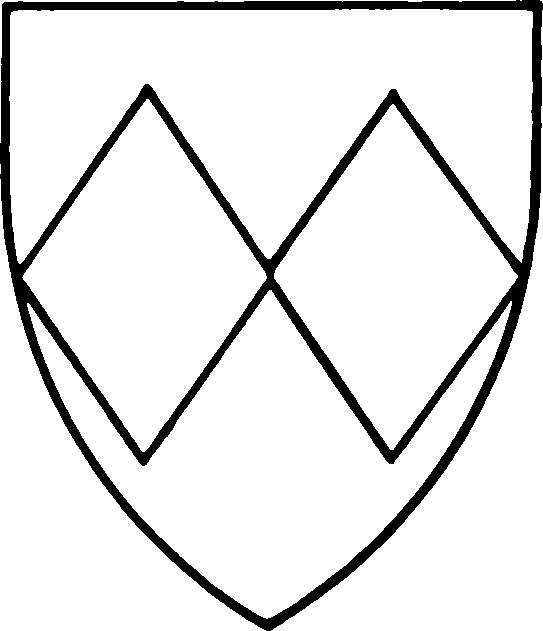
Arms: Gules, 2 lozenges joined in fess argent. (Brass at Capel le Ferne, Kent, to his dau. Margaret and her husband John Gibbes; Coll. of Arms MS. SML. 64, p. 310; etc.)
5. GREY LONGUEVILLE (1726). See Bath.
Groby Herald
Servant of Thomas Grey, Lord Ferrers of Groby and Marquess of Dorset. Some writers call him herald and some pursuivant. Perhaps he was Grey's pursuivant as Lord Ferrers and promoted to herald when Grey became marquess in 1475. Groby was at the funeral of Queen Elizabeth of York in 1503 and attended his master at a tournament in Paris in 1514 (H. of N.).
Gryphon Pursuivant
Pursuivant of the earls of Salisbury. Occurs in 1385 (no. 1 below) when he was officer of Sir William Montagu, K.G., and in 1434 when he was probably in the service of Richard Neville, perhaps also in 1473 (no. 2) when George, Duke of Clarence, had the earldom.
A gold gryphon was a Montagu beast at least from the end of the thirteenth century. At the siege of Carlaverock in 1300 Sir Simon de Montagu had an indigo banner and shield charged with a gold gryphon, and on the Barons' Letter to the Pope in 1301 his counterseal displays a ramping gryphon though his seal bears the usual Montagu fess of three fusils (Royal Beasts, p. 18; H. of N.).
1. THOMAS TURVILLE (c. 1385). See Salisbury (1).
2. THOMAS GRYFFYN (? temp. Ed. IV). See Richmond (4).
Guisnes Pursuivant
The town and county of Guînes, a few miles south of Calais, gave title to one of the garrison pursuivant in Picardy, posts which so often were stepping stones to an appointment in ordinary. Guisnes is mentioned in 1474 (Cal. Doc. Scot., iv, no. 1413), and he attended the translation of the body of Richard, Duke of York in 1476 and the funeral of Edward IV in 1480, but the first whose name is certain is Wall, no. 6 below. The title lapsed after the return of Picardy to France in 1558. The catalogues misname John Yonge, William Fellow and L. Dalton as Guisnes under Edward IV, Henry VII and Henry VIII respectively.
1. ROGER STAMFORD (temp. Ed. IV). See Chester (9).
2. ROBERT BROWNE (temp. Ed. IV). See Richmond (6).
3. THOMAS FRENCH (temp. Ric. III). See Bluemantle (16).
4. WILLIAM TYNDALE or TENDALE (temp. Hen. VII). See Lancaster (12).
5. ...CURSON
? Guisnes, c. 1502.
A pursuivant of this name was executed in 1502 for aiding Sir Edmund de la Pole (Fabian's Chronicle (1533), p. ccxxxii b). Probably related to Sir Robert Curson who was also implicated. Probably Guisnes pursuivant as he was executed there.
6. THOMAS WALL (temp. Hen. VII). See Norroy (17).
7. WILLIAM JENYNS (c. 1510). See Lancaster (14).
8. JOHN HUTTON (c. 1527). See Bluemantle (23).
9. ALLEN DAGNELL (1528). See York (10).
10. FULK AP HOWEL (1532). See Lancaster (17).
11. WILLIAM FLOWER (1536). See Norroy (26).
12. HENRY FELLOW
Fellow
Guisnes, appd as from October 1543, p.s. 26, pat. 30 May 1544.
Probably s. of William Fellow, Norroy, and brother of Nicholas Fellow, Calais, q.v. Attached to the English force sent to France 1544 and 1558 sent by Lord Wentworth to arrange the capitulation of Calais. No later reference to him. The last Guisnes pursuivant.
Arms: As Wm. Fellow, Norroy.
Guyenne and Aquitaine King of Arms
This king of arms was appointed, like Bordeaux herald, for the service of the English domains in south-west France. Aquitaine was his more usual title in the fourteenth and Guyenne in the fifteenth century, while both names were used under Henry V. Under Henry VI we meet with Guyenne both as king and as herald.
1. JAQUES HEDINGLEY
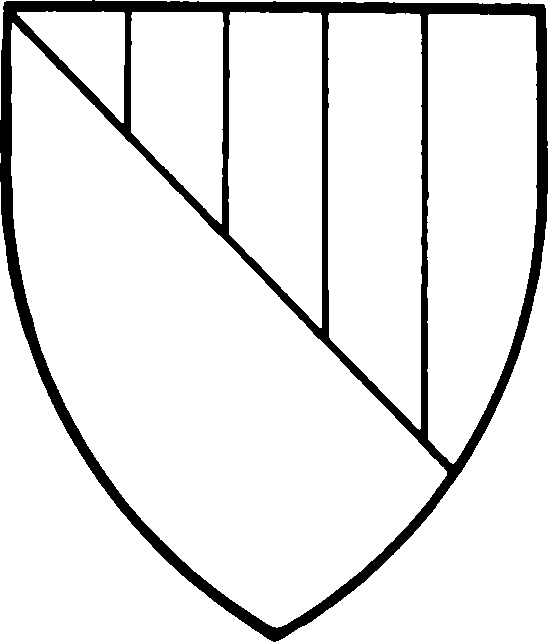
Hedingley
? Guyenne, king, c. 1306.
16 December 1546, Hawley, Clarenceux, confirmed a pat. of arms alleged to have been made 8 April, 34 Ed. I (1306) to Peter Dodge, of Stopford, co. Chester, by 'Jaques Hedingley dict Guyen Roy darmes'. Hedingley is otherwise unknown and the authenticity of the grant is suspect (H. & G., 1, 514).
Arms: Per bend... &... with 2 pales... in chief.
2. SIR PAYNE ROET
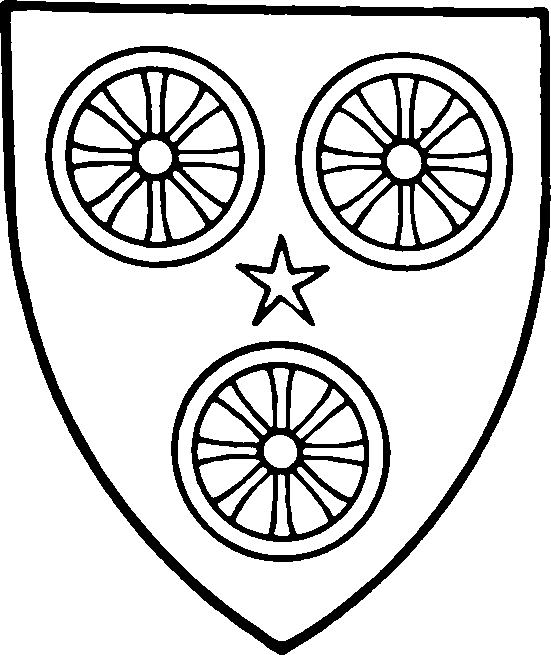
Roet
Guyenne, king, c. 1334 (?).
A Knight of Hainault, probably came to England in train of Queen Philippa; father of Catherine, third wife of John of Gaunt, and of Philippa, wife of Geoffrey Chaucer; called 'Guyenne rex armorum' on monument in Old St Paul's; dates of appointment and death unrecorded; said to have granted arms 1334 to Thomas Andrews and brothers, but document is obvious fake; perhaps d. c. 1352.
Arms: Gules, 3 wheels or with a molet in fess point. Probably cartwheels (Coll. of Arms, Vinc. MS. 88, 16 and Harl. 6163, 19; Guillim, 1724, p. 298); but Catherine wheels on Duchess of Lancaster's mon., Lincoln Cathedral, and on Duchess of Suffolk's mon., Ewelme, Oxfordshire; perhaps changed to Catherine wheels in allusion to Duchess of Lancaster's Christian name.
Aquitaine king occurs in the 1360's; he would be the officer of the Prince of Wales who held Aquitaine from 1362 to 1374.
3. TAURALD
Aquitaine, alias Guyenne, herald, c. 1373.
Named as herald of Aquitaine Issue Roll, Michaelmas, 47 Ed. III, 1373. Probably the Aquitaine king mentioned in Warrant for Issue, 13 November, 40 Ed. III, 1366, and in Issue Roll, Michaelmas, 41 Ed. III, 1367 (Coll. of Arms MS. O.A. I, 152b, 153).
4. NICHOLAS DU CHEYNE
Aquitaine, king, c. 1374.
Nicholas Duchayn or du Cheyne king of arms of Aquitaine; mentioned in John of Gaunt's Register January 1375 (Camden Soc., 3 s., xx, no. 1609); attended Earl of Buckingham in France 1380 (Froissart) and received robes at Christmas 1383 (Coll. of Arms MS. O.A. I, 153).
5. COTARD DU CHEYNE
Aquitaine, king, c. 1387.
By p.s. 27 February (9 or 10 Ric. II), 'Cotard du Cheyney roy d'armes d'Acquitaine' was exempted from all taxation (Coll. of Arms MS. I, 153); probably the Aquitaine king who gave evidence in case of Lovel v. Morley 1395, being then 70 years old (Coll. of Arms MS. O.A. I, 153). Must have succeeded Nicholas du Cheyne soon after 1383 unless they are one and the same.
6. WILLIAM BRUGES (1413). See Garter (1).
7. WILLIAM HORSLEY (temp. Hen. V). See Clarenceux (3).
8. THOMAS MORE
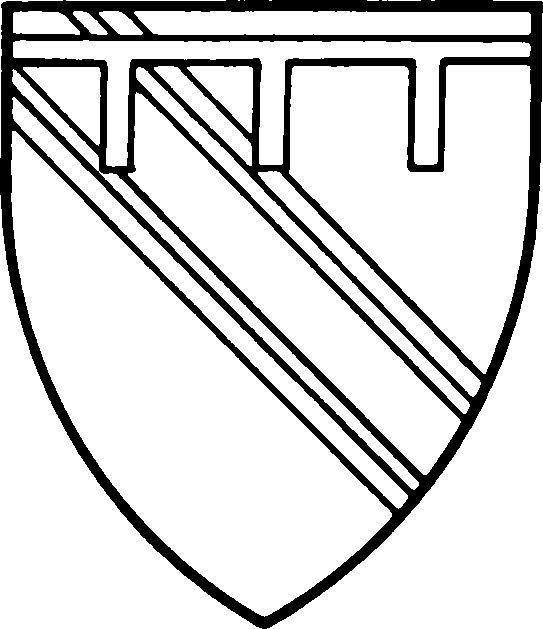
More
Antelope, temp. Hen. V.
Bluemantle, 6 Hen. V, 1418–19.
Richmond, temp. Hen. VI.
Windsor, temp. Hen. VI.
Guyenne, king, temp. Hen. VI.
Arms: Or, a bend cotised gules & label azure.
Martin Leake (Coll. of Arms MS. SML. 64, p. 281) says he was 'Richmond, an extra herald' before Windsor, and calls him father of John More, Norroy, but gives no evidence for either statement, latter probably mere inference, Lant giving same arms to both men.
9. JOHN SMERT (temp. Hen. VI). See Garter (2).
10. WILLIAM HAWKESLOWE (temp. Hen. VI). See Clarenceux (6).
11. JOHN WREXWORTH
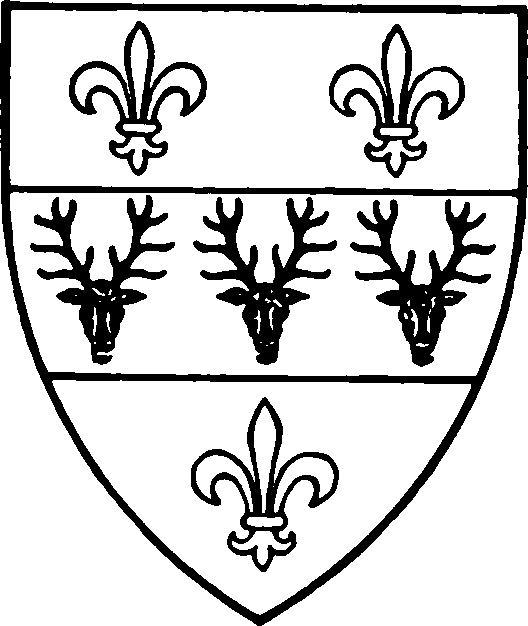
Wrexworth
Collar, c. Easter term 1445, perhaps appd 22 Hen. VI, 1443–4.
Guyenne, king, 6 February 1446.
Said to have been successively Antelope, Bluemantle 1 Hen. V, Exeter and Guyenne, but no evidence for any but last title.
4 August 1441, described as 'our messenger' and sent to Duchess of Burgundy; probably appd Collar, 22 Hen. VI, 1443–4, but first so named Issue Roll, Easter, 23 Hen. VI, 1445; almost constantly travelling to and from Continent (Coll. of Arms MS. O.A. III, 171, etc.); Guyenne king by 6 February 1446 (conf'n of arms to John Oxenden), and November following asked French officers of arms to obtain release of Huntingdon herald (?W. Whiting) then prisoner in France; various foreign missions 1451–2; 30 November 1460, named as Guyenne in pat. granting officers of arms £243 arrears of largesses; d. between 13 May 1463 (pat. of arms to John Wybarne) and October 1472 when Richmond (? Brereton) was cr. Guyenne.
Following patents of arms issued by him as Guyenne: 1446, 6 February, John Oxenden (Arch. Cant., vi, 277); 1447, March, Ralph West of Sudbury; 1456, 18 November, John Bangor (Misc. Gen. & Her., 1, 54); 1456, Thomas Wade; 1458, 4 December, Thomas Aleyn, of Norfolk (original in Peterborough Museum); 1458, John Grene, common Serjeant of London; 1461, 29 January, William Swayne, of Somerset (Harl. Soc. 77, 192); 1461, 31 May, Cooks' Co. (see A. C. Cole in Coat of Arms, iv, 330); 1463, John Wybarne, of Kent (Misc. Gen. & Her., 5 s. v, 238).
As king of arms of the Duchy of Guyenne status in issuing these patents uncertain; some are mere confirmations, but others, for instance, Swayne and Aleyn, are out and out grants—see H. & H., pp. 74, 76.
It is worth noting that in the West confirmation his signature 'Gyan Kynge of Armes' is followed by a slipped trefoil somewhat like that in the Tyndale signatures.
Arms: Azure, on a fess between 3 fleurs de lis argent 3 stag's faces sable. Counterseal: An open crown (seal on Aleyn grant, etc.).
12. NAME UNKNOWN (1472), Richmond, herald, cr. Guyenne, king, 13 October 1472; perhaps identical with William Brereton, see below (13).
13. WILLIAM BRERETON
? Richmond, c. 1467.
Guyenne, king, c. 1475.
'Willelmus Brerton Gyan Rex Armorum' was received into the English Hospice in Rome, Christmas 1475 ('Englishmen in Rome during the Renaissance', Modern Philology, xxxvi (1938–9), 137). Probably he was the Richmond herald who was cr. Guyenne 13 October 1472, and the same who occurs as Richmond 1467, etc.
Hameltue
See NEWHAVEN.
Hampnes Pursuivant
Hampnes, now Hames, is a castle and village near Calais which England acquired by the Treaty of Bretigny in 1360. It gave title to one of the garrison pursuivants who was present at the coronation of Henry VII, and who may perhaps be identical with one 'Hannes' who occurs in the history of Brittany in 1461 and 1462. Picardy having returned to the French Crown in 1558, the title lapsed on Turpin's promotion (Coll. of Arms MS. O.A. III, 74, etc., 81).
1. JOHN PONDE or POUND (temp. Hen. VII). See Somerset (3).
2. BARTHOLOMEW BUTLER (1529). See Ulster (1).
3. GILBERT DETHICK (1536). See Garter (7).
4. WILLIAM HERVY (1541). See Clarenceux (13).
5. EDMUND ATKYNSON (1543). See Somerset (8).
6. NICHOLAS TUBMAN (1545). See Lancaster (18).
7. RICHARD TURPIN (1549). See Windsor (14).
Hanover Herald
The statute of 1726 provided that the then Bath king of arms was to be made Hanover herald and Gloucester king. See Bath.
Harington Pursuivant
Pursuivant of Thomas Grey, Marquess of Dorset (cr. 1475), who acquired the barony of Harington by marriage to the dau. of William, Lord Bonvill and Harington. He was present at the funeral of Edward IV in 1483 (H. of N.).
Hastings Pursuivant
Hastings pursuivant was sent to France several times from 1479 to 1482 (Coll. of Arms MS. O.A. III, 253; Scofield, Edward IV, ii, 319, 329). He was a retainer of William, Lord Hastings, and Sir Thomas More in his 'History of Edward V' (Coll. of Arms MS. Arundel 43) records that he attended his master at his execution in 1483. He is very possibly the John Walsh who was afterwards Falcon, and who as John Walsh alias Hastings was attainted by Henry VII in 1485.
Hembre (Henlic) Pursuivant
Hembre and Henlic are mentioned by French writers among the pursuivants attending the English ambassadors at Arras in 1435 (Coll. of Arms MS. O. A. III, 187; R.G. ii, 334 note i; Edmondson, 1, 124).
Herbert Pursuivant
Pursuivant of Sir Charles Somerset, Lord Herbert of Gower and Earl of Worcester, who left him a legacy by a codicil to his will dated 10 April 1526.
As Sir Charles' first wife was heiress of William Herbert, Earl of Huntingdon (d. s.p.m. 1491) it is possible that Herbert was originally the latter's servant.
Hereford Herald
In 1369 Hereford was herald of Humphrey de Bohun, Earl of Hereford, Essex and Northampton, but from the Earl's death in January 1373 he was a royal herald and he remained so under Henry IV and V. He attended Henry V's coronation in 1413, was sent overseas in 1414 (Warrant for Issue, 1 Hen. V, 14 February) and in 1415, owing to Richard Bruges' indisposition, he was attached to the Agincourt expedition as 'marshal of the north'. The title then seems to have slept, but it was revived in the 1470's by Henry Stafford, second Duke of Buckingham, who claimed the earldom of Hereford as heir general of the Bohuns. In 1474 Hereford was one of the chapter of heralds who concluded that the duke might bear the arms of Thomas of Woodstock alone (H. of N.).
A manuscript in the Bodleian (Wood F. 33. 19b, probably copied from a Glover MS.) calls Hereford herald of the Duke of Gloucester, but that looks like a mistake due to the fact that Thomas of Woodstock had been Duke of Gloucester.
1. RICHARD...
Hereford, c. 1369.
1369 attended his master, Humphrey de Bohun, Earl of Hereford, overseas (p.s. 20 July), and 1370 attended Sir Robert Knollys (p.s. 19 June); Crown officer from Bohun's death s.p.m. 1373; sent repeatedly to France, Flanders, Germany, etc. 1376–86; on mission to Germany 1377 allowed 10s. a day; same year was granted tenements in Calais which had belonged to Lord Fitzwalter (French Roll, 51 Ed. III, m. 8; p.s. 6 March); 1385 attended Richard II on Scottish expedition (protection by p.s. 28 June, 9 Ric. II).
Last mentioned Issue Roll, Easter, 10 Ric. II, 1387, when paid £45. 14s. 8d. balance of £109. 6s. 8d. due for various missions temp. Ric. II.
(See Coll. of Arms MS. O.A. II, 719, etc.)
2. NAME UNKNOWN (temp. Hen. V). At coronation of Henry V; marshal of the north in 1415.
Huntingdon Herald
Huntingdon occurs at various times from 1441 to 1458. In 1446 he is called 'Le harault serviteur en particulier de haut et puissant prince Mons. le Duc de Exeter', that is, John Holand, who was also Earl of Huntingdon. In November 1446 he was kept prisoner in France whereat Lancaster and Guyenne protested to their French colleagues that such detention was contrary to the privileges of their office.
One of the books bequeathed by Benolt to his successors as Clarenceux was a Chronicle 'wryttyn by William Whyting alias Huntingdon herauld and after Chester', q.v. (H. of N.).
Ich Dien Pursuivant
Ich Dien was a pursuivant of the Prince of Wales whose ostrich feather badge has been accompanied by that motto since the time of the Black Prince. In 1476 he attended the translation of the body of Richard, Duke of York, on behalf of Prince Edward, then only 6 years old (H. of N.).
Il Faut Faire Pursuivant
According to Anstis (Coll. of Arms MS. O.A. III, 183) a pursuivant called Aiyl Fauste Faire is named in the Issue Roll, Easter, 22 Hen. VI, as sent from England with letters to the Council in France, but the reference is mistaken and the name is obviously corrupt. The pursuivant in question must have been Sir John Fastolf's officer named from his motto. This is variously given but Il faut Faire or Me faut faire are the most plausible versions (H. of N.).
Ireland King of Arms
Ireland king of arms is first mentioned by Froissart who calls Chandos 'le roy d'Irlande' in 1389. Although described as king of arms of the Dominion of Ireland none of the incumbents had much to do with that island and all were counted as members of the Office of Arms in England. The title lapsed on Bellengier's death in 1487, but in 1552 Edward VI entrusted Ireland to a new king called Ulster, q.v. The English king must be distinguished from the Scottish Ireland herald or pursuivant who occurs in 1498.
1. ...CHANDOS
Herald to Sir John Chandos, c. 1366.
Ireland, king, c. 1370.
Chandos herald is first mentioned 1366, but was probably so appd 1360 when his master, Sir John Chandos, was made banneret. After Sir John's death, 1 January 1370, entered royal service and was made Ireland king, becoming 'roy d'armes d'Engleterre', that is, doyen of the Office of Arms, 1377; still living 1383. Best known as author of a metrical life of the Black Prince, the language of which shows that he was a native of Valenciennes.
Chandos is generally taken to be his name of office, but it is not impossible that he was of kin to Sir John and that it was his own name.
(Froissart; Life of the Black Prince..., edit. Pope and Lodge, 1910.)
2. JOHN LAKE or OTHELAKE (temp. Ric. II). See Norroy (4).
3. THOMAS COLLYER (COLLIER)
Falcon, pursuivant, temp. Hen. V.
Bluemantle, 9 Hen. V.
Clarence, herald, temp. Hen. VI.
Ireland, king, temp. Hen. VI.
Lant probably meant the 'Thomas Ireland Rex Armorum Hiberniae', of St Michael Cornhill, who made his will 7 June 1414, pr. 16 June 1419 (Bishop of London's Reg. 1418–38, fo. xxixb). Thomas accompanied Henry V to Agincourt, but nothing more is known of him except that on 15 May 1417 the King confirmed an annuity of 10 mks previously granted him by Edward, Duke of York (d. 1415); this suggests that he may have been the Duke's own pursuivant and as such Falcon is not an unlikely title. Improbable that he had the title Clarence under Henry VI as there was no duke of Clarence from 1421 to 1461.
(Coll. of Arms MS. O.A. I, 128; II, 709.)
4. JOHN KIRBY, KIRKBY or KITEBY
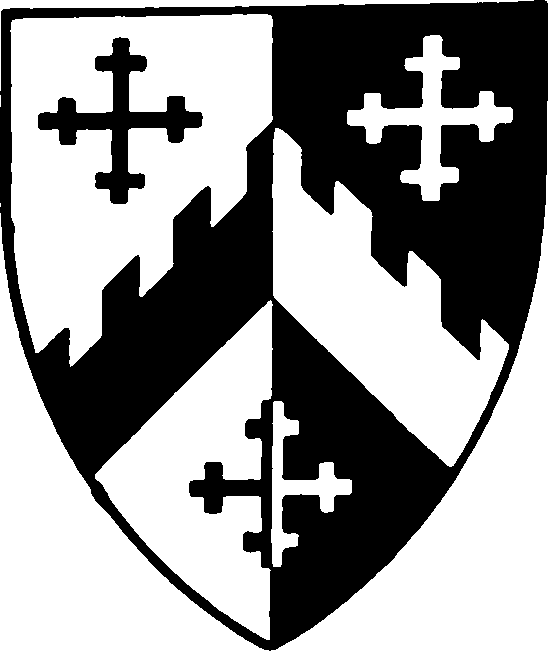
Kirby
Leopard, temp. Hen. V.
Ireland, c. 1419.
Said to have been Leopard temp. Hen. V, but not so. As 'Jehan Kyrkeby autrement dit Irland, Roy darmes des Irlandois' attended chapter of heralds, Rouen, 5 January 1420; said to have been appd Ireland on motion of James Butler, fourth Earl of Ormonde; at coronation of Queen Katherine February 1421, but no further mention of Ireland until 1447.
Arms: Per pale argent & sable, a chevron embattled between 3 crosses crosslet counterchanged.
5. ?WILLIAM GRIMSBY (c. 1461). See Norroy (9a).
6. RICHARD ASHWELL
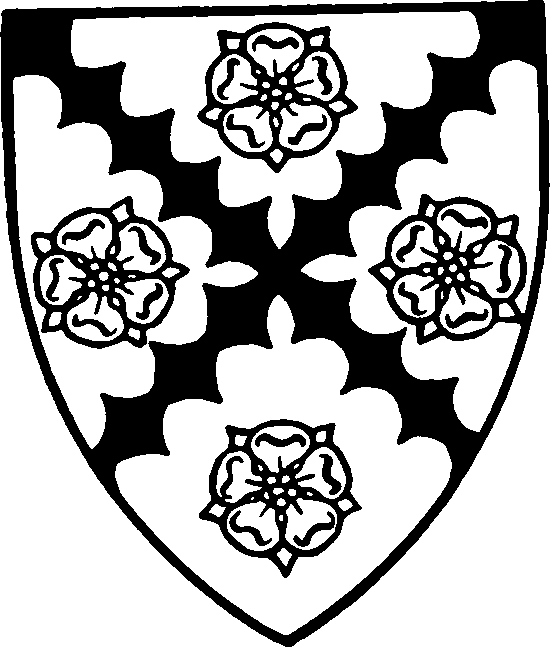
Ashwell
Cadran (pursuivant to Earl of Dorset), temp. Hen. VI.
Rouge Croix, temp. Hen. VI.
Lancaster, temp. Ed. IV.
Ireland, temp. Ed. IV.
Said to have been previously Cadran, Rouge Croix and Lancaster and is possibly identical with Robert Ashwell. See Windsor (4).
Arms: as John Ashwell, Norroy (7).
7. WALTER BELLENGIER or BELLINGHAM
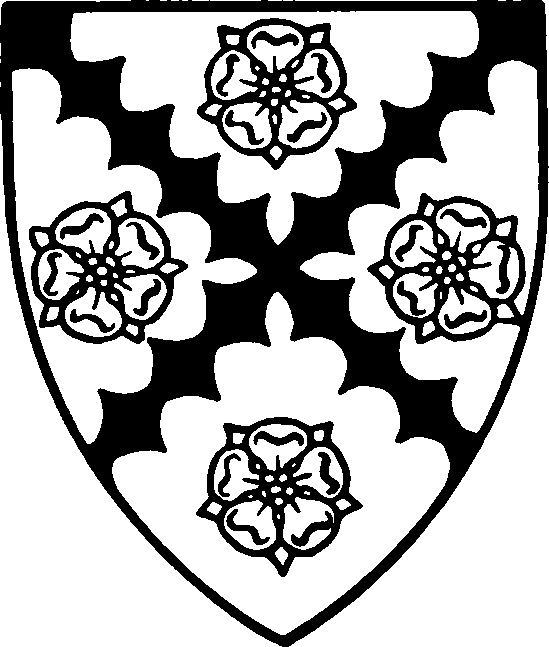
Bellengier (Bellingham)
Ireland, king, cr. 9 June 1467, resd (possibly deprived by Richard III or Henry VII).
Native of Dieppe by name Bellengier, anglice Bellingham; must by his own account have begun heraldic career about 1422 (Coll. of Arms MS. L. 14, 211b), but nothing more is known of him until 1467 when 'Walter Ireland' was created 'King of Arms of Our lande of Ireland' (P.R.O., E. 404/74, 9 Ed. IV, no. 59). At first employed in Ireland, but afterwards sent to Scotland and overseas; seems to have retired soon after the death of King Edward. D. 3 May 1487 and wife Elizabeth 9 days later (Records of Bucks., vii, 530).
Most conspicuous mission in 1475 when, attended by two pursuivants, he carried King Edward's final defiance to King Louis (Cal. S.P. Milan, p. 200, no. 296); Commines confused this with the earlier message carried by Garter Smert, q.v.
Free of Parish Clerks' Co., to whom he granted arms 1479 (Ebblewhite, Parish Clerks' Co., p. 15; see also N. & Q., cciii, 232–6).
Arms: Argent, a saltire engrailed sable between 4 roses gules. Crest: A demi-swan with expanded wings.
Joieulx Pursuivant
Pursuivant of Lord Bonvill at the battle of St Albans in 1455 (H. of N.).
Joye Pursuivant
Joye or Joies appears in the Issue Rolls, Michaelmas, 31 and Easter, 32 Hen. VI, 1453–4, as Lord Scales' pursuivant. Lord Scales' pursuivant was also employed as a King's messenger in 1451 (Issue Roll, Easter, 29 Hen. VI) but it is not said whether that was Joye or Scales.
Kendal Herald
'Candalle', herald of John, Duke of Bedford, Earl of Kendal, etc., was serving in Normandy in September 1430 (Sureau, fo. 768).
Kildare Pursuivant
'Galdare' or Kildare was pursuivant of Gerald Fitzgerald, the 'Great' Earl of Kildare. He had livery at the coronation and mourning at the funeral of Henry VII. He also attended the coronation of Henry VIII and the fact that no tabard was then provided for him shows that he was not a royal officer. He may probably be identified with the 'herald' who attended Lambert Simnel's coronation at Dublin in 1487 (H. of N.).
Leicester King of Arms
From 1380 or earlier Leicester (no. 1) was herald of John of Gaunt, Duke of Lancaster and Earl of Leicester, from whose death he joined the royal household. On Henry IV's accession he was made king of arms, probably having the southern province. The title disappeared between 1415 and 1419, but reappeared as a herald in 1478 at the marriage of Richard, Duke of York, in 1483 at Edward IV's funeral, in 1485 (no. 2), and at New Year 1507.
1. HENRY GRENE, ATTE GRENE or DE GRENE
Leicester, herald, 24 June 1380, king, c. 4 October 1399.
Herald of John of Gaunt, Duke of Lancaster and Earl of Leicester; sent to Portugal 1380 and to Spain 1386. Herald of Richard II 1398–9; on Irish expedition 1399. Made king of heralds by Henry IV before 4 October 1399; in charge of the southern province; at siege of Coity Castle 1405; on Agincourt campaign 1415; d. c. 1419.
Perhaps related to Sir Henry Grene, of Raundes, Northamptonshire, one of John of Gaunt's knights (John of Gaunt's Register, 1372–6 and 1379–83).
Is he the English king of arms called 'Arieta' (sic,? Harry) who is said to have founded the Portuguese office of arms?
2. ROGER MACHADO (temp. Ed. IV). See Clarenceux (8).
Leon d'Or Pursuivant
Pursuivant attending Sir John Sutton, Lord Dudley, Ambassador to France, in 1446–7. He was present at the Chalons-du Breuil duel in 1446. Anstis thought he was Dudley's officer and that his title was suggested by the arms, but the lions in Lord Dudley's arms were respectively green with a double tail (Sutton) and azure passant (Someri). If Leon d'Or was Dudley's officer he is probably the 'pursuivant of the lords Duddelys the which went in oure erand into France' in August 1447 (H. of N.).
Leopard Herald
This title, given to a herald under Henry V and VI, recalls the beasts in the royal arms of England, now blazoned lions passant guardant, but for a time called leopards. Lant lists John Wrythe as Leopard though he was really Falcon.
1. JOHN KIRBY or KITEBY (temp. Hen. V). See Ireland (4).
2. NICHOLAS SERBY
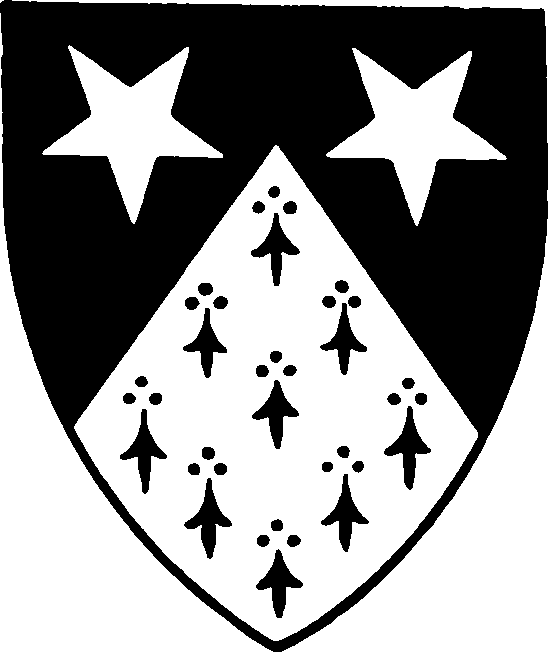
Serby
Falcon, temp. Hen. V (sic).
Rouge Croix, 2 Hen. V. (sic).
Leopard, c. 1404.
Said to have been Falcon and Rouge Croix temp. Hen. V, but was already Leopard in Michaelmas Term, 6 Hen. IV, 1404, when Nicholas Leopard sent to Germany (Coll. of Arms MS. O.A. II, 757, citing Issue Roll); still Leopard at chapter of Rouen 5 January 1420.
Arms: Per chevron sable & ermine, 2 molets in chief argent.
3. JOHN ASHWELL (temp. Hen. V). See Norroy (7).
4. WILLIAM HAWKESLOWE (temp. Hen. VI). See Clarenceux (6).
Le Sparre Pursuivant
In 1390 Le Sparre pursuivant came to England on behalf of his master Florimond, Lord of Le Sparre in Gascony (Issue Roll, Easter, 13 Ric. II). Later pursuivants of that name were retained by John Lord Tiptoft (Earl of Worcester in 1449) and by John and Henry Holand, Dukes of Exeter, all of whom held the lordship. Le Sparre attended Duke Henry at the first battle of St Albans in 1455 (H. of N.).
Lisle Pursuivant
Lisle or Lysley was pursuivant to Charles Brandon when he was Viscount Lisle. Later he was retained by Arthur Plantagenet, Viscount Lisle (who obtained a grant of this title on the surrender of the patent by Charles Brandon), when Deputy of Calais 1533–40 (H. of N.).
1. CHRISTOPHER BARKER (1513). See Garter (6).
2. GEORGE SHAW
Lisle, ? 1533.
1534 imprisoned at Southampton on charge of piracy or plotting piracy; variously described in correspondence from 27 March to 17 April as 'late my lord Lisle's servant', 'my lord Lisle's pursuivant' and 'George Shaw vintner' (L. & P. Hen. VIII, vii, 381–502 passim). Probably appd Lisle pursuivant when Arthur Plantagenet, Lord Lisle, was made Deputy of Calais 1533.
Longchamp Pursuivant
Pursuivant of the Lord of 'Courselles' (? Courseulles, dépt. Calvados); employed in Normandy from 1433 onwards.
1. DENIS HURTYN
Longchamp, 1433–44.
Longchamp pursuivant occurs repeatedly from July 1433 to Easter Term 1444 (Warrants for Issue, 11 Hen. VI, no. 162, 22 July; 12 Hen. VI, no. 131, 12 November and no. 152, 29 January; 13 Hen. VI, no. 359, 18 July; and 15 Hen. VI, no. 154, 28 November; Issue Rolls, Easter 13, 14, Michaelmas 15, Michaelmas 18, and Easter 22 Hen. VI; Coll. of Arms MS. O.A. III, 671). In August 1439 he carried messages between England and the Peace Conference in France (Nicolas, Proc. Privy Council, v, 386).
It is probable that these entries all refer to the same man. He is named Denis in the wt. of 12 November 1433, when he had just brought despatches from the Council in France to that in England and was about to take back replies (Nicolas, Proc. Privy Council, iv, 182); and in that of 29 January following he is called Denis Hurtyn, pursuivant of the Lord of Courseulle.
Louvre Pursuivant
Louvre, Lovre or Lover pursuivant of John, Duke of Bedford, who as Regent of France resided in the Palace of the Louvre; he was employed in France and as courier to and from England 1430–2 (Issue Rolls, Easter 9, Michaelmas 10, Michaelmas 11 Hen. VI; Warrants for Issue, 10 Hen. VI, nos. 302, 17 June, and 349, 30 August; Rymer, p. 455; Coll. of Arms MS. O. A. III, 77). In March 1432 he was granted £5 as compensation for his ill-treatment when captured by the King's enemies on his way to England (Devon, Pell Records, p. 123 citing Issue Roll, Michaelmas 10 Hen. VI).
One John Collis was the Duke's pursuivant at some time after 1422, but his title is not stated and the date is uncertain (H. of N.).
1. FRANCISCUS DE PARISIIS
Louvre, cr. 16 April 1430.
Pursuivant of John, Duke of Bedford, who resided at the Louvre as Regent of France; cr. by the King at Canterbury and given a silver-gilt cup of 10½ oz. weight (Rymer, x, 455); mentioned in Issue Rolls down to 11 Hen. VI, 1432–3.
2. JOHN COLLIS
Pursuivant to John, Duke of Bedford, c. 1435.
Mentioned as the Duke's pursuivant in letter from Henry VI to Mayor of Southampton 2 October, year omitted (Hist. MSS. Comm., 11th Rep., part iii, p. 97, MSS. of Southampton Town). Title not stated; may have been Racine who occurs as the Duke's pursuivant May 1435.
Loveyn Pursuivant
Loveyn or Laweyn pursuivant, employed by Henry VI in 1455 and 1456 (Issue Roll, Michaelmas and Easter, 34 Hen. VI) was presumably retained by Henry Bourchier, then Captain of Calais, who was descended from and quartered the arms of Louvaine (H. of N.).
Loyaute Pursuivant
Loyauté pursuivant carried despatches from and to the Council in France in 1444 (Issue Roll, Easter, 22 Hen. VI; Coll. of Arms MS. O.A. III, 45). Not said by whom he was retained.
Lyon Pursuivant
Pursuivant of Thomas Burgh, who was Captain of Avranches in 1429 (Sureau, fo. 757), and father of Lord Burgh of Gainsborough, cr. 1487. 'Lyon' refers to the blue lion of Percy, arms, crest and beast of Thomas' wife, Elizabeth, dau. and coheiress of Henry Percy of Athol, whose arms were quartered by their descendants.
Maine Herald
The French province of Maine was in English hands under Henry V and VI, and Maine occurs as an English herald serving in France from 1428 to 1450. His name has not been found.
In 1428–30 he was the officer of the Regent, John, Duke of Bedford and Earl of Maine (Sureau, fos. 691, 775). On Bedford's death in 1435 he was perhaps engaged by Richard, Duke of York, Regent 1436–7, but in August 1440, when he was granted 20 mks a year in consideration of the losses he had sustained in the war, he was said to have been in the King's service for the past two years or more (Pat. 18 Hen. VI, p. 3, m. 4, 18 August; Close Roll, 18 Hen. VI, m. 3, 18 August; Issue Roll, Michaelmas, 21 Hen. VI, etc.). In June 1449, when he brought the Duke of Somerset letters from the French peace delegation at Louviers, he was accompanied by Villebon and Nogent pursuivants (Rolls Series 32, pp. 385–513). The above-mentioned annuity was paid down to the Easter Term 1450 (Issue Rolls, Michaelmas, 21 to Easter, 28 Hen. VI; cf. warrants for Issue passim from 13 Hen. VI, no. 296 to 29 Hen. VI, no. 100, 14 December 1450; Nicolas, Proc. Privy Council, v, 224).
No mention of Maine has been found after the wt. of 14 December 1450, until November 1458, when he was attached to Sir John Wenlock, the English Envoy to the Court of Burgundy (Rolls Series 22, 1, 365), but that was probably a different man.
Maltravers Herald
Maltravers was pursuivant of Henry, Lord Maltravers, as Deputy of Calais 1540–4 (H. of N.). In the nineteenth century the Duke of Norfolk, E.M. and Lord Maltravers, revived the title as that of a herald extraordinary.
1. JOSEPH JACKSON HOWARD, LL.D., F.S.A.
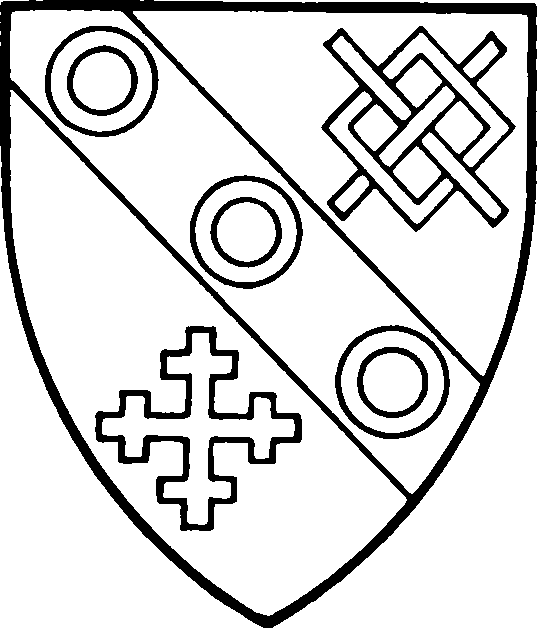
Howard
Maltravers, E.M. wt. 21, R. wt. 26 November 1887.
B. 12 April 1827, only s. of Peter Howard of Woodside, co. Chester; educ. Trinity Hall, Cambridge, LL.B. 1854, LL.D. 1859; F.S.A. 1854; Clerk in Postmaster General's Department 1851–88; founded Civil Service Supply Association; devoted leisure to heraldry and genealogy; founder and editor Miscellanea Genealogica et Heraldica (1866–1902); a founder of Harleian Society; joint-founder and editor 1893 The Vis'n of England and Wales and 1897 The Vis'n of Ireland; edited number of Vis'ns for Harleian and other societies; many contributions to Notes & Queries, The Athenaeum, etc. D. 18 April 1902; burd Twickenham Cemetery.
Arms granted 1893: Gules, on a bend between a fret in chief & a cross crosslet in base or 3 annulets vert. Crest: A lion proper holding between his forepaws a fret or & resting his dexter hind paw on 2 silver S's linked as in a herald's collar, on the shoulder 2 annulets in pale vert. Motto: Credo Christi Cruce.
2. RT HON. SIR WILLIAM BULL, BT., P.C., F.S.A.
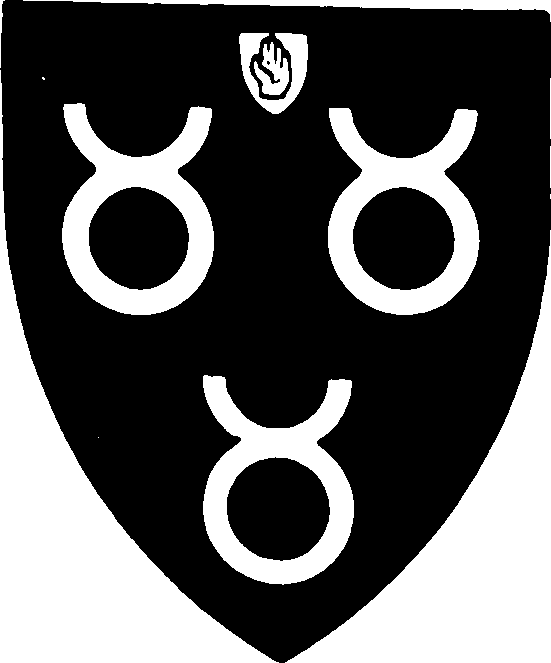
Bull
Maltravers, E.M. wt. 3, R. wt. 14 February 1922.
B. 29 September 1863, s. of Henry Bull, of a Sussex family long settled as solicitors in London; d. 23 January 1931, at his house in Cadogan Gardens.
Member of L.C.C. 1892–1901; M.P. for Hammersmith 1900–29; Knight 1915; P.C. 1918; Bt. 1922; F.S.A. 1928. Founded and was first Knight Principal of the Imperial Society of Knights Bachelor.
(The Times, 24 January 1931; N. & Q., clx (1931), 91; Knights Bachelor 1931; etc.)
Arms granted 1923: Sable, 3 astronomical signs of Taurus or. Crest: On a wreath or & sable a bull's face sable charged on the forehead with the sign of Taurus gold. Motto: Hitherto.
3. (ARTHUR) OSWALD BARRON, F.S.A.
Maltravers, E.M. wt. 20 February, R. wt. 10 March 1937.
B. 1868, s. of Henry Stracey Barron, of a family settled in London more than two centuries, hence the pen-name 'The Londoner' under which he contributed a daily article to the Evening News for some thirty years. F.S.A. 1901; d. 24 September 1939.
His knowledge of medieval heraldry was unrivalled, and his output, remarkable considering the other calls on his time, included many papers in The Ancestor (editor 1902–5), the Northamptonshire County Families (1906) volume of the V.C.H., and 'Heraldry' and other articles in the Encyclopaedia Britannica. Also edited Parliamentary Roll and left valuable genealogical collections to the Soc. Antiq.
His appointment as Maltravers shortly before the coronation of George VI was a well-earned tribute to his outstanding authority on armory and genealogy.
(The Times, 20 March 1937, 9 and 28 September 1939; Antiquaries J., xx, 124; Genealogists' Mag., viii, 419; New Eng. Hist and Genealog. Register, xciv, 307; Evening News, 1 October 1946.)
March King of Arms
By November 1377 March was herald of Edmund Mortimer, third Earl of March. After the Earl's death in 1381 the then March herald was put on the royal establishment becoming king of arms by 1384, having the northern province (Norroys) from 1386 and being doyen of the English heralds by 1393 if Froissart is to be trusted.
In 1419 Lobineau (Preuves de l'Hist. de Bretagne, p. 931) mentions that a pursuivant of the Earl of March conducted the Duke of Brittany part of the way on his journey to Rouen, but he gives neither name nor title. In 1425, however, the fifth Earl of March, another Edmund who d. a fortnight later, granted March herald 60s. 8d. a year, the grant, which was made at Trim, being afterwards confirmed by Henry VI (Irish Genealogist, vol. 2, p. 5).
Under Edward IV and Henry VII March was a royal officer, king of arms of the west parts of England, Wales and Cornwall. He attended the tournament between Lord Scales and the Bastard of Burgundy in 1467 and was present at many other ceremonies (including the funeral of Edward IV) down to 1488 when he was attached to the expedition to Brittany (H. of N., q.v. for references).
Under Richard III March seems to have been superseded by Gloucester as king of arms of Wales.
1. JOHN LAKE or OTHELAKE (temp. Ric. II). See Norroy (4).
2. JOHN FERRANT
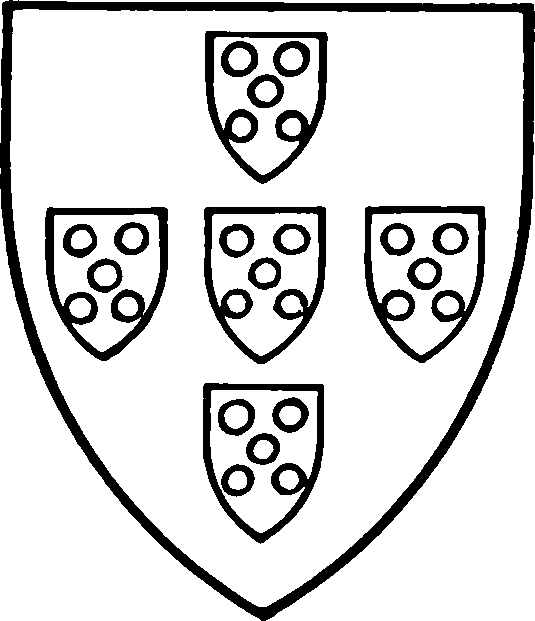
Ferrant
Wallingford, temp. Hen. VI.
Bluemantle, temp. Hen. VI.
Windsor, temp. Ed. IV.
March, temp. Ed. IV.
So Lant but without corroboration; probably an imaginary elaboration of John Ferrant (no. 9 in list of additional names of officers with titles unknown).
Arms: Argent, 5 scocheons in cross gules each charged with 5 silver roundels in saltire (1613 version of Lant's Roll).
3. RICHARD CHESTER (temp. Ed. IV). Perhaps RICHARD STANTON. See Chester (8).
4. WILLIAM BALLARD
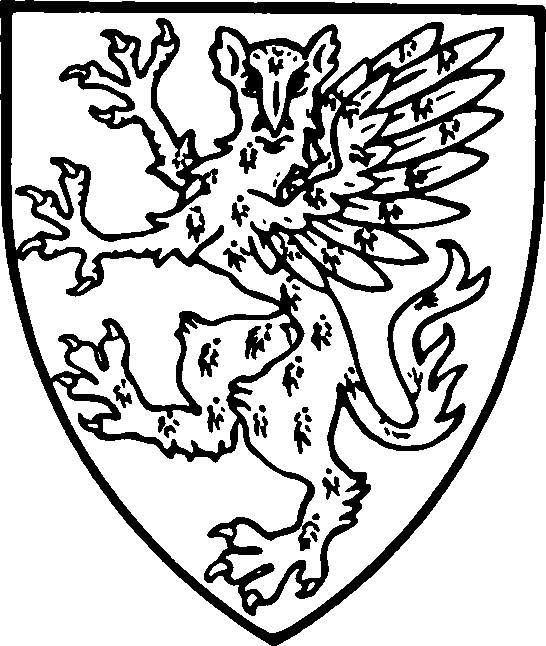
Ballard
Herald to the Duke of Exeter, c. 1460.
March, c. 1481.
S. of Thomas Ballard of Hurtisley, Hereford (Ballard's Book, fo. C). In 1460 was herald to Henry Holand, Duke of Exeter (pat. 38 Hen. VI, 28 March), but thereafter name disappears until 1485 when Thomas Gibbes was granted reversionary pat. to be Alms Knight of St George next after 'William Ballard alias Marche' (pat. 2 Ric. III, 18 January). Never admitted as Alms Knight; must have been appd March soon after 1480; his province the West of England, Wales and Cornwall; d. c. 1490 when Garter Wrythe bought from his widow the collection of arms and heraldic memoranda known as Ballard's Book (C.E.M.R.A., p. 111).
Arms: 'Asure a gryffon ermyn regardant', i.e. full-face (Ballard's Book, fo. C).
Marenceux Pursuivant
Marenceux was pursuivant to John Tiptoft, Earl of Worcester in 1462 (Issue Roll, Michaelmas, 2 Ed. IV).
Marenceux or Marynsyn was a lordship in Aquitaine which was held by the Earl's father, John, Lord Tiptoft 1426–43, and Seneschal of Aquitaine 1415–23. It was claimed by the younger Tiptoft as part of his paternal inheritance when he was made Earl of Worcester in 1449, although the lordship was then in French hands (Coll. of Arms MS. O.A. III, 261 citing Coll. of Arms MS. WC. 16; Dugdale, Baronage, ii, 41; etc.).
1. JOHN SHORTER
Marenceux, c. 1462.
Retainer of John Tiptoft, Earl of Worcester and Lord of Marynsin in Aquitaine; sent to York and Durham with despatches in 1462 (Issue Roll, Michaelmas, 2 Ed. IV).
Perhaps the same who was yeoman of the Crown, ranger of Melchett Forest, Wiltshire, 1475, and 'launder' of Clarendon Park, Wiltshire, 1482 (pat. 8 October, 15 Ed. IV, and 15 November, 22 Ed. IV).
Marleon de Aye Pursuivant
Pursuivant of Charles Brandon, Duke of Suffolk and E.M. The title means a little hawk in its eyrie and Anstis identifies it with the small bird which Brandon's sinister supporter, a hawk or eagle, holds in one claw (Coll. of Arms MS. O.A. III, 261).
1. WILLIAM FELLOW (1522). See Norroy (22).
Meriton (Moriton)
See MORTAIN.
Merlyne Pursuivant
'Merlyne pursevaunte' was sent to Normandy in 1444 (Rolls Series 22, 1, 451). Otherwise unknown. Uncertain whether Merlyne was the man's name or title. (See no. 31 in list of additional names of officers with titles unknown.)
Montagu Herald
Herald or pursuivant of the Earls of Salisbury. Mentioned as herald in April 1373 when William de Montagu was Earl (John of Gaunt's Register 1372–6, Camden Soc. 3s, xx, no. 1342), and as pursuivant in 11 Ed. IV when Richard Nevile had the earldom (Coll. of Arms MS. O.A. II, 513).
1. JOHN DEE
Montagu, c. July 1471.
17 July 1471 became a surety for good behaviour of John Water, Chester. No doubt Earl of Salisbury's pursuivant.
Montorgueil Herald
Montorgueil was instituted by Henry VII as 'pursevant of Gurnesey', the title being taken from Montorgueil Castle, headquarters of the Governor of Jersey. He attended the coronation and the funeral of Henry VII. As herald Montorgueil replaced Chester from 1516 to 1533. He is said to have been appointed for service in the Channel Islands and to have resided in Jersey, but there is nothing in the only known holder's record to support that (H. of N.).
1. RANDALL JACKSON alias HOLMES (c. 1494). See Chester (13).
Mortain Herald
Moriton or Meriton is said to have been pursuivant to the Duke of Clarence (Bodleian MS. Wood F. 33. 20); this probably refers to Thomas, Duke of Clarence, who was Lieutenant of France and Normandy from 1415. The title is the same as Mortain, a herald who occurs in 1449 and 1450 as officer of Edmund Beaufort, Duke of Somerset, Count of Mortain and Governor of Normandy (Rolls Series 32, pp. 385–513, and 22, 1, 286, 288; H. of N.).
Mouncells Pursuivant
Mouncells or Monceux pursuivant carried despatches from and to the Chancellor of France in 1435 (Issue Roll, Easter, 13 Hen. VI; Warrant for Issue, 14 Hen. VI, MS. 178, 16 December). It is not said by whom he was retained.
Mowbray Herald
From the time of Richard II to that of Henry VI Mowbray was the Duke of Norfolk's private herald. Since its revival in 1623 the title has always been given to a herald extraordinary (H. of N.; Coll. of Arms MS. O.A. III, 262–5; etc.).
I. HERALD OF THE DUKE OF NORFOLK
1. JOHN...
Mowbray, c. September 1392.
Attended future Henry IV on journey to Holy Sepulchre 1392. Probably retainer of Thomas Mowbray, Earl Marshal and Duke of Norfolk, borrowed by Henry because he had been to Holy Land before and 'knew the ropes'; mainly employed as painter and commissariat officer. Perhaps the John Mowbray at whose house in Calais some of Henry's retinue stayed May 1390 on way to Prussia (Derby Accounts, Camden Soc., N.S. 52, passim; 'Henry IV's Heralds in 1390 and 1392', N. & Q., xcxiii (1948), 464, etc.).
2. REYNOLD
Mowbray, c. 1398.
14 October 1398, licensed to take four lengths of russet and six of 'blanket' cloth to the exiled Duke of Norfolk, Thomas Mowbray, whose herald he was and who had granted him 20 mks a year from manor of Findon. On Duke's death apparently entered Crown service; 16 March 1400 King Henry confirmed above annuity by p.s.; sent to France several times 8 & 9 Hen. IV (Issue Rolls) and 1407 he and wife Elizabeth were given custody of the Exchange at Calais (p.s. 22 October, 9 Hen. IV); d. c. 1419 (see Coll. of Arms MS. O.A. III, 263).
3. GILES WASTER
Falcon, temp. Hen. V.
Rouge Croix, 6 Hen. V.
Mowbray, c. 1420.
As 'Giles Waster dit Moubray' attended chapter at Rouen 5 January 1420. Herald of John Mowbray, Earl of Nottingham and Earl Marshal and later Duke of Norfolk.
4. JOHN COSOUN (c. 1416). See Clarenceux (4).
5. JOHN HORSLEY

Horsley
Falcon, pursuivant, temp. Hen. VI.
Bluemantle, temp. Hen. VI.
Mowbray, temp. Hen. VI.
Arms: As William Horsley, Clarenceux.
6. GILES FRAUNCEYS
Mowbray, c. 1425.
Nothing known of Fraunceys except that as Mowbray he accompanied Sir John Grey to France in 3 Hen. VI (Coll. of Arms MS. O.A. III, 263).
7. GILES STEKER or STEYKER
Mowbray, c. 1435.
Pardoned for failing to answer a summons for debt, pat. 14 July 1435; given protection under p.s. 12 October 1435, while attending Lord Willoughby in France.
8. WILLIAM BAKER
Mowbray, c. May 1455.
Herald of the Duke of Norfolk; present at the Battle of St Albans 22 May 1455; still living 37 Hen. VI, 1458–9.
II. HERALD EXTRAORDINARY
9. JOHN BOROUGH (1623). See Garter (10).
10. WILLIAM LE NEVE (1624). See Clarenceux (18).
11. FRANCIS BURGHILL (1677). See Somerset (14).
12. PATRICK BUCHANAN
Mowbray, R. wt. 2, cr. 9 November 1681.
A Scot, Master of the Horse to Duke of Norfolk; d. 18 March 1683 (? 1684), burd St Clement Danes.
13. ROBERT PLOTT, D.C.L., F.R.S.
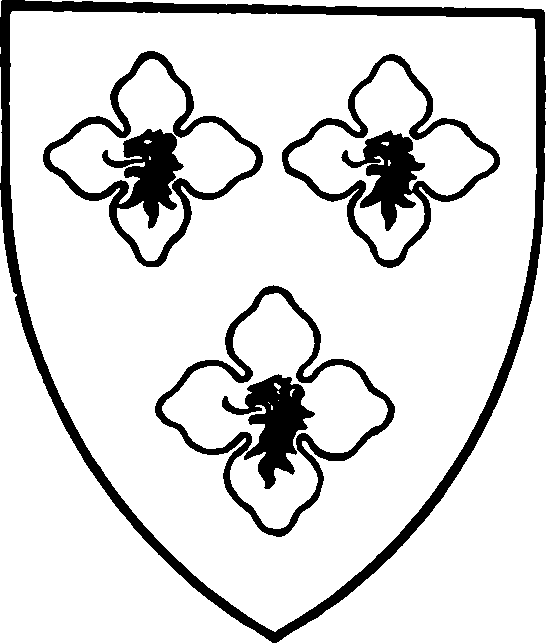
Plott
Mowbray, E.M. wt. 20 January, cr. 2 February 1695.
Of Sutton Baron or Sutton Barne, parish of Borden, Kent; s. of Robert Plott of the same; b. there 1640; baptized Borden 13 December; educ. Wye School, Kent, Magdalen Hall and University College, Oxford; B.A. 1661, D.C.L. 1671; F.R.S. 1677 and Secretary 1682–4; 1683–90 first Curator of Ashmolean Museum and Professor of Chemistry, Oxford; 1688 Historiographer Royal; 1687 E.M's Secretary and Registrar of Court of Chivalry; 20 January 1695 Mowbray herald extraordinary and 22 January Registrar of College; intended for appointment as king of arms, but d. at Sutton Baron 30 April 1696, before vacancy occurred; burd Borden (M.I.).
Projected a natural history of England, but only published Natural History of Oxfordshire (1677) and Natural History of Staffordshire (1686). For other publications see D.N.B. and sources there quoted.
Left in MS. 'History of the Office of Earl Marshal of England'; 'Discourse concerning the reasonableness of the revival of the Earl Marshal's Court'; and 'Defence of the Jurisdiction of the Earl Marshal's Court'; this last printed in Hearne's Curious Discourses (1775), ii, 250.
Some records of Court of Chivalry remained in the College on his death; others which he retained were bought by the College in 1715 from Hare, Richmond, for £4. 10s.
A bon vivant and good company; friend of most scholars and antiquaries of the day; extremely credulous, said to have been mercilessly humbugged by gentlemen of Staffordshire; very acquisitive; when asked to return a curio he had been lent replied that it was a rule among antiquaries to receive and never restore (Hearne's Collections, 1, 67).
Arms: Quarterly, (1 & 4) vert, 3 quatrefoils argent each charged with a lion's head erased sable; (2) ermine, a lion sable; (3) argent, 3 chevrons sable bezanty. Crest: An arm in armour, the gauntlet brandishing a falchion, all proper garnished or.
14. ROWLAND FRYTH (1698). See Lancaster (29).
15. JOHN DUGDALE
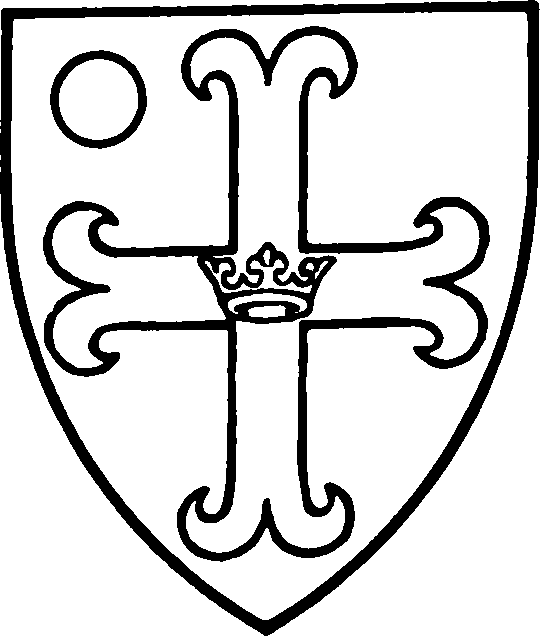
Dugdale
Blanch Lyon, E.M. wt. 21 November 1707.
Mowbray, R. wt. 10, cr. 17 June 1713.
B. 2 May 1690, at Blythe Hall, Warwickshire; d. 4 August 1749; burd at Shustoke, Warwickshire (M.I.). S. and heir of William Dugdale, who was only s. of Sir John Dugdale, Norroy; last direct male descendant of Sir William Dugdale. Dying without issue he bequeathed Blythe Hall to Richard Geast, eldest s. of his sister Jane, who took the name and arms of Dugdale in 1799, and from whom Sir William Stratford Dugdale, Bt. (1936) and F.S.A. is descended.
22 July 1698 William, his father, was authorized to add to his paternal arms and crest 'such a coronet as Garter Principal King of Arms is crowned with at his Creation'. As depicted in the Grant Book both coronets are what is now known as a crest coronet or open crown, but latterly these have been replaced by circlets like those now worn by kings of arms.
(Hamper, op. cit.; Burke's Peerage; etc.)
Arms granted 1698: Argent, a cross moline gules charged with an open crown or, & in dexter chief a roundel gules. Crest: From a torse argent & gules a griffin's head & wings gorged with an open crown, all or. Motto: Pestis Patriae Pigrities.
16. JOSEPH EDMONDSON, F.S.A.
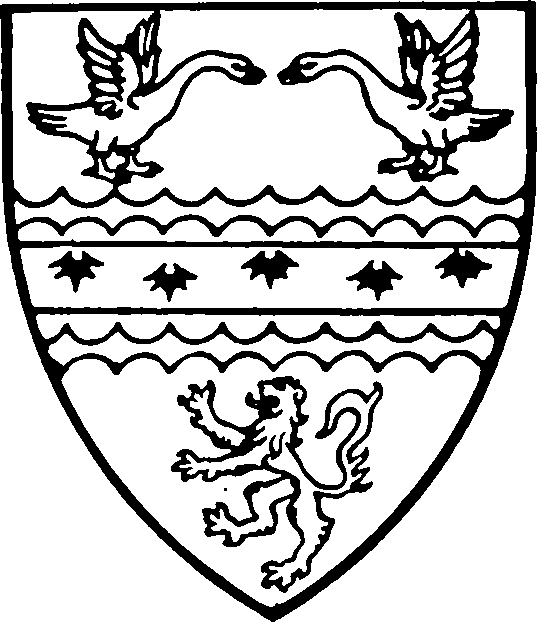
Edmondson
Mowbray, E.M. wt. 23, R. wt. 29 December 1763, cr. 21 January 1764.
Lived in Warwick St, Golden Square; coach-painter by trade and heraldpainter to the King, with considerable private practice, which members of the College thought to encroach on their own prerogatives. D. at his house 17 February 1786; burd St James', Piccadilly.
Mowbray 1763; deputy to Sir Thomas Gery Cullum, Bath king of arms.
At the sale of his library 1788 the College bought thirty-two books and seventeen MSS.
Published Baronagium Genealogicum (1764), based on Sir William Segar's collections; An... Account of the Noble Family of Greville (1766); and A Complete Body of Heraldry (1780), which includes copious extracts from the Anstis MS. 'Officers of Arms', and an alphabet of some 50,000 coats of arms which was the foundation of the armories of Berry, Robson and Burke.
(D.N.B.; Thomas Moule, Bibliotheca Heraldica; R. & C.; etc.)
Arms granted 1765: Azure, a fess ermine cotised engrailed or, in chief two swans facing each other with wings raised argent & in base a lion argent (in allusion to his office of Mowbray). Crest: A lion or collared gemel gules, supporting a pennon azure, the staff gules & head argent.
17. EDWARD HOWARD GIBBON (1842). See Norroy (55).
Mushon King of Arms
John Mushon, herald or king of arms, occurs 1353–7. Doubtful whether Mushon was name of office or personal name (q.v.).
Nazers Herald
Title instituted by Edward III in honour of the victory of Najara on 3 April 1367.
1. RICHARD MIDLETON
Nazers herald, c. 1374.
6 November 1374 accompanied John Duke of Brittany overseas; September 1379 attached to the Captain of Calais; December 1401 granted 1s. a day for life (as pension?) for services to Edward III, Richard II and John of Gaunt; 1408 witness for Lord Grey in case against Sir Edward Hastings.
Newhaven Pursuivant
Newhaven was the English name both for Ambleteuse, near Boulogne, and for Le Havre at the mouth of the Seine. It seems to have given title to a pursuivant attached to the English garrison at Ambleteuse (Hameltue) in 1544–9 and to the English force at Le Havre 1562–3 (H. of N.).
1. JOHN HART (? 1544). See Chester (16).
Nogent Pursuivant
One of the two pursuivants who accompanied Maine herald (q.v.) in 1449. Uncertain whether an English or French officer.
Noir Faucon
See NOIR TAUREAU.
Noir Lion Pursuivant
Pursuivant of John, Viscount Wells who bore Or, a lion with forked tail sable. At Lord Wells' funeral in 1498 his coat of arms was worn by Berwick pursuivant in the absence of 'Noirlion his owne poursurvant' (H. of N.).
Noir Taureau Pursuivant
Pursuivant of George, Duke of Clarence (Coll. of Arms MS. WC. 16). Title taken from the well-known Yorkist beast, a black bull with gold horns, etc. (Royal Beasts, p. 25). The Duke differenced this with his own silver label with a canton gules on each point (Coll. of Arms MS. WGA. 156), though the label is omitted in Coll. of Arms MS. 2 M. 16, fo. 1 (Barnard, Edward IV's French Expedition of 1475, p. 8).
In the version of Thynne's paper on heralds at the end of the 1724 edition of Guillim ('Honor Civil', p. 39) the title is given as 'Noyre Fawcone', but Hearne's version of the same paper (Curious Discourses, 1, 160) has 'Noyre Tauren', which is evidently correct.
Norfolk Herald
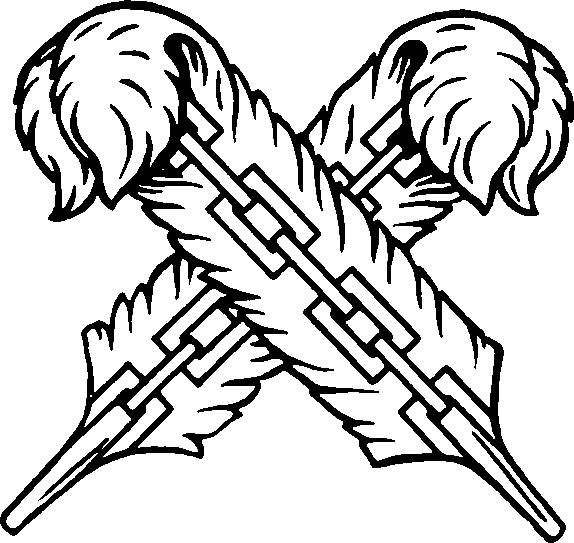
This title first appears in 1539 when James was appointed. Although appointed and granted a salary by Henry VIII, he was not regarded by his fellow-officers as a Crown herald, but was expressly called herald to the Duke of Norfolk. James shared in the heralds' fees as a herald extraordinary, and at all the later revivals of the title that was the bearer's rank (H. of N., pp. 48, 79).
1. JOHN JAMES
Blanch Lyon, pat. 9 May 1537.
Norfolk, appd c. 6 January, p.s. 26 March, pat. 17 April 1539.
Though salaried by the Crown and described in his patents as one of the King's pursuivants and one of the King's heralds he was 'with Thomas Duke of Norfolk'; in the College was deemed 'extraordinary' and only allowed reduced fees. 1540 secretary and courier to English embassy in France; April or May 1541 absconded with money entrusted to him for embassy expenses; caught at Lyons in September but escaped again.
2. JOHN ANSTIS (1707). See Garter (16).
3. WILLIAM OLDYS (1755). See Norroy (43).
4. STEPHEN MARTIN LEAKE
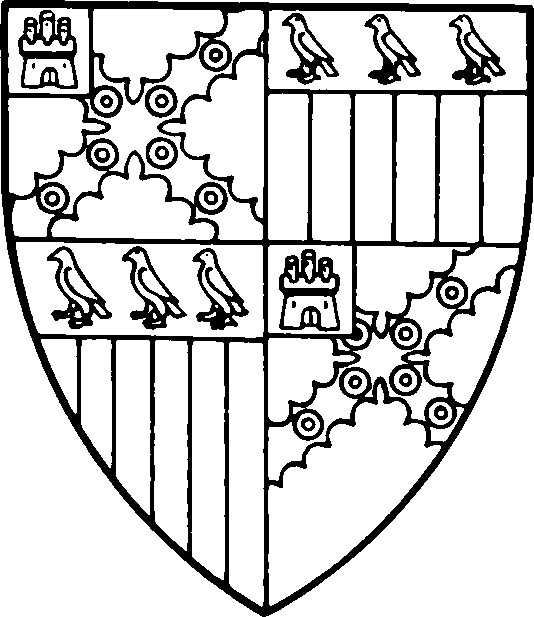
Leake
Norfolk, R. wt. 4 July, cr. 21 September 1761.
Of Thorpe Hall, Essex; b. 1737, eldest s. of Stephen Martin Leake, Garter; Norfolk 1761; Deputy Registrar of Court of Chancery; d. 19 February 1797, s. p.; burd Thorpe-le-Soken, Essex (M.I.).
Arms: As Garter with a label for difference.
5. WILLIAM WOODS (1825). See Garter (25).
6. ALBERT WILLIAM WOODS (1841). See Garter (27).
7. HUGH STANFORD LONDON, F.S.A.
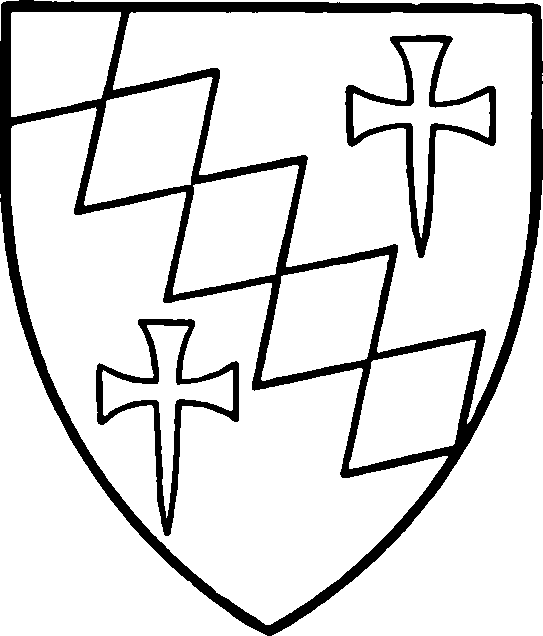
London
Norfolk, E.M. wt. 14, R. wt. 27 April 1953.
Of Coldharbour, Buxted, Sussex; b. Rhyl, N. Wales, 3 April 1884, s. and heir of Sir (Edgar) Stanford London, C.B.E., of Inland Revenue Department; educ. King's School, Canterbury, Dulwich College, and Clare College, Cambridge; H.M. Consular Service 1908–44; Citizen and Glazier of London; F.S.A. 1935; assistant editor of projected New Dictionary of British Arms and member of the Croft Lyons Committee of the Soc. Antiq. 1941; Member of Royal Commission on Historical Monuments (England) 1944; Corresponding member of French & Swiss Heraldic Societies; member of the Académie Internationale d'Héraldique; Officier d'Académie (France) 1951; F.H.S. 1954; F.S.G. 1955. D. 20 January 1959. Burd Buxted.
Publications: The Queen's Beasts (1954); Royal Beasts (1956); 'A Catalogue of the English Officers of Arms' (Landed Gentry, 1952, pp. cvii–cxxi); and many papers on heralds and heraldic subjects in Archaeologia, Archives Heraldiques Suisses, Coat of Arms, etc. Designed several bookplates for self and friends.
Arms granted 1918: Azure, a bend of 5 lozenges between 2 crosses formy fitchy or. Crest: A lozenge checky argent & sable between 2 wings or. Motto: Virtus non Stemma.
8. GEORGE DREWRY SQUIBB, Q.C., F.S.A.
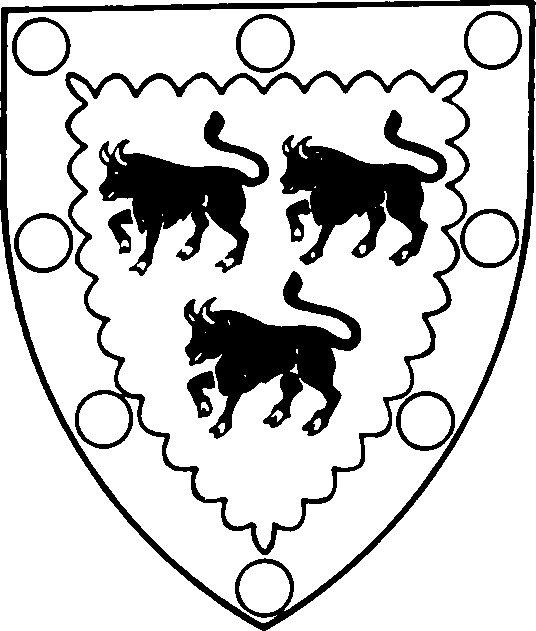
Squibb
Norfolk, E.M. wt. 13 April, R. wt. 24 April 1959.
Of Cerne Abbas, Dorset, and 5 Paper Buildings, Temple, London, E.C. 4; b. Chester, 1 December 1906; s. and heir of Reginald Augustus Hodder Squibb; remote kinsman of Arthur Squibb, Clarenceux, 1646–51, and of William Oldys, Norroy 1755–61; educ. King's School, Chester and Queen's College, Oxford; Barrister, Inner Temple, 1930; a Master of the Bench 1951; Junior Counsel to the Crown in Peerage and Baronetcy Cases 1954–6; Q.C. 1956; Chairman of Dorset Quarter Sessions 1953; F.S.A. 1946; Member of the Croft Lyons Committee of the Soc. Antiq. 1955; Vice-President of the Dorset Natural History and Archaeological Society 1958; Citizen and Scrivener of London.
Publications: The Law of Arms in England (1953); Wiltshire Visitation Pedigrees, 1623 (1954); Reports of Heraldic Cases in the Court of Chivalry, 1623–1732 (1956); The High Court of Chivalry (1959); and papers in antiquarian and legal journals.
Arms granted 1944: Or, 3 bulls passant sable, armed & unguled gules, a bordure engrailed of the last charged with 8 besants. Crest: A demi-bull sable, armed & unguled gules, gorged with a collar with chain reflexed over the back & supporting with the fore-legs a staff or, flying therefrom a banner also gules charged with a tower argent. Motto: Deus Fortissima Turris.
Normandy King of Arms
Not hitherto noted as the title of an English king of arms, though in France there was from 1347 a herald with jurisdiction over Normandy entitled 'duc des Normans' instead of 'roy d'armes' (Parties inédites de l'œuvre de Sicile héraut, ed. le P. Roland (Mons, 1867), p. 93; P. Adam Even, Les fonctions militaires des hérauts d'armes (Lausanne, 1957), p. 19). Dr Sydney Anglo ('The Foundation of the Tudor Dynasty: The Coronation and Marriage of Henry VII', Guildhall Miscellany, vol. 11, no. 1), however, quotes from a hitherto unnoticed account of Henry VII's coronation on 30 October 1485 (B.M. MS. Egerton 985, fos. 41b–48a) a statement that 'Garter and Normandie Kinges of armes' were there present. Sir Thomas Holme had resigned the office of Clarenceux on 4 January 1485 and the office was apparently vacant until his reappointment on 1 May 1487. It seems possible Normandy filled the gap. Could John More have held the title briefly while displaced from Norroy by Roger Machado? The claim of the Kings of England to be Dukes of Guyenne and Normandy was kept alive down to 1760 by the inclusion in the coronation procession of two gentlemen, specially habited, representing the Dukes.
Northampton Herald
Northampton has been listed by some writers among heralds of the nobility and it is probable that the office was instituted by or for Humphrey de Bohun, Earl of Hereford, Essex and Northampton, but on the Earl's death in 1372 the earldom of Northampton reverted to the Crown and in 1372 the King expressly calls Macheby 'un de nos herauds' (H. of N.).
1. RICHARD MACHEBY
Northampton, c. 30 August 1372.
Of Theydon Mount and Theydon Gernon, Essex, and Great and Little Hormead, etc., co. Hertford; s. of William Macheby, of Brewood, Staffordshire; retainer of Humphrey de Bohun, Earl of Northampton; 1372, on the Earl's death, entered royal service and accompanied John of Gaunt overseas; 1382 for services to Edward III and Richard II granted alien priory of Winghale for fifty years; sent to France 1383 and 1386 and to Rome 1387; d. 1389 (will dat. 7 June 1387, pr. 5 July 1389, Commissary Court, London). Retained style of Northampton to the end.
Northumberland Herald
Herald of the earls of Northumberland from the time of Edward IV to that of Henry VIII; often employed on the King's service; in 1527 and 1529 was treated as a herald extraordinary (H. of N.; Coll. of Arms MS. O.A. III, 275; Partition Book).
In 1472 attended Louis de Bruges' creation as Earl of Winchester (Coll. of Arms MS. WQ. 78); 1482 accompanied Garter to Scotland (Rymer, xii, 165; Cal. Doc. Scot., iv, 1482); April 1484 attached to English embassy to Scotland (Rolls Series 24, 1, 55); 1485 attended creation of Jasper Tudor as Duke of Bedford; 1488 again in Scotland (L.T.A., 1, 96); 1491 attended ambassador Urswick to Scotland (Warrant for Issue, 13 May, 6 Hen. VII, and 21 October, 7 Hen. VII; Cal. Doc. Scot., iv, 1570); 1493 conducted the French ambassadors to Scotland (Warrant for Issue, 9 December, 9 Hen. VII); 1503 attended Princess Margaret on part of her journey to Scotland wearing a tabard of the Northumberland arms (see J. Yonge's account of the journey).
1. JOHN BEE
Northumberland, c. 1502.
Herald to the Earl of Northumberland. (Will of Wm. Blackburne of Fyly, dat. 18 March 1502, cited by Longstaffe, 'The Old Heraldry of the Percies', Arch. Aeliana, N.S. iv, 209.)
2. WILLIAM JENYNS
Northumberland, temp. Hen. VIII.
Herald of the Earl of Northumberland; d. 29 January 1527; successor appd by 1 November following.
3. NAME UNKNOWN (1527), appd before 1 November 1527; still there 1 November 1529.
Nottingham Herald
At the first appearance of the title, in 1399, Nottingham must have been the officer of the Duke of Norfolk who was also Earl of Nottingham, and who is known to have maintained a herald in 1385. Whether the Nottingham herald who attended the coronations of Henry V in 1413 and Queen Katherine in 1421 was also a ducal officer is less clear for on the latter occasion he is expressly described as the King's herald. The title was revived by Henry VIII who attached a pursuivant to the household of his bastard son Henry Fitzroy, Duke of Richmond and Somerset and Earl of Nottingham. The first of these pursuivants, Towre, is not called Nottingham in his pat. but all four of his successors are so named. The Duke having died in 1535 the title lapsed on Davy's death. There is no apparent reason for its revival in 1778 save to recall that Nottingham had once been one of the Duke of Norfolk's titles (H. of N.).
I. HERALD TO THE EARL OF NOTTINGHAM
1. JOHN KYNDALE
Nottingham, c. 1399.
As 'John Kyndale alias Notyngham herald' witnessed will of William Multon, Bordeaux, 14 January 1399. Probably the herald of the Earl of Nottingham who occurs 1385 (Sussex Arch. Coll., liv, 163) and the Nottingham herald who received robes for Henry V's coronation April 1413. Perhaps the 'Notyngham signifer' to whom the fourteenth- to fifteenthcentury 'Becket's Murderers Roll' attributes Sable, 3 dexter hands or.
II. PURSUIVANT TO THE DUKE OF RICHMOND AND SOMERSET
2. RICHARD DE LA TOWRE
Nottingham (?), p.s. 5, pat. 8 July 1525.
All his successors were named Nottingham, but his pat. merely appoints him pursuivant to the Duke of Richmond and Somerset without giving any name of office. Anstis, however (Coll. of Arms MS. O.A. III, 279), lists him as Nottingham. D. c. April 1526.
3. WILLIAM HASYNG or HASTINGS (1526). See Somerset (4).
4. RICHARD CROKE
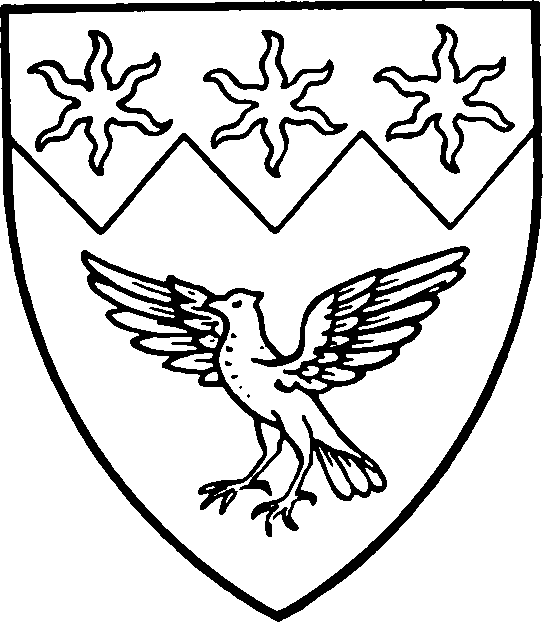
Croke
Nottingham, p.s. 30 April, pat. 5, cr. 31 May 1528.
Goldsmith of London; younger s. of William Croke of Colyweston, Northamptonshire; sent to France with Sir Robert Wingfield 1529; slain at Boulogne between November 1529 and April 1530. Lant's statements that he was Rouge Dragon and Windsor are impossible. Probably father of Dr Richard Croke, Greek Professor at Cambridge.
(Eton Coll. Reg.)
Arms: Argent, a dove rising azure & on a chief indented azure 3 estoiles or.
5. THOMAS TREHERON (1530). See Somerset (5).
6. JOHN DAVY
Nottingham, p.s. 2 September, pat. 3 October 1532.
His master, Henry Fitzroy, d. 24 July 1536, and Davy d. between then and 9 May 1537.
III. HERALD EXTRAORDINARY
7. EDMUND KELLY
Nottingham, R. wt. 17 March, cr. 30 April 1778.
Still Nottingham 1805.
Nucells Pursuivant
Pursuivant of Anthony Wydevill, Earl Rivers and jure uxoris Lord Scales and Nucells. Attended Lord Rivers at Tours in 1446 at the Chalons–du Breuil duel and is mentioned several times in Issue Rolls 1468–70 (H. of N.).
1. THOMAS WHITING (after 1462). See Chester (11).
Papillon Pursuivant
In 1423 pursuivant of Gaston de Foix, Captal de Buch and Earl of Longueville, K.G., 1438–58 (Coll. of Arms MS. O.A. III, 676 citing accounts of Sir John Radcliffe as Constable of Bordeaux).
Perhaps the Earl's pursuivant who took letters from Guyenne to England in 1449 (Coll. of Arms MS. O.A. III, 40 citing Warrant for Issue, 27 Hen. VI, no. 227, 22 August).
Passavant Pursuivant
Pursuivant to Sir Thomas Stainer in 1431 (Coll. of Arms MS. O.A. III, 238, 282).
Patiens Pursuivant
Pursuivant employed in Normandy in 1447 (Issue Roll, Michaelmas, 26 Hen. VI).
Pembroke Herald
Herald of Humphrey, Duke of Gloucester and Earl of Pembroke, took the Duke's challenge to the Duke of Burgundy in 1424 and 1436 and in 1430 accompanied the 'Duke' of Clarence to France (H. of N.).
1. WILLIAM CROSSE
Pembroke, c. 1424.
Pembroke herald was retained by Humphrey, Duke of Gloucester and Earl of Pembroke at least 1424–36. In 1427 attended the Bastard of Clarence to France, his name being given as William Crosse.
Percy Herald
In or about 1385 a herald of the Earl of Northumberland is mentioned in the borough accounts of King's Lynn; his title is not given but in 1387 Percy herald was serving with the Earl's brother, Sir Thomas Percy, before Aurenne; he was then sent by the Duke of Lancaster to Aurenne wearing the Duke's coat (Froissart, xii, 195). Percy is also mentioned several times from 1401 to 1410 (H. of N.).
1. JOHN HERYNG (c. 1401). See Shrewsbury (1).
Pisore (Pisow) Pursuivant
Pursuivant named in French Roll, 3 Ric. II, m. 7, 1379. Probably retained by the Earl of Salisbury (H. of N.).
1. THOMAS TURVILLE (c. 1379). See Salisbury (1).
Portsmouth Pursuivant
Pursuivant extraordinary created in 1604, and never revived. The reason for the choice of the title is not apparent, but in 1673 Charles II made his mistress, Louise de Querouaille, Duchess of Portsmouth.
1. JOHN GUILLIM (1604). See Rouge Croix (46).
Purchase Herald
Purchase or Purchesse was sent overseas with despatches in 1439 (Issue Roll, Easter, 17 Hen. VI); in 1440 he was attached to the English embassy to France and was sent to St Omer with letters to the Duchess of Burgundy (Issue Roll, Easter, 18 Hen. VI), and in 1441 he accompanied Garter Bruges on a mission to the Duke of Orleans (Warrant for Issue, 19 Hen. VI, no. 186, 6 April). He is called pursuivant in 1439 and 1441 but herald in 1440. Purchase, pursuivant, is mentioned again in 1447 in a despatch from Garter to the Chancellor dated at Caen 21 July (Rolls Series 22, 1, 189, 192).
Rasyn Pursuivant
Rasyn or Racine, pursuivant of John, Duke of Bedford in 1435 (Warrant for Issue, 13 Hen. VI, no. 292, 23 May), was so called from the Duke's badge, a 'root' or uprooted tree-stump. The title is said to have existed also under Henry VII (H. of N., note h), but that seems unlikely.
1. ?JOHN COLLIS (c. 1422). See Louvre (2).
Risebank Pursuivant
Risebank, one of the French garrison pursuivants, took his name from the tower or fort of Risban, part of the fortifications of Calais. The title is said to go back to the reign of Edward IV, but its first mention in the public records is at the coronation of Henry VII. The title was allowed to lapse after the loss of Calais. Of the following names all but the first and last are miscalled Rose Blanche by Lant and his followers (H. of N.; Coll. of Arms MS. O.A. III, 85).
1. ?...BANELEE (c. 1501). See Bluemantle (19).
2. THOMAS BYSLEY (temp. Hen. VII). See York (9).
3. JOHN NARBOON (? 1522). See Richmond (9).
4. RICHARD STORKE
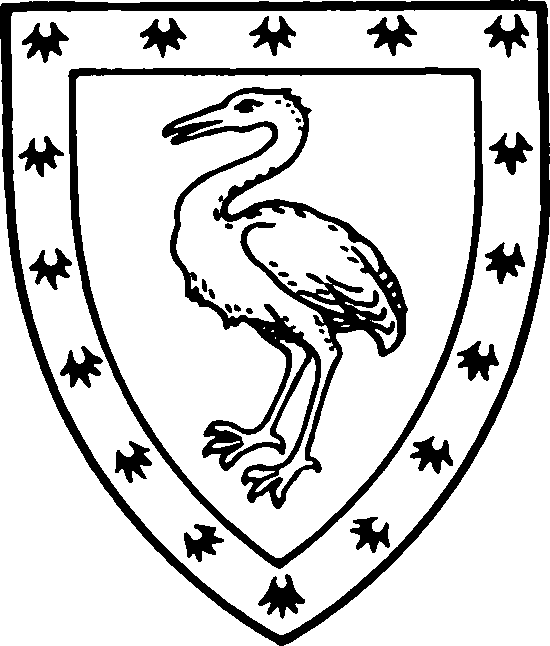
Storke
Risebank, cr. 31 May 1528.
D. last week of 1528. Noble and others say cr. Allhallows Day 1528, but Partition Book says Whitsunday (31 May), 1528.
Arms: Azure, a stork argent, beak & legs gules, in a border ermine.
5. WILLIAM LAMBARDE or LAMBERT
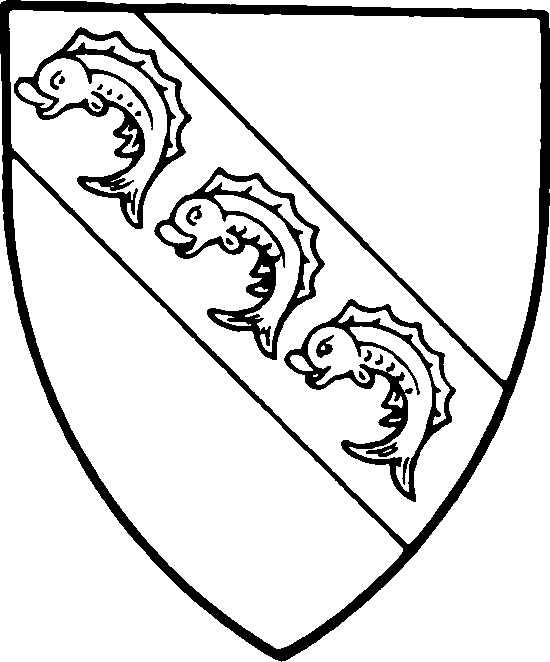
Lambarde (Lambert)
Risebank, appd c. 1529, cr. 1 November 1532.
Called William Morris Lombard in a seniority list of officers of arms quoted by Anstis and said to have been appd 20 Hen. VIII, 1528–9; d. before April 1554.
Arms: Gules, on a bend argent 3 dolphins vert.
6. JUSTINIAN BARKER (temp. Hen. VIII). See Rouge Croix (35).
7. JOHN HOLLINGSWORTH (1554). See Bluemantle (29).
Rivers Herald
Herald or pursuivant of Richard Wydevill, cr. Earl Rivers 1466 (H. of N.).
Rose Herald
Rose, without addition, is the title borne by Robert Cooke for a few days in January 1562. He is so styled in the pat. appointing him Chester, and also in two contemporary manuscripts, Machyn's Diary (see H. of N., note h) and a paper by Glover in Coll. of Arms MS. WC. 11, though Lant and his followers call him Rose Blanche. The title seems to have been used even earlier, for Stow (Annals, ed. 1631, p. 612, C. 1) mentions Rose herald in 1553. Anstis also calls Philip Holland, 1602–4, and Henry St George, 1610–11, Rose, but elsewhere they are called Rose Rouge.
1. RICHARD HALL
? Rose, c. 1553.
Richard Hall, pursuivant, is mentioned in the will of Richard Rapsley in 1552 (P.C.C. 11 Powell). Probably the Richard 'Rose herald' sent by the Council to the Earl of Northumberland in 1553 after he proclaimed Queen Mary at Cambridge (Stow, Annals, 1631, p. 612).
2. ROBERT COOKE (fn. 1) (1562). See Clarenceux (14).
3. PHILIP HOLLAND (fn. 2) (1602). See Portcullis (11).
4. HENRY ST GEORGE (fn. 2) (1609). See Garter (11).
5. ROBERT KNIGHT
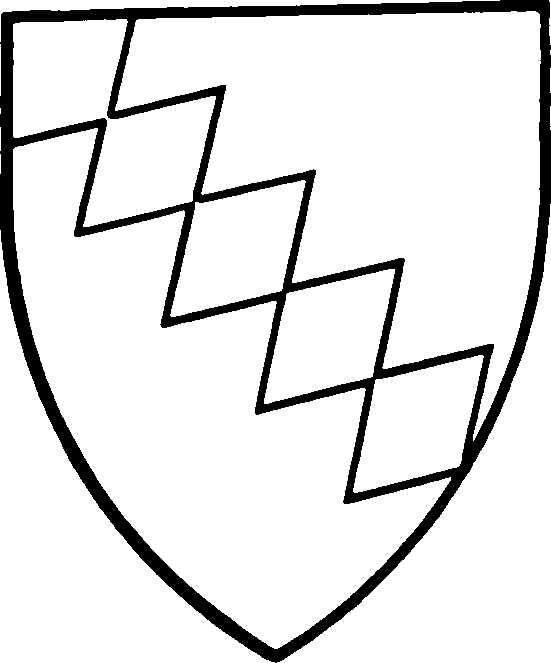
Knight
? Rose, 1611.
S. of Edmund Knight, Norroy; recommended 1611 to succeed St George as Rose, but no record of his appointment.
Arms: As his father.
Rose Blanche Pursuivant
The only certain references to this pursuivant are in 1482 when he attended the English Ambassador to France (Cal. Doc. Scot., iv, 1478), and in 1483 when he attended the funeral of Edward IV and in the following August brought news from Lord Dynham of the death of King Louis XI (Rolls Series 24, 1, 8 and 11, 1). Most of the officers named by Lant as Rose Blanche were really Risebank.
1. THOMAS HOLLINGSWORTH (temp. Ed. IV). See York (2).
2. JOHN WATER or WALTER (temp. Ed. IV). See York (3).
3. LAURENCE ALFORD (temp. Ric. III). See Bluemantle (18).
Rose Rouge Pursuivant
The red rose of Lancaster gave title to a series of pursuivants extraordinary from 1604 to 1702. All but the last soon obtained appointments in ordinary. Coote was the last pursuivant extraordinary named from a royal badge, although two heralds, Blanc Coursier and Falcon were afterwards so named.
1. ? WILLIAM WYRLEY (c. 1603). See Rouge Croix (45).
2. SAMPSON LENNARD (1613). See Bluemantle (37).
3. AUGUSTINE VINCENT (1616). See Windsor (19).
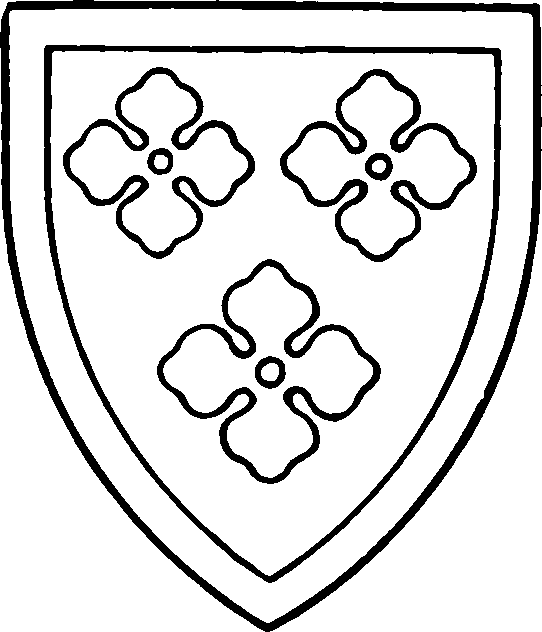
Vincent (1)
4. JOHN BRADSHAW (1624). See Windsor (20).
5. WILLIAM RYLEY (1630). See Clarenceux (18D).
6. HENRY LILLY (1634). See Rouge Dragon (17).
7. HENRY BALL (1675). See Windsor (24).
8. SAMUEL STEBBING (1698). See Somerset (15).
9. THOMAS COOTE
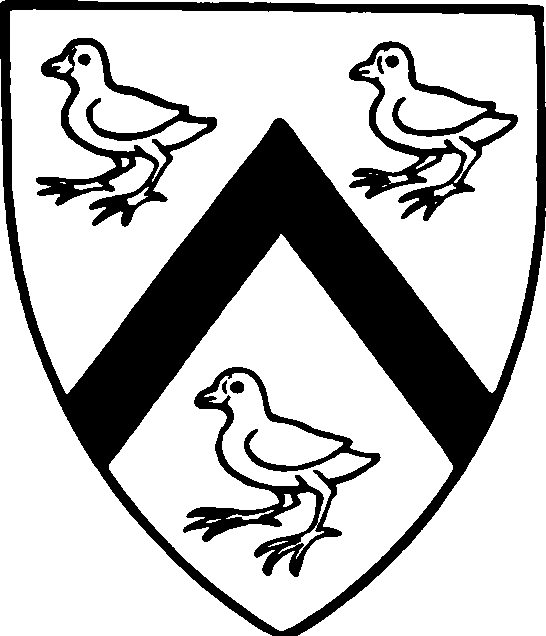
Coote
Rose Rouge, R. wt. 12 April 1702.
B. c. 1693 in Essex, s. of Thomas Coote of Coote Hill, co. Cavan (Ulster), by Ellinor, dau. of Sir Thomas St George, Garter; educ. Eton and Trinity College, Dublin; Captain of Foot; d. April 1718.
(Eton Coll. Reg.; Le Neve's Knights, Harl. Soc., vol. 8, pp. 223–4; etc.)
Arms: Argent a chevron sable between 3 coots proper. Crest: A coot proper. Motto: Vincit Veritas.
(Peerage sub Earl of Bellamont, and Coote, baronet.)
Rutland Herald
Herald of Edward, Earl of Rutland (Duke of York 1402–15) in 1395.
1. ROGER...
Rutland, c. 1394.
By pat. 21 Ric. II, p. 3, m. 27, 15 March (1398), John Carleton was pardoned for the death of Roger Rutland, Messenger of the King and herald of arms of the Earl of Rutland (Edward, afterwards second Duke of York), 'treacherously killed by await' 6 February 1395.
Salisbury Herald
Herald of William de Montagu, Earl of Salisbury temp. Richard II (H. of N.).
1. THOMAS TURVILLE
Pisore or Pisow, pursuivant, c. 1379.
Gryphon, pursuivant, c. 1385.
Salisbury, herald, 18 February 1388.
1388 attached to Sir Thomas Swinburn, Governor of Roxburgh Castle, and a p.s. dat. 18 February calls him Thomas Pysore alias Turvyle Gryffon pursuivant alias Salisbury herald (Cal. Doc. Scot., iv, 373); already Pysore 1379–80 (French Roll, 3 Ric. II, m. 7), Gryphon by 27 April 1385, when attached to Simon de Burgh, Treasurer of Calais; still Salisbury 1395 when attached to Richard II's Irish expedition (Coll. of Arms MS. O.A. III, 95, 189, 289). As Gryphon and Salisbury was officer of William Montagu, Earl of Salisbury, but name Pisore otherwise unknown.
Sans Repose Pursuivant
Pursuivant; brought Henry VI despatches from France in 1434 (Coll. of Arms MS. O.A. III, 47 citing Issue Roll, Easter and Michaelmas, 13 Hen. VI).
Scales Pursuivant
Pursuivant of Anthony Wydevill, Earl Rivers and jure uxoris Lord Scales. While in France with his master in 1475 he was taken prisoner and his despatches read by King Louis. Was present in 1477 when Lord Rivers did homage to the Prince of Wales for lands held of him (H. of N.).
In 1451 Wydevill's father-in-law, Thomas, Lord Scales (1445–60), had a pursuivant who was sent to Scotland, but his title is not given; it may have been either Scales or Joye (H. of N.).
Secret Pursuivant
Secret or Segret, pursuivant of Sir John Fastolf from 1425 (H. of N.).
1. LAURENCE DE FUGIERS (FOUGÈRES)
Segret, 1425.
Sir John Fastolf appd de Fugiers his pursuivant by the name Segret 1425; with Fastolf in France 1428–9 (Accounts of Pierre Sureau, Receiver General of Normandy, Bibl. Nat., Paris, ms. fr. 4488, fos. 692, 775, 777). Fastolf afterwards suspended him but restored him to his office 28 June 1432. Shortly after he and Gloucester herald (Roger Legh) fell among thieves on their way from Rouen to Dieppe and barely escaped with their lives as certified by the mayor of Dieppe 4 September 1432 (Coll. of Arms MS. O.A. II, 134).
Serreshall Pursuivant
Pursuivant to Sir Richard Nanfort, Deputy-Lieutenant of Calais. He was in Henry VII's retinue when he met Philip of Austria in 1500 and he attended the funeral of Queen Elizabeth in 1503 (H. of N.).
Shrewsbury Herald
In recognition of the services rendered by George Dunbar, the Scottish Earl of March, at the battle of Shrewsbury 21 July 1403, Henry IV authorized the Earl to call his officer Shrewsbury herald, but that use of the title soon lapsed.
Later John Talbot, Earl of Shrewsbury 1442–53, had a herald, but his title is not recorded and it may have been Talbot (q.v.); it was he who recognized his master's mangled remains on the field of Châtillon. He is represented in the Shrewsbury book wearing a tabard of the Talbot arms, and as late as 1582 an inventory of the sixth Earl's effects includes 'a coate for a harralde of armes with my Lordes armes on it' (H. of N.).
1. JOHN HERYNG
Wales, c. 1393.
Percy, c. 1401.
Shrewsbury, 1403.
Occurs 1393–4 as Wales herald and John Wales; presumably Richard II's herald for the Principality of Wales (cf. Wm. Bruges' appt as Chester 1398); c. 1401 Percy, herald to the Earl of Northumberland; after battle of Shrewsbury 21 July 1403 retained by George Dunbar, Earl of March, as Shrewsbury pursuivant; 1404 attached to the Governor of Berwick and 19 April had protection as 'Johannes Shrouesbury heraud alias dictus Johannes Heryng pursuant comitis Dunbard'; still living 1409.
(L.T.A., 1, ccxcvi, etc.; Coll. of Arms MS. O.A. II, 735–9; III, 287 citing Issue, Pat. and Fine Rolls.)
Sparre
See LE SPARRE.
Suffolk Herald
Suffolk herald appears at various times from 1385 to 1452 and again from 1517 or somewhat earlier to 1522; he was then herald of the earls or dukes of Suffolk. The title was revived in 1707 as that of a herald extraordinary, Henry Howard, Earl of Bindon, s. and heir of the Earl of Suffolk, being then D.E.M. It was again revived in 1774 when the title was apparently chosen because the new herald was a Suffolk man (H. of N.).
I. HERALD OF THE EARL, MARQUESS OR DUKE OF SUFFOLK
1. JOHN
Suffolk, c. 1385.
Witness 9 & 10 Ric. II, 1385–7, in case of Lovel v. Morley (Coll. of Arms MS. O.A. III, 303).
2. WILLIAM MAYLARD
Suffolk, c. 1434 (?).
By pat. 30 July 1452, William Maylard, Suffolk herald, 'servitor noster', was authorized to go to France to fetch his wife, children and goods long detained there by the French. Must have been retainer of William de la Pole, Earl and Marquis of Suffolk; is probably the anonymous Suffolk often mentioned 1434–49, usually in France or Brittany with Pole; doubtless entered royal service on Pole's execution 1450.
3. CHRISTOPHER BARKER (? 1514). See Garter (6).
II. HERALD EXTRAORDINARY
4. ROBERT DALE (1707). See Richmond (23).
5. JOHN IVES
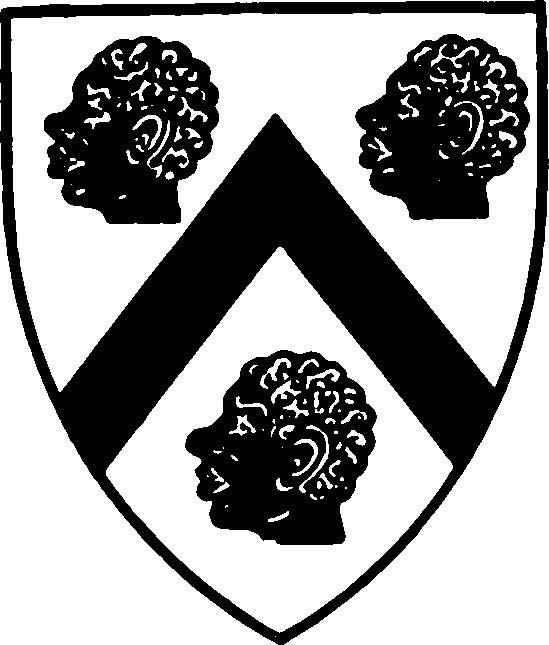
Ives
Suffolk, cr. October 1774.
B. 1752, s. of John Ives, wealthy Yarmouth merchant; educ. Caius College, Cambridge; friend of Tom Martin of Palgrave many of whose MSS. he bought; F.S.A. 1771; F.R.S. 1773; 1774 nom. Suffolk by Earl of Suffolk, D.E.M.; d. of consumption at Yarmouth 9 June 1776, aged 25.
Keen antiquary, collector of coins, medals and other antiquities, and of MSS. chiefly about Suffolk and Norfolk. College has 10 volumes of his Suffolk collections.
Published Garianorum of the Romans (Burgh Castle, 1774) and Select Papers (1773–4–5).
(D.N.B.; Nichols, Lit. Anec. and Lit. Hist.; Memoir in 1803 edit. of Garianorum; J. Brit. Arch. Assoc., xxi (1865), 158.)
Arms: Argent, a chevron between 3 moor's heads sable.
Surrey Herald
The choice of this particular title for a herald extraordinary in 1856 was no doubt inspired by the same motive which in 1842 had led the fourteenth Duke of Norfolk to assume the additional name of Fitzalan, the earldom of Surrey having been in the Fitzalans and their Howard descendants since the fourteenth century.
1. EDWARD STEPHEN DENDY (1856). See Chester (32).
2. CHARLES ALBAN BUCKLER
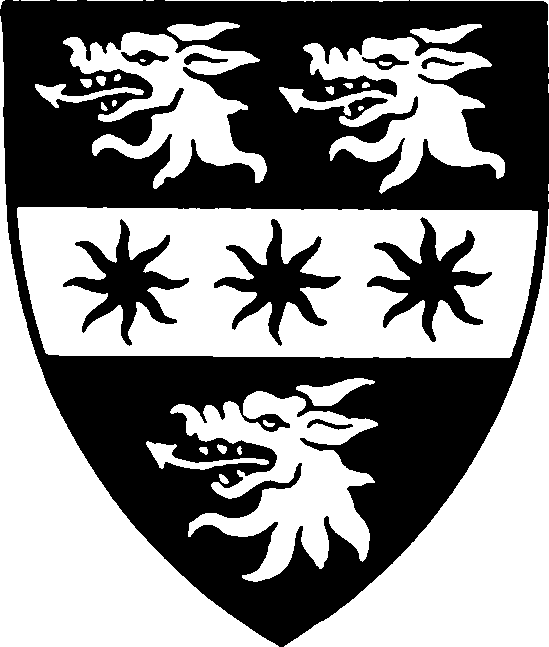
Buckler
Surrey, E.M. wt. 7, R. wt. 16 July 1880.
Architect; b. 25 September 1824, s. of John Chessel Buckler; d. 14 June 1905 in a private asylum; burd at Sutton Place near Guildford; designed armorial decorations at Arundel Castle, Mowbray House and elsewhere, also a few bookplates.
(Armorial Families (1902); Crisp, Vis'n of England, ii, 183; Fox-Davies, The Art of Heraldry, p. 462; N. & Q., 12s, xii, 123, etc.)
Arms: Sable, on a fess between 3 dragon heads erased or 3 estoiles sable. Crest: A dragon's head couped sable gorged with 2 gemels and goutty gold. Motto: Fidelis Usque Ad Mortem.
Talbot Herald
Pursuivant in 1456 and herald in 1457–8; retained by John Talbot, Earl of Shrewsbury 1453–60 (H. of N.). See also Shrewsbury above.
1. WILLIAM...
Talbot, pursuivant, c. 1456, herald, 1457.
Sent thrice with letters on royal business 1456–8; called pursuivant 1456 but herald 1457–8 (Issue Roll, Michaelmas, 35 Hen. VI, Michaelmas and Easter, 36 Hen. VI; Coll. of Arms MS. O.A. III, 309).
Thury Pursuivant
Thury or Tury, pursuivant of the Bailiff of Rouen in 1428–9 (Sureau, fos. 694, 716).
Sir John Salveyn, one of the English notables at the battle of Verneuil 17 August 1424, was Bailiff and Justiciar of Rouen and Gisors down to 1455 (Rolls Series 22, ii, 24, etc., and 1, 322, 499). Probably Sir John of New biggin, d. c. 1471, s. of George Salveyn of North Duffield, Yorkshire (Graves, Cleveland, p. 289). Another Sir John, s. of Sir Gerard of North Duffield, d. c. January 1432 (Surtees, Durham, iv, 118).
Thury, now Thury-Harcourt (dépt. Calvados), an important lordship in Normandy, belonged to the Ferrières family. It was confiscated and granted to Sir Lewis Robsart, Lord Bourchier, in 1429 (Norman Roll, 7 Hen. V, p. 1, m. 70; Carte, Roles Gascons, p. 298), and must have been afterwards given to Salveyn.
Toell Volland
See ESTOILE VOLANT.
Torrington Pursuivant
Pursuivant of John Holand, Earl of Huntingdon and later Duke of Exeter; carried letters from Rouen to the Duke of Bedford in Paris May 1431. Torrington is the chief town in the Hundred of Tremington, Devonshire, which belonged to Holand (H. of N.).
Tyger Pursuivant
Only known from a letter written by Edmund Bedyngfield to Sir John Paston and dated Calais, 17 August 1477. In this Bedyngfield said that the 'French Keng with inne these iij dayes rayled gretely of my lord to Tygyr Pursevaunt'. There can be little doubt but that 'my lord' was William, Lord Hastings and that Tyger was his pursuivant. Hastings had been Lieutenant-General of Calais since 1471 and his seal displays two man-tygers as supporters (H. of N.).
Ulster King of Arms
Office instituted by Edward VI February 1552 as king of arms and principal herald of Ireland. The title replaced that of Ireland which had lapsed on Bellengier's death in 1487. The first two Ulsters had been English heralds and even after their promotion they seem to have been regarded as members of the College of Arms though only sharing in the fees as extraordinaries. After Narboon's resignation in 1588 all connection with the College was severed, although the sixth Ulster, Thomas Preston, 1633–43, had been Portcullis pursuivant.
The office was maintained as a purely Irish kingship until 1943 when, Eire having become a Republic and Sir Neville Wilkinson having d. in December 1940, it was united with the Office of Norroy and confined to Northern Ireland (see Norroy).
1. BARTHOLOMEW BUTLER
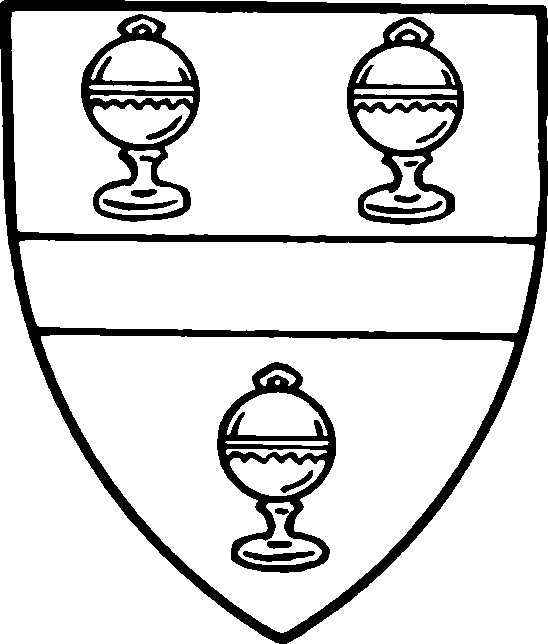
Butler (1)
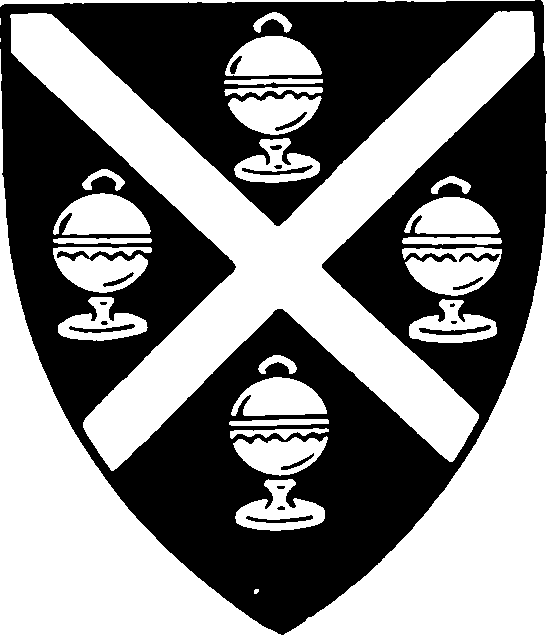
Butler (2)
Hampnes, appd c. November 1529, cr. 25 April 1530.
Rouge Croix, p.s. 7, pat. 12 January 1535.
York, p.s. 14, pat. 24 June 1538.
Ulster, cr. 2 February, pat. 1 June 1552.
A Scot from Galloway; successively Hampnes, Rouge Croix and York.
In 1552 it was decided to make a king of arms of Ireland and Butler was so created. At first remained in England where he was counted as 'extraordinary' and only allowed a herald's share of fees; went to Ireland about mid-1554. D. probably early 1566, Nicholas Narboon's pat. being dated 7 July 1566.
Wrote 'Church Notes in Gloucester' 1535, and description of Scotland 1542. Also left descriptions of ceremonies at which he was present as pursuivant and herald (but not as Ulster) with notes on his other employments (as courier rather than diplomat); these now in Trinity College, Dublin.
His natural s., Philip, was Athlone pursuivant.
(Hermathena, xx (1930), 284, etc.)
Arms: (1) In England: Gules, a fess between 3 covered cups argent. So Lant and dictionaries from Berry to Burke's General Armory (1848). Glover and Edmondson list the coat but do not mention Ulster. (2) As Ulster: Sable, a saltire between 4 covered cups or. (Trinity College, Dublin, MSS. E. 4. 28 (sixteenth century), E. 1. 21 (late sixteenth or early seventeenth century); Burke's General Armory (1878). In E. 4. 28 this quarters 2 & 3 ..., a double eagle... & over all 2 bars....)
2. NICHOLAS NARBOON
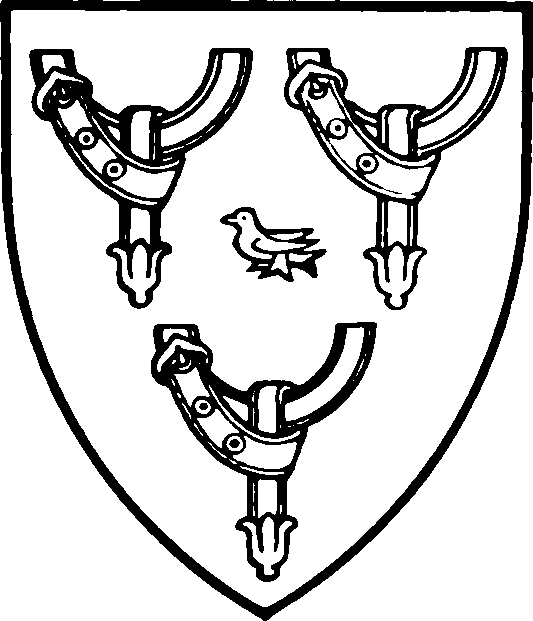
Narboon
Boulogne, temp. Ed. VI.
Bluemantle, p.s. 1, pat. 28 August 1550, salary from Michaelmas 1549.
Richmond, appd 1557, cr. 8 January, pat. 27 July 1559, salary from Lady Day 1557.
Ulster, cr. 6, pat. 7 July 1566, resd 1588.
Of Richmond, Surrey; s. (? fourth) of John Narboon, Richmond, by Joan Bird; said to have been Boulogne (the last so named), but not so styled in pat. of Bluemantle 28 August 1550; nom. Richmond 1557 while in Spain; his pat., dat. 27 July 1559, grants salary from Lady Day 1557; 1566 Ulster, cr. by Duke of Norfolk in London; resd 1588 since when no connection between Ulster and the College until 1943.
Instituted funeral certificates, but few taken during his Ulstership.
7 July 1566, Vis'n commission from Lord Deputy and Council; said to have visited twelve counties in next six years, but all copies lost except part of that concerning Dublin and neighbourhood (Ulster Office MS. 123).
Inherited his father's MSS. and those of B. Butler; now in Trinity College, Dublin.
Arms: As his father with martlet sable for difference.
Vaillant (Volant) King of Arms
It is uncertain whether Vaillant and Volant are two distinct titles, or variants of one title; in either case the name is evidently an epithet and therefore more appropriate to a pursuivant than to a king of arms. Nothing is recorded as to the province, if any, entrusted to these kings. William, in the 1350's and 1360's, might have had either the north or the south of England. In 1400, however, the only one of the four then provinces whose king has not been identified is Guyenne.
1. WILLIAM...
Vaillant or Volant, c. 1354.
Occurs several times as king of heralds Michaelmas, 28 Ed. III, 1354, to Christmas 1363 when he and Faucon received winter robes; March 1358 sent overseas to announce forthcoming tournament and later that year served at the Garter Feast; attended tournaments at Smithfield 1359 and 1363 (Coll. of Arms MS. O.A. I, 63, 156 and Devon Pell Records citing Issue Rolls and Wardrobe Account).
Having acted as king of arms of the Order 1358 no doubt he whom William Bruges meant as having been doyen of the English heralds (Anstis, Reg. Garter, 1, 329 m. para. 7).
2. ADAM...
Derby, temp. Ric. III (?).
Vaillant, c. May 1400.
Adam's name is only known from a p.s. and pat. of 15 May 1400, in which he is called 'nostre servant Adam Derby autrement dit Vaillant nostre heraut', and from a Wardrobe Account of 1402 where he appears as Adam Derby alias Vaillant.
Though Derby may have been his personal surname it is more likely that he was Derby herald to King Henry IV before his accession. He is probably the Vaillant king who was a witness in the case of Lovel v. Morley in 1395; he was then 60 years old.
(Coll. of Arms MSS.)
Verrey Pursuivant
Pursuivant who accompanied Chester herald when sent with letters to the Duke of Brittany in 1468 (Issue Roll, Easter, 8 Ed. IV).
Villebon Pursuivant
One of the two pursuivants accompanying Maine herald (q.v.) in June 1449.
Wales Herald
Wales appears to have given title to a herald for a few years from 1393 or somewhat earlier. Though there was no Prince of Wales at the time, King Richard probably intended that he should eventually be attached to the Prince's household—cf. William Bruges' appointment as Chester in 1398.
1. JOHN HERYNG (c. 1393). See Shrewsbury (1).
Wallingford Pursuivant
Wallingford Castle, whence this title was taken, belonged to the Prince of Wales as part of the Duchy of Cornwall until 31 Hen. VIII. If the title was used in the reigns of Henry V and VI its incumbent must have been a Crown officer, but there is no reliable evidence for its existence before 1489 when Wriothesley was created.
1. JOHN ASHWELL or HASWELL (temp. Hen. V). See Clarence (1).
2. ROGER LEGH or LYGH (temp. Hen. V). See Clarenceux (5).
3. WILLIAM HAWKESLOWE (temp. Hen. VI). See Clarenceux (6).
4. RICHARD STANTON (temp. Hen. VI). See Chester (8).
5. JOHN FERRANT (temp. Hen. VI). See March (2).
6. JOHN BALLARD (temp. Hen. VI). See Windsor (6).
7. THOMAS WRYTHE, later WRIOTHESLEY (1489). See Garter (4).
Wark Pursuivant
'Werk' pursuivant occurs in 1454; he was presumably retained by Richard Grey, first Lord Grey of Powis, who then held Wark Castle in Northumberland (H. of N.).
1. HENRY CROFTON
Wark, c. 1454.
'Henricus Crofton alias dictus Werk, de Derney (Dorney), in com. Bukingham, pursevant' occurs in bond dated 17 November 1454 (Coll. of Arms MS. O.A. III, 52). Presumably retained by Richard Lord Grey (of Powis), who then held Wark Castle in Northumberland.
Warwick Herald
Warwick herald occurs repeatedly from 14 Hen. VI (1435–6) to 8 Ed. IV (1468–9), first as officer of Richard Beauchamp, Earl of Warwick 1401–39, then of his s. and successor Henry 1439–45, and lastly of the Kingmaker, Richard Nevill, Earl of Warwick and Salisbury. In the interval between Henry Beauchamp's death in 1445 and Nevill's recognition as Earl of Warwick jure uxoris in 1449, Warwick herald was employed by the King. In 1445–6 Warwick is twice called pursuivant in the Issue Rolls, but that may be a mistake (H. of N.).
1. JOHN WATER (date unknown). See Chester (7).
2. DAVID GRIFFITH
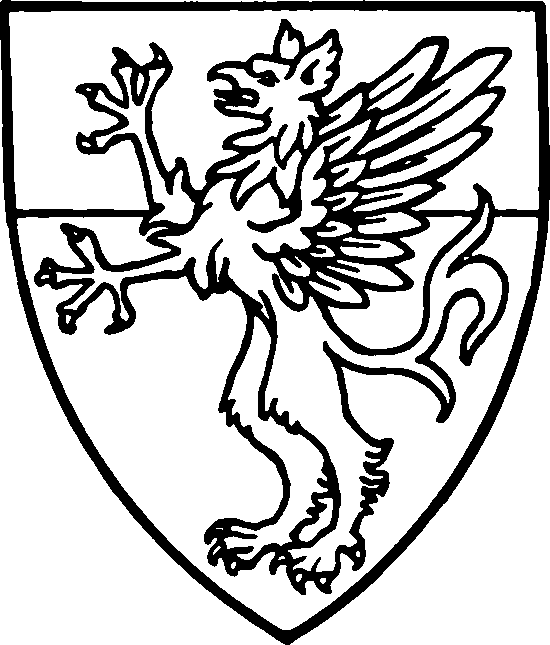
Griffith
Warwick, pursuivant, c. 1455, herald, c. 1461.
David Warwick, herald of the Earl of Warwick, appears on Close Roll, 6 Ed. IV, 1466–7, and on 30 October 1468 the earl granted 40s. a year to David Griffith alias Warwick herald and Joan his wife. Dead by 13 May 1480, when Edward IV confirmed the annuity to Joan.
Though not mentioned elsewhere by name he is probably the Warwick pursuivant sent to Wales in 1455 and on later missions including one to Bordeaux c. April 1461, when he talked too much on his way through Paris (Scofield, Life of Edward IV, 1, 238, 243). The earlier version of the Salisbury Roll (C.E.M.R.A., p. 104) was perhaps his work.
(Memoirs of P. de Commines, ed. Dupont, iii, 201–2; B. de Mandrot, Dépêches des ambassadeurs milanais en France, ii, 80–1; Scofield, Life of Edward IV, 1, 87, 238, 243, 337; H. & G., 1, 252–5.)
Arms: Azure, a chief gules & over all a griffin leaping or (MS. Harl. 2169, fo. 46).
Wexford Pursuivant
Pursuivant of John Talbot, Earl of Shrewsbury and Waterford, who was styled Earl of Wexford. Called 'Waysford' in Issue Roll, Easter, 14 Hen. VI, 1436, when he brought despatches from France (Coll. of Arms MS. O.A. III, 315).
Worcester Herald
Herald of John Tiptoft, Earl of Worcester 1449–70. In 1464 he was sent from Amiens to Normandy (H. of N.).